Manufacturers have invested millions in supply chain traceability, product verification systems and anti-counterfeiting technologies. Yet adoption often stalls not because the technology fails, but because ownership does. Systems are implemented. Dashboards are launched. Training is delivered once. Then, daily business takes over.
The result is familiar. Authentication labels are applied but not promoted. QR codes are printed but not scanned internally. Product authentication becomes an operational feature rather than a cultural norm. Brand protection remains the responsibility of a single compliance or legal team instead of a company-wide priority.
If counterfeiting is projected to reach a global economic value of over USD 4.2 trillion according to OECD and EUIPO estimates, and if 70 % of consumers say brand trust influences their purchase decisions, then product authentication cannot sit quietly in the background. It must be owned, practised and defended across departments.
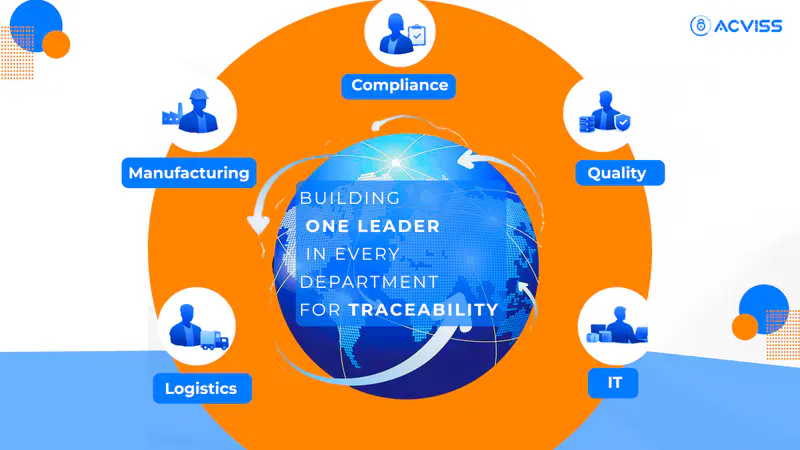
The most effective organisations solve this by training one traceability champion in each department. Not an extra title for decoration, but a clearly accountable internal leader for supply chain traceability, product authentication and brand verification.
This guide explores how to build that structure properly.
Why Traceability Adoption Fails Without Internal Champions
Technology alone does not create an authentication culture. Accountability does.
Common failure points include:
Operations teams treat product verification as a packaging requirement rather than a protection strategy
Sales teams rarely communicate authentication features to distributors
Marketing promotes product benefits but ignores anti-counterfeiting solutions
Legal protects Trademark and IP Protection at a policy level, but lacks real-time data from the ground
Customer service receives counterfeit complaints without escalation mechanisms
Supply chain traceability becomes fragmented. Each team sees only a slice of the problem.
A traceability champion model fixes this by distributing ownership. Instead of one overburdened compliance head, every department has a trained internal advocate who understands Brand Protection, product safety and authentication technologies.
This is how product authentication becomes cultural rather than procedural.
What Is a Traceability Champion?
A traceability champion is a designated individual within each department responsible for:
Driving internal adoption of Product Verification systems
Ensuring the correct use of anti-counterfeiting solutions
Acting as a bridge between the central brand protection leadership and their team
Monitoring performance and reporting issues
They are not IT administrators. They are not merely compliance officers. They are cross-functional authentication leaders.
Every key function should have one:
Manufacturing or Operations
Quality and LIMS
Sales and Channel Management
Marketing
Customer Support
Legal or IP Protection
When structured correctly, this network forms an internal authentication council.
Designing the Champion Framework
1. Define Clear Ownership
Each champion must have written responsibilities linked to KPIs. Without measurable accountability, enthusiasm fades.
Core responsibilities should include:
Ensuring the correct implementation of anti-counterfeiting technologies in their department
Conducting monthly product authentication audits
Reviewing scan data and traceability dashboards
Reporting anomalies linked to potential counterfeit activity
Supporting internal training sessions
Their performance review should include authentication metrics, not just operational metrics.
2. Establish Role-Specific Mandates
Each department interacts differently with product authentication and supply chain traceability. Responsibilities must reflect that.
Manufacturing Champion

Verify the correct integration of non-cloneable security codes during production
Conduct random verification scans before dispatch
Ensure tamper-proof labelling standards are maintained
Coordinate with QA and LIMS to track batch-level data
Manufacturing champions protect the integrity of the first mile.
Supply Chain Champion

Monitor movement tracking across warehouses and distributors
Flag irregular scan patterns across regions
Ensure logistics partners understand product verification protocols
Validate shipment authenticity before export
Given that counterfeit infiltration often occurs in transit, this role is critical for supply chain traceability.
Quality and LIMS Champion
Align product authentication data with laboratory and batch records
Validate product safety alerts linked to suspicious batches
Investigate scan discrepancies tied to specific lots
LIMS integration strengthens evidence trails for Trademark Protection and IP enforcement.
Sales Champion

Educate distributors on brand authentication features
Encourage retail partners to promote customer-facing verification
Collect counterfeit intelligence from the market
Escalate regional red flags
Field-level insights often detect counterfeit trends faster than the head office.
Marketing Champion
Communicate Brand Authentication as a consumer benefit
Promote product verification in campaigns
Use authentication scans to enhance customer engagement
Convert verification interactions into loyalty touchpoints
Studies show that consumers who verify products report higher customer satisfaction and greater trust. Marketing must amplify this.
Customer Support Champion

Track counterfeit complaints
Respond to product authentication queries
Escalate suspicious cases
Feed real-world data into brand protection teams
Customer-facing teams often see early warning signs of counterfeiting.
Legal and IP Protection Champion
Use traceability data to support Trademark enforcement
Collaborate with investigators
Coordinate takedown actions
Monitor evidence trails for litigation
Data-backed IP Protection increases enforcement success rates significantly.
Weekly and Monthly Cadence for Champions
Consistency drives culture.
Weekly Tasks
Review the authentication dashboard metrics
Analyse unusual scan locations or duplicate scans
Conduct spot-check product verification internally
Hold a 15-minute team awareness huddle
Monthly Tasks
Submit the traceability adoption report
Audit compliance within the department
Share one case study or a real incident
Identify training gaps
Quarterly reviews should measure:
Scan rates
Counterfeit detection incidents
Distributor participation
Internal awareness scores
When numbers are visible, accountability improves.
Training Champions Properly

Training cannot be a single workshop.
An effective programme includes:
Foundational Training
Understanding global counterfeiting impact
Basics of anti-counterfeiting solutions and technologies
Overview of supply chain traceability systems
Role of product authentication in brand protection
Technical Enablement
How to read scan analytics
Identifying suspicious scan patterns
Using LIMS and dashboard tools
Escalation workflows
Behavioural Training
How to influence peers
Communicating risk without creating fear
Encouraging scan-first behaviour
Training must also include practical simulations. For example:
Mock counterfeit detection exercises
Scenario-based distributor training
Escalation drills
Champions must leave training confident, not merely informed.
Building an Authentication Culture
Technology is infrastructure. Culture is behaviour.
To build a scan-first mindset:
Include product authentication training in onboarding packs
Add traceability metrics to departmental scorecards
Celebrate counterfeit interception success stories
Publish monthly authentication insights internally
Posters in manufacturing areas reminding teams to verify codes. Dashboard screens in offices showing live scan data. Recognition for departments with the highest compliance.
These small reinforcements build Brand Authentication into daily thinking.
Integrating Non-Cloneable Technologies for Stronger Ownership

Champions need tools that justify their efforts.
Modern anti-counterfeiting solutions must move beyond static QR codes. Advanced non-cloneable technologies create unique, impossible-to-replicate identities for each unit. When integrated with a structured traceability framework, these technologies enable real-time product verification at scale.
Solutions such as Origin by Acviss operate as a plug-in layer within existing systems, adding non-cloneable authentication and digital traceability without overhauling infrastructure. For champions, this matters.
They gain:
Real-time Brand Verification dashboards
Duplicate detection alerts
Geo-location anomaly tracking
Evidence-ready reports for IP Protection
Instead of chasing suspicion, they operate on data.
When non-cloneable technology is combined with internal accountability, counterfeit detection rates increase significantly while false positives reduce.
Measuring Success Across Departments
Traceability adoption must link to business outcomes.
Track metrics such as:
Percentage increase in product verification scans
Reduction in grey market diversion
Counterfeit detection response time
Distributor compliance rates
Customer satisfaction scores linked to verification usage
Authentication data can also fuel customer engagement campaigns. Verified users can be redirected to loyalty programmes, warranty registration or educational content. This converts brand protection into revenue enablement.
Overcoming Resistance
Resistance usually stems from one of three concerns:
Extra workload
Lack of understanding
Fear of exposure of internal gaps
Address these directly.
Clarify that traceability reduces long-term operational risk. Share data on how counterfeit infiltration damages product safety and reputation. Provide leadership backing to ensure champions are empowered, not isolated.
Executive endorsement is non-negotiable. Without senior buy-in, traceability champions lose influence quickly.
From Implementation to Ownership

The shift from system deployment to internal adoption is subtle but powerful.
Deployment asks: Is the technology installed?
Adoption asks: Is it used consistently and intelligently?
Ownership asks: Who is accountable?
When every department has a traceability champion:
Product Authentication becomes standard behaviour
Brand Protection becomes distributed
IP Protection becomes data-driven
Trademark enforcement becomes evidence-backed
Product safety risks reduce
The organisation stops reacting to counterfeiting and starts anticipating it.
The Strategic Advantage
Brands that treat anti-counterfeiting solutions as optional safeguards remain reactive. Brands that embed authentication leadership internally gain a strategic advantage.
They understand their supply chain traceability in granular detail. They detect anomalies early. They convert product verification into customer engagement. They strengthen brand authentication at every touchpoint.
Counterfeiters exploit gaps. Internal champions close them.
Conclusion
Counterfeiting is not merely a legal issue. It is an operational risk, a product safety concern and a customer trust threat. Technology can support defence, but people sustain it.
Training one traceability champion in each department creates distributed accountability, measurable adoption and cross-functional authentication leadership. With structured roles, weekly cadence, technical enablement and advanced non-cloneable technologies such as Origin by Acviss layered into your systems, traceability shifts from a compliance checkbox to a strategic pillar of Brand Protection.
Organisations that embed Product Verification and Brand Authentication into their culture do not merely defend their Trademark. They protect their customers, reputation and long-term growth.
Interested to learn more about strengthening your internal authentication framework and deploying scalable anti-counterfeiting solutions? Get in touch with us.