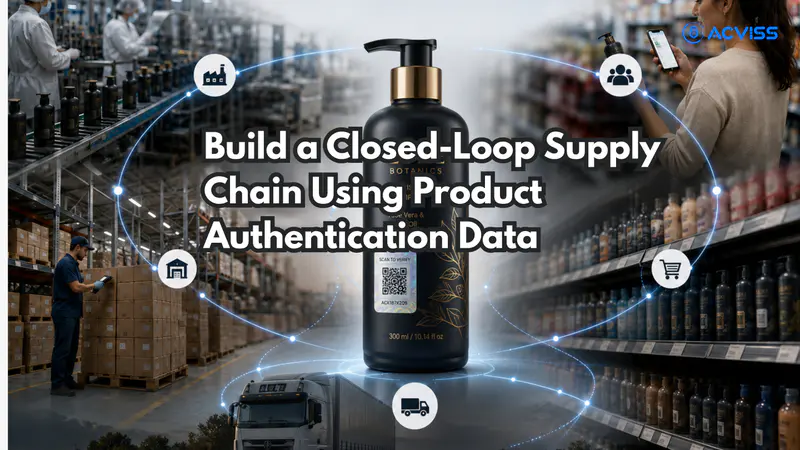
Supply chains generate enormous volumes of data every day, yet much of it remains fragmented across manufacturing systems, warehouse software, logistics platforms and enterprise resource planning (ERP) applications. While these systems reveal where products should be, they often struggle to show where products actually travel once they leave controlled environments. The result is a persistent visibility gap that affects inventory planning, counterfeit prevention, regulatory compliance and customer trust.
Product authentication is increasingly helping organisations close that gap. Every authentication event captures information that extends beyond confirming whether a product is genuine. When collected, analysed and connected across the supply chain, authentication data becomes a continuous source of operational intelligence, allowing businesses to identify inefficiencies, detect diversion, strengthen product integrity and make faster, evidence-based decisions. Instead of serving as a final verification checkpoint, authentication becomes the beginning of a closed information loop that improves the entire supply chain.
What Is a Closed-Loop Supply Chain?

A traditional supply chain is designed around the forward movement of products. Raw materials are transformed into finished goods, shipped through distributors and retailers, and eventually reach consumers. Once a product is sold, visibility often ends unless a customer raises a complaint or submits a warranty claim.
A closed-loop supply chain extends beyond product movement by continuously feeding operational data back into the business. Information generated throughout a product's lifecycle is analysed and used to improve manufacturing, logistics, quality assurance, compliance and future planning.
Rather than treating each supply chain stage as an isolated process, a closed-loop model creates continuous communication between every stakeholder. Manufacturers gain visibility into downstream activities, distributors become more accountable, retailers can validate inventory more effectively, and consumers contribute valuable insights through authentication interactions.
Authentication data plays a crucial role in enabling this feedback mechanism because it creates trusted product-level information throughout the product's journey.
This shift is becoming increasingly important as supply chains grow more complex. Modern manufacturers operate across multiple suppliers, contract manufacturers, distributors and online marketplaces, making it difficult to maintain consistent visibility using conventional systems alone.
Why Visibility Alone Is No Longer Enough
Many organisations have invested heavily in improving supply chain visibility over the past decade. Dashboards display inventory levels, shipment status and production schedules in near real time, creating the impression that the business has complete control over product movement.
In reality, visibility and intelligence are not the same.
A shipment marked as "delivered" does not confirm that it reached the intended distributor. Inventory records cannot determine whether products have been diverted into unauthorised channels. Likewise, enterprise systems rarely identify when counterfeit products begin circulating alongside genuine inventory.
Recent industry research highlights this disconnect. While 82% of supply chain leaders report having access to real-time visibility, only 24% possess predictive capabilities that help them anticipate disruptions before they occur. This gap contributes to substantial operational inefficiencies, with global supply chain disruptions estimated to have resulted in USD 1.6 trillion in missed revenue during 2024.
The challenge is not the absence of data. It is the inability to generate meaningful intelligence from trusted product interactions occurring throughout the supply chain.
Authentication provides one of the few data sources directly linked to individual products rather than aggregated shipments or batches. This enables organisations to understand how products behave after leaving controlled facilities, creating a more accurate picture of real-world supply chain performance.
Product Authentication Has Evolved Beyond Security

Product authentication is often viewed primarily as an anti-counterfeiting measure. A customer scans a product, verifies its authenticity and continues with their purchase. While this remains an essential function, it represents only a fraction of the information generated during the authentication process.
Each verification event captures contextual information that can reveal how products move through authorised and unauthorised channels. Over time, these interactions build a rich dataset that supports operational decision-making across multiple business functions.
Authentication data can reveal:
Geographic distribution patterns
Scan frequency and repeat verification attempts
Unusual product activity outside expected markets
Consumer engagement trends
Distributor performance
Product lifecycle milestones
Warranty validation events
Viewed individually, these data points may appear insignificant. Analysed collectively, they create a dynamic picture of supply chain behaviour that would otherwise remain invisible.
This distinction is particularly important because supply chain risks rarely emerge from a single event. Diversion, counterfeit activity and distribution irregularities typically develop through patterns that become visible only when product-level interactions are connected over time.
Authentication, therefore, shifts from being a security checkpoint to becoming an intelligence layer embedded throughout the supply chain.
Turning Authentication Scans into Operational Intelligence

The value of authentication lies not only in verifying products but in understanding everything that surrounds the verification event.
A single product scan can generate multiple operational signals simultaneously. Instead of producing a simple "genuine" or "not genuine" response, modern authentication platforms can capture contextual information that strengthens decision-making across manufacturing, logistics and commercial operations.
A typical authentication workflow looks something like this:
Product Authentication → Identity Verification → Timestamp Capture → Location Recording → Distribution Context → Consumer or Supply Chain Interaction → Analytics Dashboard → Business Action
Each stage adds another layer of intelligence.
The timestamp helps establish when products move between different stages of the supply chain. Geographic data identifies where products are being verified and whether they appear within authorised markets. Product identifiers connect scans to manufacturing batches, while repeat verification attempts may indicate suspicious activity or counterfeit replication.
Over time, these interactions enable organisations to identify patterns rather than isolated events.
For example, repeated first-time scans appearing hundreds of kilometres away from an authorised distribution territory may indicate grey market diversion. Similarly, products consistently remaining inactive within expected retail regions could suggest inventory bottlenecks or delayed distribution.
Instead of relying solely on scheduled audits or manual reporting, businesses gain access to continuous operational feedback generated directly from product interactions.
Connecting Manufacturing, Distribution and Consumers Through Trusted Data
Closed-loop supply chains depend on information flowing across organisational boundaries. Authentication data creates a common thread that connects every stage of the product lifecycle using a trusted product identity.
Rather than functioning independently, each stakeholder contributes information that strengthens the overall intelligence available to the business.
Manufacturing: Establishing a Trusted Product Identity
A closed-loop system begins at the point of production.
Each product receives a unique identity linked to its manufacturing information, production batch and quality records. Establishing secure identities at this stage ensures that every subsequent interaction can be traced back to a verified origin.
Without reliable product identities, downstream authentication becomes significantly less valuable because businesses cannot confidently associate product activity with manufacturing records.
This is why secure product identification forms the foundation of effective traceability and authentication programmes.
Distribution: Improving Accountability Across Logistics Networks
Distribution remains one of the least transparent stages of many supply chains.
Products frequently move through multiple warehouses, logistics providers and regional distributors before reaching retailers. Although shipment records document expected movements, they cannot always confirm whether products remain within authorised channels.
Authentication events generated during distribution provide an additional layer of verification that complements existing logistics systems.
Unexpected scan locations, unusually long periods without product activity or verification attempts outside approved territories can help identify operational anomalies that warrant further investigation.
Rather than replacing existing warehouse or transportation systems, authentication data enhances them by validating product movement through independent, product-level interactions.
Retail: Creating Greater Confidence at the Point of Sale
Retail environments introduce another layer of complexity, particularly for organisations managing extensive distributor networks or multi-channel sales operations.
Retailers can use authentication to confirm product authenticity before products reach consumers, helping reduce the risk of counterfeit inventory entering legitimate sales channels.
Authentication data also provides insights into product availability, regional demand and inventory movement, enabling businesses to identify slow-moving stock, unexpected sales patterns and regional performance differences with greater accuracy.
These insights become increasingly valuable when combined with existing sales and inventory data, providing a more complete picture of product movement across the market.
Consumers as a New Source of Supply Chain Intelligence
Consumer authentication is often treated as the final stage of the verification journey. In reality, it represents the beginning of one of the most valuable sources of operational intelligence available to modern brands.
Each consumer scan provides independent confirmation that a product has reached the market. When analysed alongside manufacturing, distribution and retail data, these interactions help organisations validate whether products are appearing where they were intended to be sold.
Authentication also enables businesses to understand how products behave after purchase. Patterns such as repeated scans, regional verification trends and unusually high authentication activity can all provide early indicators of emerging supply chain issues.
Importantly, consumer-generated intelligence should not be viewed in isolation. Its real value emerges when combined with information captured throughout the upstream supply chain, creating a continuous feedback loop that connects production with real-world market behaviour.
Detecting Supply Chain Problems: Traditional Systems Often Miss
Many operational issues remain invisible until they begin affecting revenue, customer experience or regulatory compliance. Conventional enterprise systems excel at recording planned transactions, but they are less effective at identifying unexpected product behaviour once goods leave controlled environments.
Authentication intelligence helps organisations detect these hidden risks earlier by analysing how individual products interact with the supply chain rather than relying solely on shipment records or inventory updates.
Authentication does not replace ERP, warehouse management or transport systems. Instead, it complements them by providing an independent stream of trusted product intelligence that reflects how products behave in the real world rather than how they were expected to move.
As organisations increasingly pursue connected and resilient supply chains, this additional layer of intelligence is becoming an essential component of operational decision-making rather than simply a security feature.
Why Closed-Loop Supply Chains Often Fail
Many organisations recognise the value of product authentication and invest in serialisation or verification technologies. Yet, despite these investments, they often struggle to realise meaningful improvements in supply chain visibility. The problem rarely lies with the technology itself. More often, it stems from how authentication data is managed, shared and acted upon across the organisation.
A closed-loop supply chain is not created simply by generating product data. It depends on establishing processes that ensure the right information reaches the right teams at the right time. Without this operational discipline, authentication becomes another isolated data source rather than a driver of better decisions.
Several implementation challenges repeatedly emerge across industries.
Authentication is treated as a standalone security initiative
In many organisations, authentication programmes are owned exclusively by brand protection or marketing teams. Supply chain, quality assurance and operations teams rarely have direct access to authentication insights, limiting their ability to detect operational issues before they escalate.
As a result, valuable product intelligence remains confined to isolated dashboards instead of informing broader business decisions.
Data is collected but rarely analysed
Generating millions of authentication events does not automatically create intelligence.
Without analytics capable of identifying unusual scan patterns, regional anomalies or unexpected product movements, organisations accumulate large datasets that provide little operational value. Businesses must define which signals require investigation and establish workflows that convert raw data into actionable insights.
Limited participation across the supply chain
Closed-loop visibility depends on multiple stakeholders contributing reliable information. If distributors, logistics providers or retailers do not participate in verification processes, visibility gaps remain despite having robust authentication systems.
Successful deployments encourage authentication at multiple checkpoints rather than relying exclusively on end consumers to generate product intelligence.
Lack of system integration
Authentication platforms should complement existing enterprise systems rather than operate independently.
Integrating authentication data with ERP, warehouse management systems, business intelligence platforms and customer service workflows allows organisations to correlate product scans with inventory records, shipment histories and customer interactions. This connected view enables faster investigations and more informed operational decisions.
From Product Authentication to Supply Chain Intelligence with Acviss Certify
Effective product authentication begins with creating a secure product identity that cannot be easily copied or manipulated. Without trusted product identities, every downstream process—whether authentication, traceability or investigation—becomes less reliable.
This is where Acviss Certify fits within a broader product integrity strategy.
Rather than relying on easily replicated identifiers, Certify uses non-cloneable security labels that provide every product with a unique digital identity. Each authentication event generates trusted information that can be used not only to verify authenticity but also to strengthen supply chain visibility throughout the product lifecycle.
The value extends well beyond identifying counterfeit products.
As products move from manufacturing facilities to distributors, warehouses, retailers and consumers, every verification contributes additional operational context. Over time, these interactions create an intelligence layer that helps organisations understand how products are actually moving through the market.
This enables businesses to answer questions such as:
Are products reaching authorised markets?
Which regions generate unusually high authentication activity?
Are distributors following intended sales channels?
Where are duplicate authentication attempts occurring?
Which products require further investigation?
How are consumers interacting with genuine products after purchase?
Because every product maintains its own secure identity, organisations can analyse product behaviour at a far more granular level than traditional batch-based reporting allows.
Importantly, authentication should not operate in isolation. Its greatest value emerges when combined with complementary product integrity capabilities.
A comprehensive strategy typically brings together:
Product authentication to verify genuine products.
Supply chain visibility to monitor product movement across authorised channels.
Brand protection to identify counterfeit activity across physical and digital markets.
Warranty verification to reduce fraudulent claims and validate product ownership.
Consumer engagement to build trust while generating additional market intelligence.
Investigation workflows that enable rapid responses to suspicious product activity.
Together, these capabilities create a stronger foundation for operational resilience than any individual technology deployed independently.
Business Outcomes of a Closed-Loop Supply Chain

When authentication data is integrated into broader supply chain operations, the benefits extend well beyond counterfeit prevention. Organisations gain a more accurate understanding of how products move, where inefficiencies occur and which operational risks require attention.
Some of the most significant business outcomes include:
Earlier diversion detection through unexpected geographic verification patterns.
Faster counterfeit investigations supported by product-level authentication histories.
Improved recall precision, allowing businesses to identify affected products more accurately rather than relying solely on batch-level information.
Greater distributor accountability, with product movement validated through independent authentication events.
Reduced warranty abuse by verifying genuine products before warranty activation.
Improved inventory visibility, particularly across complex distributor networks.
Better production planning, using downstream authentication trends to understand market demand.
Enhanced regulatory compliance, supported by traceable product identities and verifiable product histories.
Stronger consumer trust, created through transparent and reliable product verification.
These outcomes reinforce an important shift in perspective. Authentication should not be measured solely by the number of counterfeit products detected, but by the quality of operational decisions it enables across the business.
A Practical Framework for Building a Closed-Loop Supply Chain
Developing a closed-loop supply chain is an incremental process rather than a single technology deployment. Organisations that achieve the greatest value typically progress through a series of connected stages, with each phase building upon the previous one.
Progressing through these stages requires more than technology investment. Organisations must establish governance structures that define data ownership, investigation procedures and cross-functional collaboration.
Authentication events should be treated as operational signals rather than isolated customer interactions. When these signals are reviewed alongside inventory records, logistics data and market intelligence, they become significantly more valuable for strategic decision-making.
The Future of Supply Chain Visibility Lies in Trusted Product Data
Supply chains are becoming increasingly distributed, interconnected and exposed to disruption. Regulatory requirements continue to evolve, online marketplaces expand the reach of counterfeit networks, and consumers expect greater transparency regarding the products they purchase.
Against this backdrop, traditional visibility models are beginning to show their limitations.
Industry research suggests that many organisations have already achieved access to real-time operational data, yet only a small proportion have developed the predictive capabilities needed to anticipate disruption and respond proactively. The competitive advantage is no longer determined by how much data businesses collect, but by how effectively they transform trusted product information into operational intelligence.
Authentication data is uniquely positioned to support this transition because it is generated directly from individual product interactions. Combined with technologies such as AI, IoT and advanced analytics, it can help organisations move beyond simple monitoring towards more connected, responsive and resilient supply chains.
Rather than viewing authentication as the final step in protecting products, forward-looking organisations are recognising it as the starting point for building continuous intelligence across manufacturing, distribution and post-purchase operations.
Conclusion
A closed-loop supply chain is built on more than connected systems or digital dashboards. It depends on the continuous flow of trusted information that enables organisations to understand how products move, where risks emerge and how operations can improve over time.
Product authentication provides one of the most reliable sources of this intelligence. Every verified product contributes another data point that strengthens visibility, supports investigations and improves decision-making across the supply chain. When combined with traceability, brand protection, warranty verification and consumer engagement, authentication evolves from a security feature into a strategic business capability.
As supply chains continue to grow in complexity, organisations that can convert trusted product data into actionable intelligence will be better equipped to respond to disruptions, strengthen compliance and build more resilient operations.
Interested in learning how Acviss Certify can help transform product authentication into real-time supply chain intelligence? Get in touch with our team to discover how secure product identities, non-cloneable labels and connected visibility can strengthen your entire supply chain.