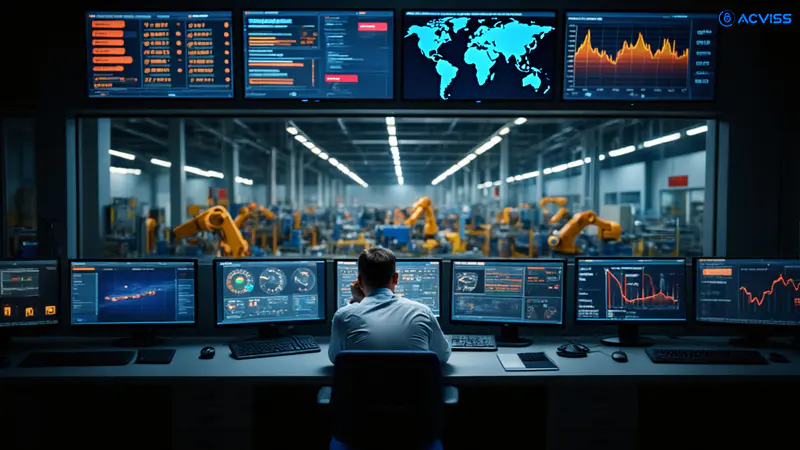
Manufacturing has long been viewed as a domain of precision, discipline, and repeatability. Assembly lines are optimised, machines are calibrated, and quality protocols are documented with meticulous care. Yet despite technological advances, a persistent and often underestimated factor continues to influence production outcomes: human decision fatigue.
In modern factories, especially those operating in sectors such as pharma, FMCG, electronics, and automotive manufacturing, professionals are expected to make hundreds of operational decisions daily. From approving production batches and resolving quality deviations to overseeing automated systems and managing supply chain management workflows, these decisions accumulate throughout the workday.
As cognitive load increases, the quality of those decisions declines. The result is subtle but measurable degradation in production quality, oversight efficiency, and operational consistency. For manufacturers striving for high standards of product safety, product authentication, and brand protection, this phenomenon introduces a hidden operational risk.
Understanding how decision fatigue manifests within manufacturing environments is therefore essential for organisations seeking reliable track and trace systems, stronger product traceability, and resilient anti-counterfeiting solutions.
Understanding Decision Fatigue in Professional Environments
Decision fatigue refers to the deterioration of decision quality after an extended period of cognitive effort. The phenomenon is rooted in behavioural psychology and has been widely studied across professional domains, including finance, healthcare, and management.
Human decision-making operates through two cognitive systems:
System 1 Thinking
System 1 thinking is fast, automatic, and intuitive. It relies heavily on past experience and mental shortcuts known as heuristics. While efficient, it often sacrifices precision for speed.
System 2 Thinking
System 2 thinking is slow, analytical, and deliberate. It requires greater mental energy and is typically used for complex problem-solving and critical evaluations.
In professional environments, high-stakes decisions require System 2 thinking. However, as mental resources are depleted throughout the day, individuals gradually shift toward System 1 thinking.
This shift leads to simplified judgments, reduced analytical rigour, and increased reliance on cognitive shortcuts.
For manufacturing operations where precision directly affects product verification, brand authentication, and regulatory compliance, this shift can have significant implications.
Evidence of Decision Fatigue: Insights from Research

Empirical research in financial analysis has demonstrated how decision fatigue affects professional accuracy.
A study examining earnings forecasts between 2002 and 2015 found that the accuracy of analysts' predictions declined measurably with each successive decision made during the workday. Forecast accuracy dropped by nearly 18.5 per cent between an analyst's first and second forecast of the day.
Although the context differs from manufacturing, the underlying cognitive mechanics remain identical. Professionals overseeing production processes, quality inspections, and supply chain management decisions face similar cognitive loads.
As the number of operational decisions increases, professionals begin to adopt heuristic behaviours that reduce cognitive effort.
Common patterns include:
Herding behaviour
Decision-makers tend to align their judgments with existing consensus rather than conduct independent evaluations.Self-herding
Individuals repeat previous decisions rather than reassess new information.Rounded estimations
Outputs become less precise, often expressed in simplified figures.
In manufacturing environments, these shortcuts may translate into approving borderline quality checks, overlooking minor production anomalies, or delaying corrective interventions.
Over time, such compromises accumulate and affect product safety, production consistency, and overall customer satisfaction.
Decision Overload in Manufacturing Operations
Manufacturing environments today are far more complex than traditional assembly lines. Modern facilities involve:
Multi-stage production processes
Integrated digital monitoring systems
Regulatory compliance checkpoints
Cross-border supply chain coordination
Real-time product verification requirements
Operators and supervisors must constantly interpret dashboards, respond to alerts, approve adjustments, and validate production outputs.
A single shift supervisor may face dozens of micro-decisions per hour.
Examples include:
approving production deviations
managing batch release decisions
resolving equipment alerts
responding to quality flags
validating track and trace data entries
While automation assists with monitoring, human oversight remains deeply embedded in most production workflows.
The paradox is that automation often increases decision demand rather than reducing it. Instead of performing manual tasks, supervisors must interpret system outputs and determine appropriate responses.
This creates a new category of fatigue: automation oversight fatigue.
The Automation Trap: When Human Oversight Becomes a Weak Link

Many organisations assume that combining automation with human oversight produces optimal results. However, research shows that hybrid human-machine systems can produce unexpected vulnerabilities.
One concept often discussed in this context is the automation bias.
Automation bias occurs when individuals rely excessively on automated system recommendations, even when those recommendations conflict with their own judgment.
In manufacturing environments, this can lead to situations where operators approve system outputs without thorough verification.
Another challenge is known as the MABA-MABA assumption, which suggests that "Men Are Better At" certain tasks and "Machines Are Better At" others. In practice, hybrid systems often create the worst combination of both.
Machines operate rapidly and consistently but lack contextual understanding. Humans possess contextual judgment, but cannot match machine processing speed.
When automated systems generate alerts or require rapid intervention, humans may not have sufficient time or cognitive capacity to intervene effectively.
The result is a system where human oversight exists in theory but becomes ineffective in practice.
This phenomenon has been described as the moral crumple zone, where human operators absorb responsibility for system failures despite lacking real control over outcomes.
In manufacturing, this risk becomes particularly concerning when dealing with product authentication, IP protection, and trademark protection processes.
How Decision Fatigue Affects Production Quality
Decision fatigue influences manufacturing outcomes in several subtle but significant ways.
1. Reduced Quality Vigilance
Operators experiencing cognitive fatigue may overlook early indicators of defects or production deviations. Minor irregularities that would normally trigger an investigation may be ignored.
2. Delayed Corrective Actions
Fatigued decision-makers tend to postpone complex decisions, leading to delayed interventions in production processes.
3. Increased Reliance on Defaults
Supervisors may rely on standard operating assumptions rather than thoroughly reviewing data from monitoring systems.
4. Reduced Documentation Accuracy
Operational records, which are essential for product traceability and regulatory compliance, such as EUDR, may become less precise when cognitive load is high.
5. Weakened Anti-Counterfeiting Safeguards
Manual verification processes within supply chains may be bypassed or inconsistently applied, weakening anti-counterfeiting solutions.
Over time, these behavioural patterns affect not only operational efficiency but also brand authentication reliability and consumer trust.
The Growing Importance of Reducing Human Decision Load
The modern manufacturing landscape increasingly recognises that human cognitive capacity is a finite resource.
Rather than relying on constant human intervention, organisations are shifting toward systems that minimise decision burden while maintaining oversight where it truly matters.
This shift involves designing production environments where routine operational decisions are automated, leaving humans responsible for strategic oversight rather than continuous micro-management.
Such approaches improve:
product safety
operational consistency
brand verification processes
customer engagement and customer satisfaction
Most importantly, they reduce the probability of fatigue-driven errors.
Technology as a Structural Solution
Reducing decision fatigue requires more than operational discipline. It requires structural technological interventions.
Modern supply chain management platforms are increasingly built around automated intelligence layers that capture, verify, and track production data without requiring constant human input.
Track and trace technologies provide continuous monitoring of product movement across manufacturing stages and distribution networks. These systems create immutable records that enable reliable product traceability and simplify regulatory compliance.
Automatically recording production data, technologies eliminate large volumes of manual verification decisions that would otherwise burden human operators.
Similarly, non-cloneable product authentication technologies help manufacturers address counterfeit risks without requiring manual inspection across supply chains.
Each product unit can carry a unique, non-replicable identifier that allows instant product verification and brand authentication through digital scanning. This significantly reduces the decision load on quality control teams while strengthening trademark protection and IP protection frameworks.
Strengthening Supply Chain Intelligence with Automated Traceability

Supply chains have become one of the most complex decision environments in modern manufacturing. Products may pass through multiple distributors, warehouses, and international markets before reaching consumers.
Without structured traceability systems, verifying product authenticity becomes extremely difficult.
Advanced track and trace platforms help resolve this challenge by creating transparent product journeys from production to the end-user.
Solutions such as Origin by Acviss, which functions as a plugin within broader brand protection solutions, enable manufacturers to capture and analyse supply chain data in real time. By automatically recording product movement and verification events, such systems reduce reliance on manual decision-making.
This automated visibility strengthens product authentication, enables rapid brand verification, and supports regulatory compliance requirements, including EUDR.
More importantly, it allows operational teams to focus on strategic interventions rather than continuous monitoring.
Designing Manufacturing Systems for Cognitive Sustainability

Addressing decision fatigue requires organisations to redesign workflows with human cognitive limits in mind.
Effective strategies include:
1. Prioritised Decision Scheduling
Critical operational decisions should be scheduled earlier in shifts when cognitive energy is highest.
2. Structured Breaks
Encouraging short breaks helps restore mental resources and improves decision quality throughout the day.
3. Automated Decision Layers
Routine verification processes should be automated wherever possible to reduce operational decision load.
4. Transparent System Design
Systems should clearly explain their outputs and confidence levels, enabling human operators to make informed interventions when necessary.
5. Continuous Learning Systems
Operators should periodically review system errors to maintain healthy scepticism toward automated outputs and avoid automation bias.
When combined, these approaches create manufacturing environments that support both technological efficiency and human cognitive sustainability.
The Strategic Importance of Reducing Decision Fatigue
Manufacturers often focus on machinery efficiency, logistics optimisation, and cost reduction. Yet the cognitive performance of the workforce remains an equally critical factor.
Decision fatigue can silently erode production quality, weaken brand protection systems, and introduce vulnerabilities within supply chains.
Adopting automated product verification frameworks, implementing reliable product authentication technologies, and strengthening track and trace capabilities, organisations can significantly reduce operational decision overload.
This not only enhances product safety and regulatory compliance but also builds stronger trust with customers and partners.
In industries where reputation, trademark protection, and IP protection are paramount, designing systems that minimise human decision fatigue is no longer optional. It has become a strategic necessity.
Rethinking Decision-Making in Modern Manufacturing
Manufacturing fatigue is not merely about physical exhaustion on the factory floor. It is increasingly a cognitive challenge driven by the sheer volume of operational decisions required in modern production environments.
As decision load grows, professionals naturally shift toward simplified thinking patterns that may compromise quality oversight, supply chain visibility, and anti-counterfeiting safeguards.
The future of resilient manufacturing lies in reducing unnecessary human intervention while strengthening intelligent automation across production and distribution systems.
Integrating advanced track and trace frameworks, automated product authentication technologies, and non-cloneable identification systems, manufacturers can reduce decision overload while strengthening brand authentication and customer trust.
Organisations that recognise and address decision fatigue today will build more reliable, transparent, and secure manufacturing ecosystems tomorrow.
Interested to learn more? Get in touch with us.