Five Hidden Entry Points Counterfeiters Exploit in Manufacturing Supply Chains
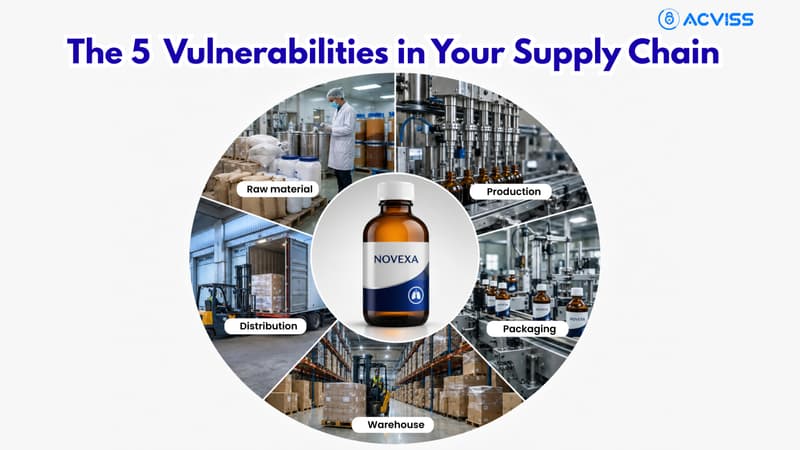
Counterfeit products rarely enter the market by accident. They exploit weaknesses that develop across sourcing, production, packaging, logistics and distribution long before a product reaches a customer. By the time a counterfeit item is discovered on a retail shelf or an online marketplace, the compromise often occurred weeks or even months earlier within the manufacturing supply chain.
This is why manufacturing supply chain security has become a board-level priority across industries. From pharmaceuticals and automotive components to electronics, agrochemicals and FMCG products, organisations are recognising that brand protection cannot rely solely on inspection at the final stage. It requires visibility, accountability and traceability throughout the entire product lifecycle.
According to the OECD and the EU Intellectual Property Office, counterfeit and pirated goods account for more than 3.3% of global trade. Meanwhile, agencies such as Interpol and Europol continue to report increasingly sophisticated criminal networks exploiting global manufacturing ecosystems rather than targeting only retailers. The challenge is no longer simply identifying fake products. It is understanding precisely where they enter legitimate supply chains.
Why Manufacturing Supply Chains Are Increasingly Vulnerable
Modern manufacturing is built on efficiency. Companies source raw materials globally, rely on contract manufacturers, outsource packaging, operate regional warehouses and distribute through multiple sales channels. Every additional participant improves scalability but also increases opportunities for counterfeit infiltration.
Many organisations still assume that counterfeit products originate outside their operations. In reality, some of the most damaging incidents begin within authorised supply chains through production leakage, unauthorised subcontracting, or inventory diversion.
Several trends have accelerated this risk:
Global supplier networks with limited visibility beyond Tier-1 vendors
Increasing reliance on outsourced manufacturing
Rapid expansion of e-commerce and direct-to-consumer distribution
Growing use of third-party logistics providers
Rising sophistication of organised counterfeit networks
Protecting products, therefore, requires organisations to secure every operational handoff rather than focusing only on finished goods.
The Five Hidden Entry Points Counterfeiters Exploit
1. Raw Material Sourcing: The Earliest and Often Most Overlooked Risk
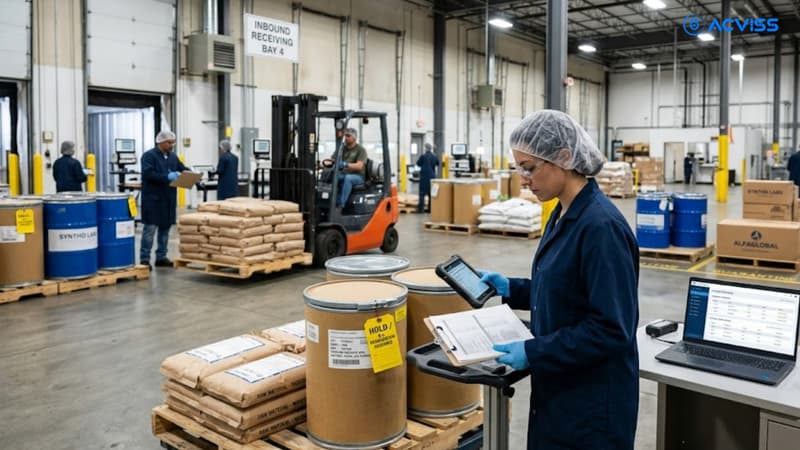
Manufacturing quality is only as strong as the integrity of incoming materials. Counterfeiters increasingly target suppliers by introducing substandard ingredients, electronic components, chemicals or packaging materials before production even begins.
Unlike finished counterfeit products, fraudulent raw materials are much harder to detect. They often resemble legitimate components and may even include forged certificates of conformity or falsified quality documentation.
This problem is particularly severe in industries where component authenticity directly affects safety, such as pharmaceuticals, electronics, automotive manufacturing and agrochemicals.
Common warning signs include:
Suppliers offering prices significantly below market value
Missing or inconsistent quality documentation
Frequent changes in sourcing locations
Limited visibility into second- and third-tier suppliers
Inadequate supplier audits
Without robust verification processes, manufacturers may unknowingly produce genuine products using counterfeit inputs, leading to quality failures, regulatory exposure, and costly recalls.
2. Contract Manufacturing: Where Ghost Shifts and Shadow Factories Thrive
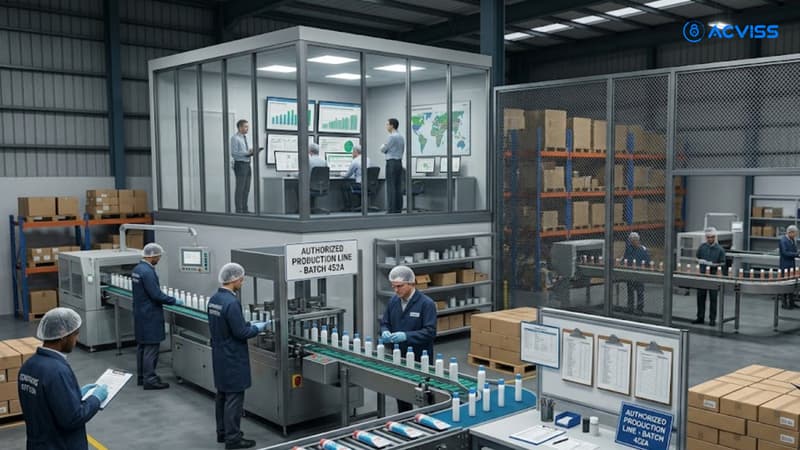
Contract manufacturing enables companies to scale production efficiently, but it also creates one of the most exploited weaknesses in the counterfeit supply chain.
One growing concern is the emergence of ghost shifts. These are unauthorised production runs that take place outside approved operating hours using legitimate equipment, packaging materials and production lines. Because the products are manufactured using genuine tooling, distinguishing them from authorised inventory becomes extremely difficult.
Another significant threat comes from shadow factories, where approved manufacturers subcontract production to facilities that have never undergone quality or security audits.
These hidden production environments often lack proper governance, creating opportunities for:
Overproduction beyond authorised quantities
Theft of packaging materials
Misuse of production tooling
Poor quality control
Counterfeit substitution
Organisations frequently focus on production capacity and pricing during procurement while overlooking governance controls. This creates blind spots that counterfeit networks actively exploit.
3. Packaging and Labelling: When Genuine Packaging Protects Fake Products
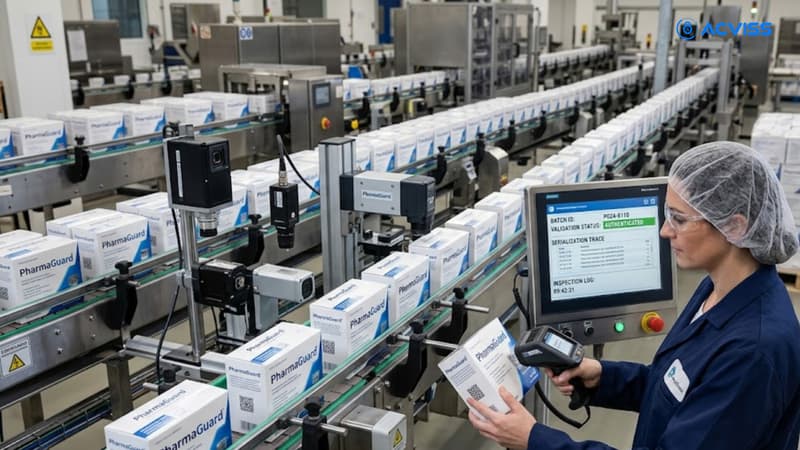
Packaging has become one of the most valuable assets for counterfeiters.
A counterfeit product wrapped inside genuine-looking packaging is significantly more convincing than a poorly replicated imitation. As a result, criminal networks increasingly target label inventories, unused cartons, security stickers and packaging suppliers.
Even organisations that invest heavily in premium packaging remain vulnerable if inventory controls are weak.
Common packaging-related risks include:
Theft of unused labels
Diversion of packaging inventory
Unauthorised reprinting
Counterfeit security labels
Excess packaging from production overruns
Traditional security features such as holograms or standard QR codes provide value, but they cannot independently prevent misuse once labels leave controlled environments.
A stronger approach combines secure authentication with controlled inventory management, serialisation and traceability so that every packaged unit can be linked back to an authorised production event.
4. Warehousing and Distribution: Where Genuine Products Become Mixed with Counterfeits
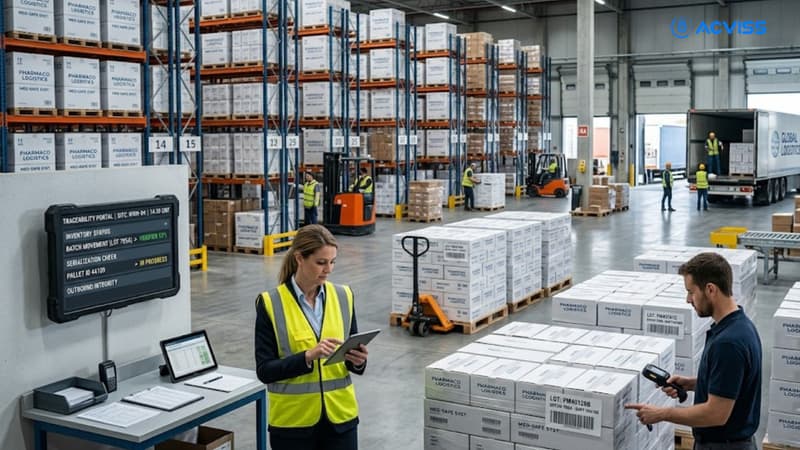
The manufacturing process may be secure, yet products remain vulnerable once they enter warehouses and distribution channels.
Counterfeiters frequently exploit inventory transfers, distributor networks and third-party logistics providers to introduce fake or diverted products into legitimate shipments.
Diversion often occurs through:
Grey market redistribution
Unauthorised resellers
Inventory substitution
Mixed pallet shipments
Warehouse reconciliation failures
These issues become increasingly difficult to detect when organisations lack real-time visibility into product movement.
A product scanned in an unexpected geography, transferred outside authorised channels or repeatedly authenticated across different regions can reveal diversion long before customers begin reporting suspicious products.
Without continuous monitoring, businesses often discover these issues only after warranty claims, customer complaints or regulatory investigations.
5. Online and Offline Sales Channels: The Final Entry Point That Often Starts Much Earlier

Many organisations believe counterfeit products originate on online marketplaces.
In reality, marketplaces are usually the final stage of a much longer supply chain compromise.
Counterfeit products reaching retailers or e-commerce platforms have often already passed through multiple authorised facilities.
The final distribution stage introduces additional risks:
Mixed retail inventory
Marketplace sellers sourcing from unauthorised distributors
Product diversion between regions
Counterfeit replacement during fulfilment
Parallel imports bypassing approved channels
This explains why removing online listings alone rarely solves the underlying problem. Unless businesses identify where counterfeit products entered the supply chain, new listings continue to appear.
Effective investigations therefore, combine marketplace intelligence with manufacturing records, shipment histories, authentication data and distributor traceability.
Why Traditional Manufacturing Audits Often Miss Counterfeit Risks
Supplier audits remain essential, but many focus primarily on quality management systems rather than counterfeit resilience.
An operational audit designed for product integrity should investigate far more than production capability.
Key indicators include:
Looking for these warning signs enables manufacturers to identify vulnerabilities before counterfeit products enter commercial channels.
How End-to-End Traceability Secures the Manufacturing Supply Chain
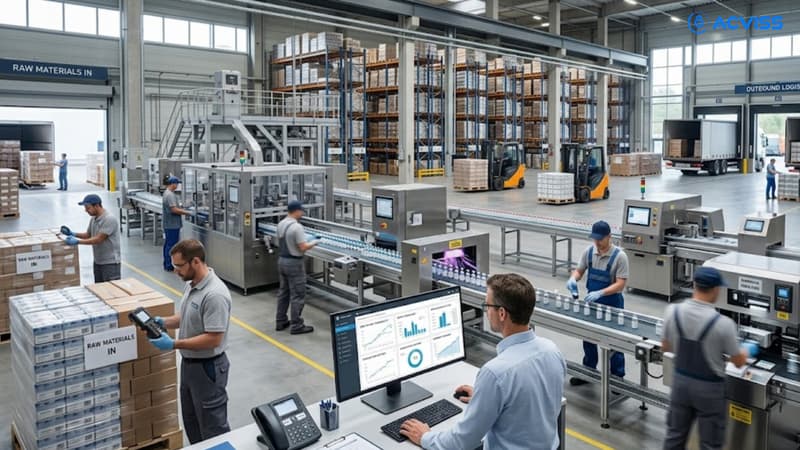
Authentication confirms whether a product is genuine. Traceability explains how it reached its current location.
This distinction is increasingly important because counterfeit investigations rarely stop at identifying fake products. Businesses also need to determine when the compromise occurred, who handled the product and whether additional inventory has been affected.
A modern track-and-trace system creates a digital chain of custody that records every significant movement throughout the manufacturing lifecycle.
For each unit, carton or pallet, manufacturers can capture:
Production batch and serial number
Manufacturing location
Packaging event
Warehouse transfer
Distributor ownership
Shipment destination
Verification history
Geographic scan events
Instead of treating supply chain data as isolated transactions, organisations gain continuous visibility into product movement from factory to market.
How Acviss Origin Strengthens Supply Chain Integrity
Acviss Origin provides an end-to-end track and trace platform that enables manufacturers to establish product-level visibility across the supply chain.
Rather than relying on disconnected records from multiple systems, Origin creates a unified digital history for every authenticated product. Each movement, ownership transfer and verification event contributes to a comprehensive chain of custody.
This enables businesses to:
Monitor product movement across manufacturing and distribution
Detect unusual routing patterns and diversion
Improve recall readiness through precise batch visibility
Support regulatory compliance with digital records
Strengthen investigations using historical movement data
Reduce dependency on manual reconciliation across supply chain partners
For industries operating under increasing regulatory scrutiny, such as pharmaceuticals, food, agrochemicals and automotive manufacturing, this level of visibility supports both operational efficiency and product integrity.
More importantly, traceability transforms counterfeit investigations from reactive exercises into evidence-driven processes.
Manufacturing Supply Chain Security Requires More Than Authentication
Many organisations invest in authentication labels and assume the problem is solved.
In practice, authentication represents only one layer of product protection.
An effective anti-counterfeiting manufacturing strategy combines multiple capabilities.
These technologies complement one another. Individually, each addresses a specific problem. Together, they provide a far stronger defence against sophisticated counterfeit operations.
Practical Framework for Strengthening Manufacturing Supply Chain Security
Businesses looking to improve supply chain authentication should prioritise operational maturity rather than isolated technology deployments.
A practical roadmap includes:
Map every supplier, manufacturer, warehouse and distributor involved in product movement.
Strengthen supplier governance beyond Tier-1 vendors.
Secure packaging inventories with serialised authentication.
Implement item-level or batch-level traceability across production and logistics.
Continuously monitor product movement for geographic anomalies.
Combine authentication data with online brand protection intelligence.
Develop structured investigation workflows supported by digital evidence.
This approach reduces blind spots while improving operational resilience against both counterfeit products and grey market diversion.
Final Thoughts
Counterfeiters rarely exploit a single weakness. They take advantage of disconnected systems, fragmented supplier networks and operational blind spots that accumulate across the manufacturing lifecycle.
The organisations that are most successful at protecting their products are shifting away from isolated security measures towards connected product integrity strategies. By combining authentication, traceability, supply chain intelligence and structured investigation workflows, manufacturers gain the visibility needed to identify risks before they escalate into commercial, regulatory or reputational crises.
As supply chains become more global, digital and interconnected, manufacturing supply chain security will increasingly depend on knowing not only whether a product is genuine, but also where it has been, who handled it and whether every movement can be trusted.
Interested in strengthening your manufacturing supply chain with end-to-end traceability and product authentication? Get in touch with the Acviss team to explore how Origin can help secure every stage of your product journey.

Frequently Asked Questions
Where do counterfeit products usually enter manufacturing supply chains?
Counterfeit products can enter at multiple stages, including raw material sourcing, contract manufacturing, packaging operations, warehousing and distribution. The earliest point of compromise often determines how difficult the issue becomes to detect later.
Is authentication enough to stop counterfeit products?
Authentication helps verify whether a product is genuine, but it cannot explain how counterfeit products entered the supply chain. Combining authentication with track and trace capabilities provides significantly greater visibility and investigative value.
Why are contract manufacturers considered high-risk?
Contract manufacturers may operate ghost shifts or outsource production to unauthorised facilities. Without strong governance and production visibility, these activities can introduce counterfeit or unauthorised products into legitimate distribution channels.
Which industries benefit most from manufacturing traceability?
Pharmaceuticals, electronics, automotive, FMCG, food and beverage, medical devices and agrochemicals all benefit from end-to-end traceability because product authenticity, regulatory compliance and recall readiness are critical operational priorities.