# Label Printing Systems: How They Work and Why They Matter for Manufacturers
Published: 2025-07-01
Category: Label Printing
Category URL: https://blog.acviss.com/category/label-printing
Tags: types of manufacturing systems, Anti-Counterfeiting Packaging, Variable Data Printing, QR codes, inline printing
Tag URLs: types of manufacturing systems (https://blog.acviss.com/tag/types-of-manufacturing-systems), Anti-Counterfeiting Packaging (https://blog.acviss.com/tag/anti-counterfeiting-packaging), Variable Data Printing (https://blog.acviss.com/tag/variable-data-printing), QR codes (https://blog.acviss.com/tag/qr-codes), inline printing (https://blog.acviss.com/tag/inline-printing)
URL: https://blog.acviss.com/how-does-label-printing-systems-work
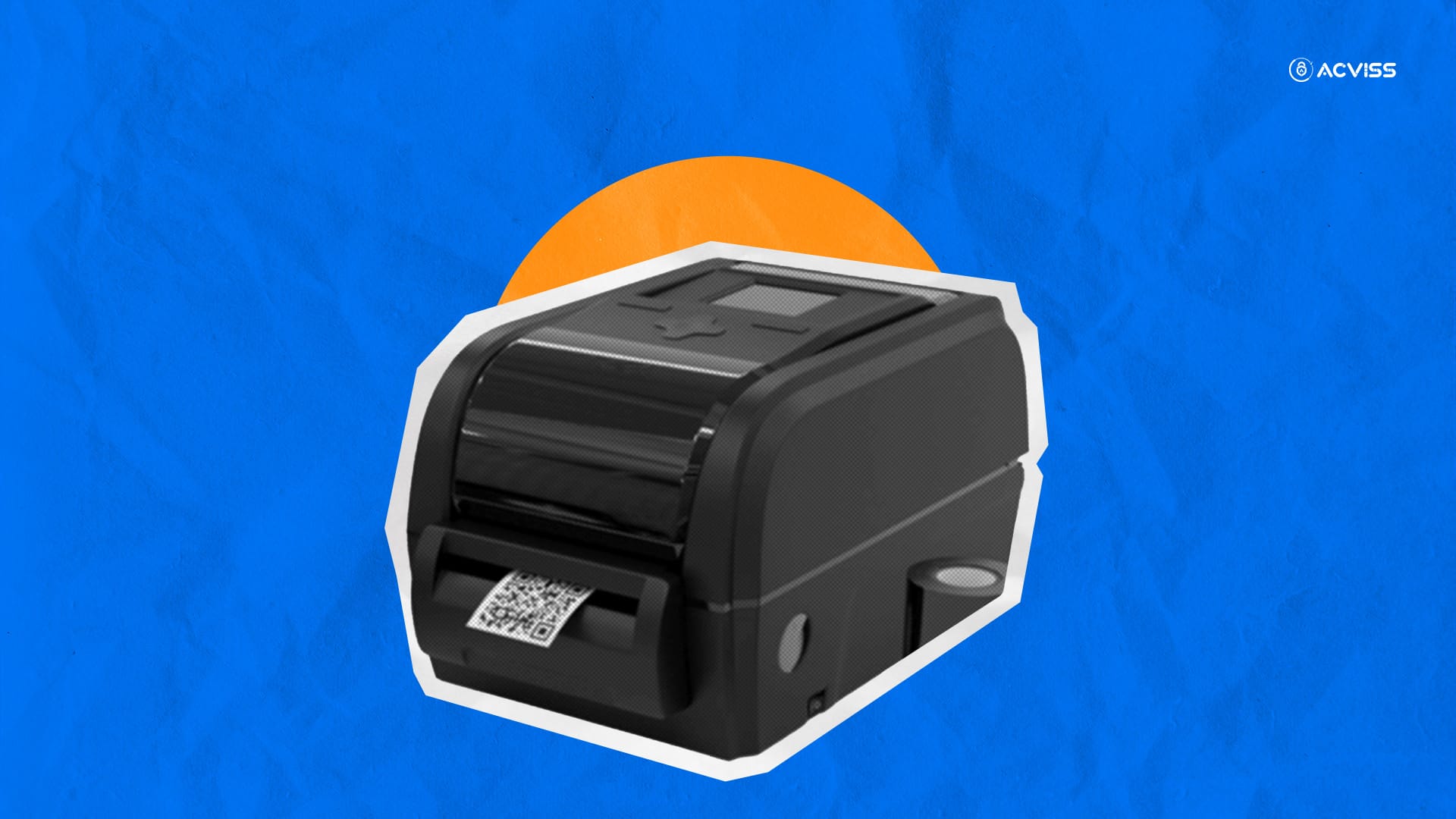
In today's complex supply chains, printing the right label is no longer only about branding. It plays a critical role in ensuring trust, traceability, and regulatory compliance. Whether you're in **pharma, agrochemicals, FMCG, or auto parts**, a label printing system is the backbone of your product identity.
### **What Is a Label Printing System?**
A label printing system is a setup that combines hardware and software to generate and print product labels, often including:
- Barcodes
- QR codes
- Batch numbers
- Expiry and manufacturing dates
- Brand or compliance information
These labels act as **gateways to authentication and tracking**, allowing regulators, brands, and customers to verify product legitimacy.
## **Core Components of a Label Printing System**
#### **1\. Code Generation Engine**
Integrated with platforms like **Acviss Origin**, this engine generates:
- Unique serial numbers
- QR codes (including non-cloneable ones)
- GS1 standard barcodes
Ensures unit-level uniqueness.
#### **2\. Label Design Software**
Tools like [BarTender](https://www.bartendersoftware.com/) or [NiceLabel](https://help.nicelabel.com/hc/en-001) allow:
- Logo placement
- Custom layout of product details
- Variable QR/barcode insertion
This enables real-time personalization.
#### **3\. Industrial Printer Hardware**
Devices like **[Zebra](https://www.zebra.com/ap/en.html)**, **[TSC](https://usca.tscprinters.com/en)**, and [**Sato**](https://satoasiapacific.com/india/products/) print high-resolution labels.
- Thermal transfer or direct thermal
- Connected via API, USB, or LAN This supports high-speed packaging lines.
#### **4\. Label Materials**
Choose depending on industry:
- Tamper-proof
- Waterproof
- Holographic labels
This strengthens product protection.
#### **5\. Real-Time Verification System (Optional)**
- OCR scanners or image recognition cameras verify print accuracy This helps prevent labelling errors and regulatory issues.
### **How a Label Printing Workflow Typically Operates**
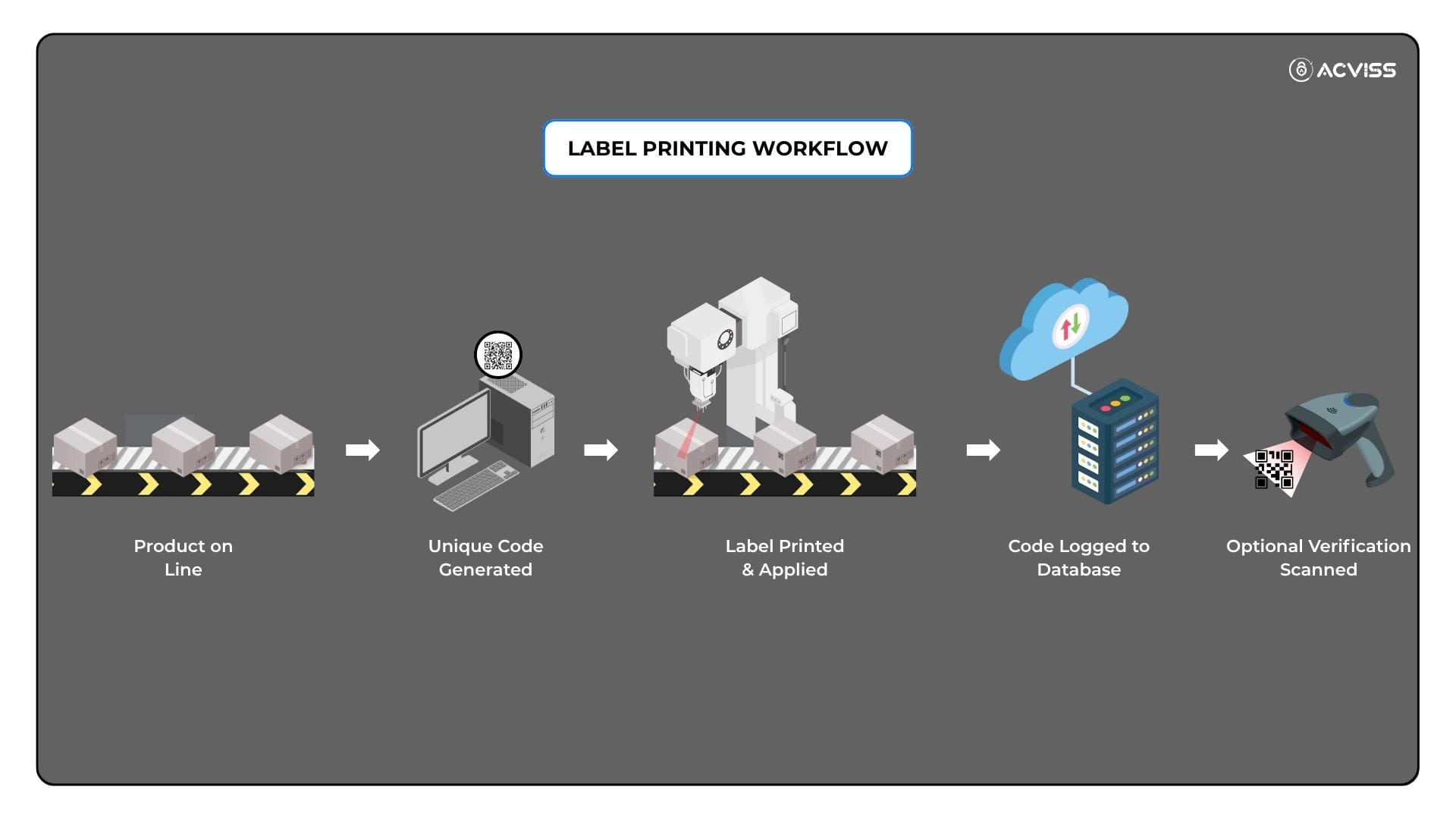
A typical label printing workflow ensures efficient product identification and tracking. Here’s how it works:
1. **Product on Line**: The process begins as products move through the production line.
2. **Unique Code Generated**: Each item is assigned a distinct identifier (e.g., barcode or QR code).
3. **Label Printed & Applied**: The code is printed on a label and attached to the product.
4. **Code Logged to Database**: The identifier is recorded in a system for tracking and management.
5. **Optional Verification Scan**: A final scan may confirm accuracy before shipping.
This seamless workflow enhances traceability, reduces errors, and supports inventory or quality control.
_[Want to optimize your labelling process? Explore advanced solutions today!](https://acviss.com/contact-us/)_
## **Industry-Specific Use Cases**
#### **Auto Parts**
- **Track warranty and parts authenticity** Ensure only genuine parts reach mechanics and service centers, especially in India's booming aftermarket segment.
- **Prevent after-market counterfeit components** Auto brands globally use serialized labels to identify and flag unauthenticated parts before they enter the supply chain.
- **Enable real-time scan-based service logs** Mechanics can scan parts for history and compatibility, reducing misfit or duplication.
#### **Pharmaceuticals**
- **Comply with DSCSA, FMD** Serialization is now mandatory under US and EU regulations; India’s [iVEDA](https://iveda.com/) rollout also mandates traceability at primary and secondary levels.
- **Recall tracing and validation** Unique codes help identify affected batches instantly, ensuring safer and quicker product recalls.
- **Counterfeit deterrence at chemist level** QR verification empowers pharmacists and consumers to validate medicines at the point of sale.
#### **FMCG**
- **Unit-level scan for customer engagement** Brands can drive digital interaction with QR-led contests, AR experiences, or scan-to-win programs.
- **Promotions or loyalty programs** Each product becomes a channel to connect with consumers, encouraging repeat purchases.
- **Monitor scan patterns by region** Brands can detect market-level fake product trends through QR scan analytics.
_You can also read [Smart Packaging for FMCG with Parent-Child Coding](https://blog.acviss.com/smart-packaging-for-fmcg-with-parent-child-coding)_
#### **Agrochemicals**
****
- **Mandated QR codes for licensing** India’s CIBRC guidelines make QR-based traceability essential for agrochemical manufacturers.
- **Authentication for regulated distribution** Labels help ensure only certified dealers handle products, avoiding diversion or black marketing.
- **Farmer verification and feedback integration** Brands can link QR scans to farmer education content, boosting loyalty and correct usage.
### **How Acviss Enhances Label Printing with Origin**
- **Parent-child traceability**: Map unit, box, and pallet labels
- **Non-cloneable QR codes**: Built-in anti-counterfeit protection
- **Geo + OTP scan validation**: Ensures only legitimate scans
- **Track scan history by user, location, and time**
_Use Origin’s dashboard to link each printed label with a verified product ID in real-time._
### **Benefits of a Label Printing System**
**Feature**
**Benefit**
Serialization
Unique identity for every product
QR/Barcode printing
Easy scan and verify anywhere
ERP/API integration
Real-time data sync
Secure labelling
Prevent counterfeits at packaging level
### **Schedule a Demo**
Want to secure your supply chain and automate serialization?
**[Book a personalized demo with Acviss.](https://acviss.com/book-demo)**
### **Conclusion**
A modern label printing system is more than just a printer. It acts as the initial checkpoint in your product’s trust journey, ensuring visibility, compliance, and authenticity right from the start of the production line. When combined with a platform like Acviss Origin, it becomes your frontline defence against counterfeiting and supply chain ambiguity.
## FAQs
Q: What is a label printing system and how does it support traceability?
A: A label printing system is a setup combining hardware and software to generate unique product labels. These enable real-time tracking and traceability throughout the supply chain.
Q: Which industries benefit most from using label printing systems?
A: Industries like pharmaceuticals, agrochemicals, FMCG, and auto parts benefit greatly due to their regulatory and authentication needs.
Q: What is the difference between barcodes and QR codes in product labeling?
A: Barcodes hold limited data and are read linearly, while QR codes store more information and enable faster, more secure verification.
Q: How does Acviss Origin integrate with label printing systems?
A: Origin connects label data to product IDs, enabling anti-counterfeiting features such as non-cloneable codes, parent-child traceability, and geo-based validation.
Q: Can label printing systems integrate with ERP or production software?
A: Yes, most modern label printing systems are API-compatible and can integrate with ERP, MES, or WMS systems for seamless operation.
---
This blog is powered by Superblog. Visit https://superblog.ai to know more.
---