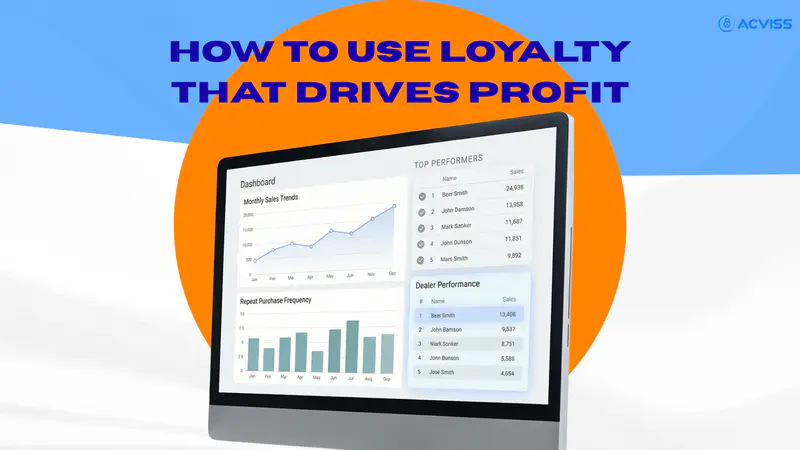
Dealer loyalty programmes have existed for decades. Most began with a simple objective: reward volume, increase billing, grow share. Points were tied to primary purchases. Slabs were designed to encourage quarterly pushes. Annual conventions celebrated top performers.
Yet beneath the surface, many brands struggle with an uncomfortable truth. They do not truly know who their real power sellers are.
They know who buys the most in a billing cycle. They know who redeems rewards aggressively. But they often lack clarity on who drives sustainable movement, protects margins, supports Product Authentication norms, and contributes to long-term Brand protection.
The difference between a promotional loyalty programme and a strategic one lies in analytics. When loyalty data is treated not as a reward engine but as a behavioural intelligence layer, it begins to reveal patterns that volume alone can never show.
This is where business value emerges.
The Problem with Volume-Led Loyalty
Traditional loyalty programmes reward billing. The higher the purchase value, the greater the incentive payout. On paper, this appears logical.
However, volume alone hides structural inefficiencies.
Primary sales do not always reflect secondary movement. Dealers may bulk-purchase near quarter-end to unlock incentives, only for inventory to stagnate downstream. In sectors such as pharma, this can increase expiry risk and compromise product safety. In other industries, it creates grey stock that eventually leaks into unauthorised markets, undermining Trademark Protection and IP Protection.
Moreover, reward leakage is a real phenomenon. Industry studies suggest that poorly structured loyalty programmes can lose 15 to 30 per cent of incentive budgets to behaviour that does not translate into genuine growth.
Without an analytics layer, loyalty becomes a cost centre rather than a growth driver.
Moving from Activity to Behaviour
The strategic shift begins when brands stop asking, “Who purchased the most?” and start asking, “Who behaves like a long-term partner?”
This requires behavioural measurement. One of the most effective frameworks for dealer analytics is RFM analysis.
RFM for Dealer Networks: A Practical Framework
RFM stands for Recency, Frequency and Monetary value. Originally developed for retail customer analytics, it adapts exceptionally well to dealer ecosystems.
Each dimension captures a different behavioural signal.
Recency reflects how recently a dealer transacted or engaged in Product Verification activity. Dealers who transact frequently but show declining recency may be signalling a slowdown or stock accumulation.
Frequency measures how often transactions occur over a defined period. High frequency indicates steady demand generation rather than occasional bulk ordering.
Monetary value represents the revenue contribution. However, when analysed properly, it should also account for margin contribution and incentive cost.
When dealers are scored across these three dimensions, meaningful segmentation becomes possible. Patterns typically emerge, such as:
High recency, high frequency and high monetary contribution dealers who drive stable growth
High monetary but low recency dealers who may be stockpiling
High frequency but moderate value dealers with strong local market penetration
Low frequency yet high incentive claim behaviour that may indicate programme misuse
RFM transforms loyalty data into insight. It enables brands to identify power sellers not by size alone but by consistency and sustainability.
Identifying Real Power Sellers
A real power seller demonstrates repeat behaviour, not occasional spikes. They contribute predictable revenue and maintain healthy product movement.
Such dealers typically show:
Consistent purchase intervals rather than end-of-quarter surges
Balanced product mix across categories
High engagement with Product Verification or Track and trace processes
Lower incidence of return or claim anomalies
In regulated sectors like pharma, power sellers often correlate with stronger adherence to Product traceability norms. They understand that product safety and compliance are not optional.
By contrast, a dealer who purchases heavily but exhibits irregular recency patterns may create forecasting distortion. Incentives tied solely to volume may unintentionally reward such volatility.
Power sellers are measured by behavioural stability.
Dealer Segmentation Beyond A, B and C

Most organisations categorise dealers into A, B and C tiers based purely on billing. This approach is convenient but superficial.
A more robust segmentation model integrates multiple behavioural indicators, including:
RFM score
Growth trajectory over rolling periods
Incentive-to-margin ratio
Geographic risk exposure
This produces nuanced clusters.
One cluster may consist of growth accelerators. These dealers show rising frequency and improving recency, even if their current volume is moderate. With targeted support, they may evolve into strategic partners.
Another cluster may include core anchors. These dealers demonstrate high RFM scores with steady performance. They form the backbone of predictable revenue streams.
A different segment may reveal incentive opportunists. They show strong billing around reward thresholds but inconsistent movement patterns.
Segmentation enables differentiated engagement. Instead of blanket incentives, brands can allocate resources strategically.
Repeat Behaviour as a Predictor of Stability
Repeat behaviour is one of the strongest indicators of long-term value.
Analytics can track behavioural signals such as:
Average days between transactions
Category diversification trends
Response to seasonal campaigns
Correlation between primary purchase and verified secondary movement
In pharma and other regulated industries, shorter and more consistent intervals between transactions often correlate with healthier inventory rotation. This reduces expiry risk and strengthens Supply chain management discipline.
Repeat behaviour also enhances forecasting accuracy. When production planning aligns with predictable dealer movement, manufacturing and logistics become more efficient.
Loyalty analytics, therefore, contributes not only to commercial insight but also to operational optimisation.
Integrating Loyalty Data with Product Authentication

When loyalty systems integrate with Product Authentication and Track and trace infrastructure, the intelligence deepens significantly.
Verified scan events provide real-world evidence of product movement. This data supports:
Product traceability mapping
Identification of geographic hotspots
Detection of duplicate or suspicious activity
Dealers who actively participate in Product Verification processes contribute to Brand protection. Their engagement supports Brand Authentication credibility and strengthens Trademark Protection efforts.
Conversely, patterns of high billing with low verification engagement may warrant closer review.
Loyalty data becomes a lens through which brand integrity can be assessed.
The Role of Bonus and Non-Cloneable Identity
Bonus serves as a loyalty engagement layer that captures structured dealer interaction data. When combined with non-cloneable identity technologies, the reliability of loyalty analytics improves significantly.
Each product unit linked to a secure, unique identity reduces the possibility of reward leakage through duplicated codes or unauthorised claims. This strengthens Product Authentication and ensures that incentives correspond to genuine product movement.
By aligning loyalty engagement with secure Product Verification, brands reinforce:
Supply chain management transparency
IP Protection frameworks
Trademark Protection Integrity
Customer satisfaction through authentic product assurance
The combination of behavioural analytics and secure identity transforms loyalty into a strategic intelligence system.
Business Value of Insight-Driven Loyalty

The commercial impact of data-driven loyalty programmes is measurable.
Brands that deploy behavioural segmentation and RFM analytics frequently observe:
Improved incentive efficiency
Reduced reward leakage
Increased repeat purchase consistency
Better alignment between production and channel demand
Enhanced visibility across Product traceability networks
More importantly, decision-making improves. Marketing campaigns can target growth accelerators. Supply chain teams can anticipate demand shifts. Compliance teams can monitor anomaly patterns.
Loyalty ceases to be a promotional tool and becomes an insight engine.
Loyalty as a Brand Protection Lever
In sectors vulnerable to counterfeit infiltration, loyalty analytics contributes directly to Brand protection.
Dealers who demonstrate strong Product Verification engagement often correlate with lower counterfeit incidence in their territories. Their behaviour supports Anti-counterfeiting solutions and strengthens overall ecosystem resilience.
In pharma, this connection is particularly important. Authentic product distribution is inseparable from public health responsibility.
When loyalty incentives reinforce authentication behaviour, the programme supports not just revenue but product safety.
From Reward Distribution to Strategic Intelligence
The evolution from incentives to insight requires discipline. It demands that brands treat loyalty data as strategic infrastructure rather than campaign support.
This means integrating loyalty analytics with ERP systems, aligning incentives with verified movement, applying RFM scoring rigorously, and reviewing behavioural trends at leadership level.
A loyalty programme that merely distributes rewards incurs cost. A loyalty programme that identifies power sellers, predicts demand and supports Brand Authentication creates value.
In increasingly competitive and regulated markets, clarity about channel behaviour is an advantage few brands can afford to ignore.
If you are ready to transform your loyalty programme into a data-driven engine that identifies real power sellers and strengthens Product Authentication and Brand protection, interested to learn more, get in touch with us.