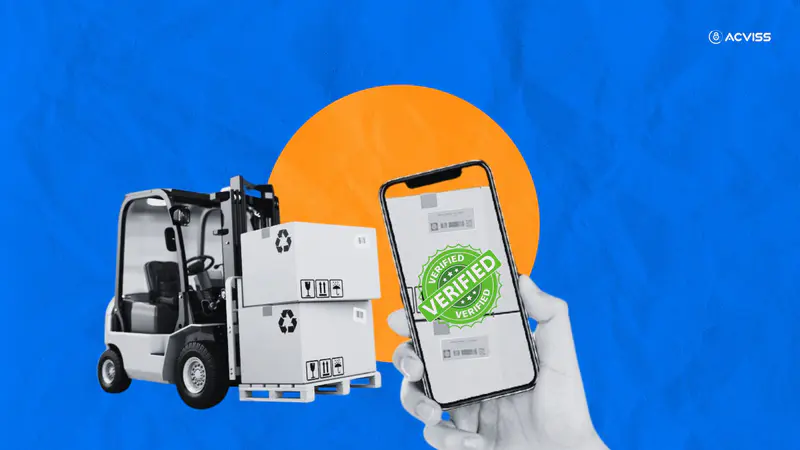
Product verification rarely fails because of technology. It fails because habits do not stick.
Across factories, warehouses and distribution centres, many brands have already run pilots for product authentication or anti-counterfeiting. QR codes were printed. Serial numbers were generated. A dashboard was demonstrated to leadership. The results looked promising. And then, slowly, verification slipped back into being “something extra” rather than something essential.
This is the quiet gap between having a product verification system and using it every day.
This article is written for brands that want to close that gap. Not with grand transformation programmes, but with behavioural change inside teams, practical workflows, and routines that fit naturally into daily operations. Because when verification becomes habitual, brand protection, product safety and supply chain traceability stop being abstract ideas and start delivering real value.
Why product verification adoption stalls after pilots
Most pilots are designed to prove technical feasibility. They answer questions such as:
Can this product be authenticated?
Does the code scan correctly?
Can we trace a unit back to a batch?
What pilots often do not test is human behaviour.
Nearly 70 per cent of digital transformation initiatives fail to achieve long-term impact, largely due to behavioural and process-related issues rather than technology gaps. Product verification and anti-counterfeiting solutions are no different. If scanning, logging or validating products adds friction to existing routines, teams will quietly bypass it. Not out of resistance, but out of pressure to meet daily targets.
To move from pilot to everyday habit, verification must align with how people already work on the shop floor and in the warehouse.
What “daily product verification” actually looks like in operations

Let us ground this in reality.
On a factory floor
A typical packaging line already includes checks such as:
Batch coding verification
Visual inspection for packaging defects
Random quality sampling
Product authentication fits naturally into this sequence when designed well.
Instead of treating verification as a separate step, it becomes part of the final quality check. The operator does not “do verification”. They confirm that the product leaving the line is genuine, compliant and traceable.
In a warehouse environment
Warehouses run on rhythm. Inbound checks, put-away, picking, packing and dispatch are highly optimised routines.
A daily traceability workflow works when authentication happens at natural control points, such as:
Inbound receipt from a contract manufacturer
Outbound dispatch to distributors
Returns and exception handling
If product verification supports existing controls rather than adding new ones, adoption becomes far easier.
Behaviour change is the real challenge
Technology adoption inside factories follows a predictable pattern.
At first, teams comply because the initiative is new and visible. Over time, compliance erodes unless three behavioural conditions are met.
1. Verification must feel meaningful
When operators understand why they are authenticating products, compliance improves. Counterfeiting is not an abstract IP issue. It affects product safety, recall exposure and customer trust.
According to the World Health Organisation, up to 10 per cent of medical products in low and middle-income countries are substandard or falsified.
Sharing such data during training helps teams see their role in a much larger picture of brand protection and consumer safety.
2. Verification must be easy
If scanning takes more than a few seconds or requires switching devices or applications, it will be skipped under pressure. Successful product authentication routines use tools that are already familiar, such as smartphones or existing handheld scanners.
3. Verification must be visible
When verification data feeds into dashboards that supervisors and managers actually review, behaviour changes. What gets reviewed gets done.
Designing an authentication routine that sticks

A good authentication routine answers one simple question for every team member: When exactly do I verify, and what do I do if something is wrong?
Below is a practical approach that many brands find effective.
Step 1: Define verification moments, not departments
Avoid saying “the QA team will handle product verification”. Instead, define moments where verification is mandatory.
Examples include:
End of packaging line approval
First pallet of every batch
Randomised checks every shift
Every inbound lot at the warehouse receipt
This spreads ownership across operations rather than isolating it.
Step 2: Standardise the action
Whether it is scanning a code or validating a non-cloneable marker, the action must be consistent.
One scan. One response. One decision.
This is where well-designed product verification solutions matter. When authentication results are unambiguous, teams trust the system.
Step 3: Embed escalation paths
Verification only matters if anomalies are acted upon. Clear escalation protocols reduce hesitation and confusion.
Sample SOP: Product verification at packaging line
Purpose:
To ensure all finished goods leaving the packaging line are authenticated and traceable.
Scope:
Applicable to all finished goods batches.
Responsibility:
Packaging line operator and shift supervisor.
Procedure:
At the start of each batch, authenticate one unit using the approved product authentication method.
Verify that the authentication result shows “genuine” and displays correct batch details.
Record the verification in the production log or digital system.
Every two hours, randomly authenticate one additional unit.
If authentication fails or data does not match, stop the line and inform the shift supervisor immediately.
Escalation:
Supervisor to notify QA and brand protection team for further investigation.
This SOP works because it is simple, predictable and tied to existing line checks.
Building a daily traceability workflow in warehouses

Traceability is often discussed in grand terms, but daily workflows are where it either succeeds or collapses.
Inbound verification
When goods arrive from a supplier or contract manufacturer, authentication at receipt helps detect diversion or substitution early.
The US Food and Drug Administration highlights inbound verification as a critical control point in supply chain integrity programmes.
Outbound verification
Outbound checks reinforce accountability. When products are authenticated at dispatch, brands gain confidence that only verified goods enter the market.
Exception handling
Returns, damaged goods and discrepancies are high-risk moments. A routine authentication check during exception handling prevents counterfeit re-entry into stock.
Sample SOP: Warehouse inbound authentication
Purpose:
To ensure all received goods are genuine and traceable.
Procedure:
Upon receipt, authenticate one unit per pallet.
Confirm batch and serial data match the delivery documentation.
Flag any mismatches immediately in the warehouse management system.
Quarantine affected pallets until cleared.
This aligns product authentication with standard warehouse controls rather than creating parallel processes.
Where brand protection solutions add value
Technology should support behaviour, not overwhelm it.
Modern brand protection solutions combine product verification, supply chain traceability and customer engagement into a single ecosystem. When used well, they reduce manual effort while increasing visibility.
Non-cloneable technology for trust
Non-cloneable identifiers add a layer of security that traditional codes cannot. These technologies make replication extremely difficult, strengthening trademark protection and IP protection without complicating daily routines.
Certify by Acviss as a practical layer
Solutions such as Certify by Acviss are most effective when positioned as enablers of daily operations rather than standalone anti-counterfeiting tools. Used selectively, they allow teams to authenticate products quickly, flag risks, and feed clean data into brand protection systems.
The key is restraint. Verification tools should appear only where they add operational value, not everywhere.
Linking verification to customer engagement and satisfaction
Product verification does not end at the factory gate.
When customers can authenticate products themselves, trust increases. Consumers are more likely to trust brands that offer transparent product information. Customer-facing authentication also feeds valuable market intelligence back to brands, supporting product safety monitoring and customer satisfaction initiatives.
Measuring success beyond compliance
To understand whether product verification has become a habit, brands should track indicators such as:
Verification frequency per shift
Percentage of batches authenticated
Time taken to resolve anomalies
Reduction in counterfeit incidents
When these metrics stabilise without constant reminders, the behaviour has taken root.
From system to culture
The most mature brands treat product verification as part of operational culture, not a project.
Operators see authentication as a way to protect their work. Warehouse teams see traceability as a safeguard for their reputation. Leadership sees brand verification as risk management, not marketing.
That is when product authentication moves from pilot to habit.
Conclusion
Product verification, anti-counterfeiting and brand authentication do not succeed on the strength of technology alone. They succeed when routines change, when SOPs are respected, and when teams understand their role in protecting trademarks, IP and customer trust.
Brands that invest in daily workflows, behavioural alignment and practical brand protection solutions build systems that endure. Interested to learn more? Get in touch with us.