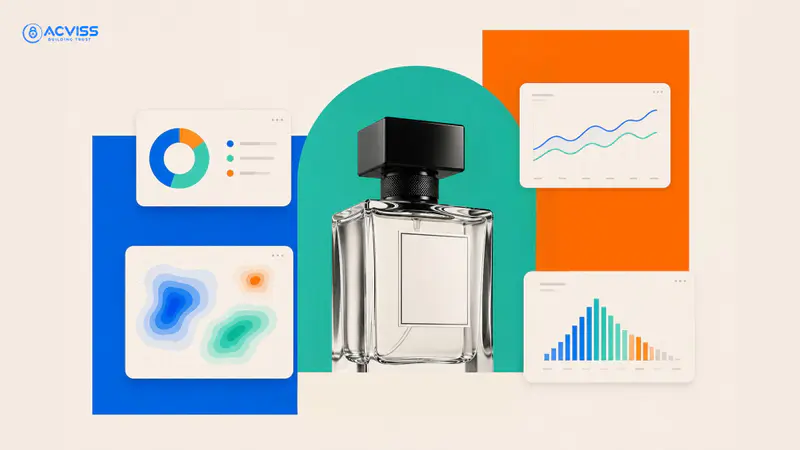
Most organisations still view product authentication as the final step in protecting products from counterfeiting. A consumer scans a code, confirms authenticity, and the interaction ends there. While this approach addresses an immediate security concern, it overlooks the far greater value generated every time a product is authenticated.
Every authentication event creates a trusted business signal. When analysed at scale, these signals reveal how products move through the supply chain, where distribution breaks down, which markets show unusual activity, how consumers interact with products, and where warranty abuse begins. Authentication is no longer just a security measure. It has become a source of business intelligence that supports better commercial and operational decisions.
Authentication Has Become a Business Intelligence Platform
Modern authentication systems do far more than verify whether a product is genuine. Instead of assigning one QR code to an entire product line, enterprise-grade platforms create a unique digital identity for every individual unit. Each authentication event contributes to a growing dataset that reflects the product's journey, ownership, and interaction history.
This shift transforms authentication from a reactive security tool into a continuous intelligence platform. Rather than investigating problems only after counterfeit products appear or distributors raise concerns, brands can identify emerging risks through authentication analytics before they develop into larger operational issues.
Seven Business Decisions Powered by Authentication Data
Instead of illustrating all seven decisions separately, show an operations manager analysing a unified dashboard.
The dashboard can contain widgets like:
Counterfeit hotspot map
Warranty claims
Distribution health
Product launch metrics
Customer engagement
Supply chain alerts
It should look like one platform providing answers across departments.
1. Where Is Counterfeit Activity Emerging?
Counterfeit products rarely appear everywhere at once. They often emerge in specific regions, marketplaces, or distribution channels before expanding into larger markets. Authentication data helps brands identify these early warning signs by detecting duplicate scans, repeated verification attempts, or unusual scan patterns linked to the same product identity.
Instead of waiting for customer complaints or regulatory intervention, brand protection teams can investigate suspicious activity sooner. Early detection reduces the scale of enforcement efforts and limits reputational damage before counterfeit products spread across the market.
2. Which Distribution Channels Are Driving Grey Market Leakage?
Grey market activity involves genuine products being sold outside authorised channels, often because of regional price differences or unauthorised redistribution. Although the products are authentic, they undermine pricing strategies, distributor agreements, and market planning.
Authentication data combined with location intelligence makes these movements easier to identify. Unexpected concentrations of scans outside intended markets can indicate diversion, parallel imports, or distributor non-compliance. For organisations operating across multiple territories, these insights support targeted investigations rather than broad assumptions.
3. Is Warranty Abuse Increasing?
Warranty fraud extends far beyond counterfeit products. Service centres regularly encounter duplicate claims, reused serial numbers, substituted products, and unauthorised repairs that are difficult to verify using manual processes alone.
Authentication establishes verified product ownership before a warranty is activated. This reduces fraudulent claims, improves service efficiency, and ensures that support resources are directed towards legitimate customers rather than preventable investigations.
4. Is a Product Launch Performing as Expected?
Sales reports explain what has been sold. Authentication data explains how products are being adopted.
Brands can evaluate first-scan rates, regional engagement, repeat interactions, and consumer activation much earlier than traditional reporting cycles allow. If one region demonstrates significantly lower authentication activity than expected, marketing, distribution, or retailer engagement can be reviewed before launch momentum is lost.
These insights provide a more immediate understanding of customer behaviour than relying solely on sales numbers collected weeks later.
5. Are We Learning From Verified Customers?
Most digital marketing relies on anonymous website traffic and incomplete customer profiles. Authentication changes this by creating interactions with verified product owners rather than casual visitors.
Verified authentication events allow businesses to enrich first-party customer data, understand regional purchasing behaviour, gather reliable product feedback, and deliver personalised engagement. Reviews collected through authenticated ownership also carry greater credibility because they originate from genuine purchasers rather than anonymous accounts.
6. Can Product Recalls Become More Precise?
Product recalls often become expensive because organisations lack confidence in identifying affected inventory. The result is broader recalls than necessary, increasing financial losses while disrupting distributors, retailers, and consumers.
Authentication linked with product serialisation enables brands to identify precisely which units belong to an affected batch. Combined with supply chain records, this improves recall speed, reduces unnecessary product withdrawals, and strengthens regulatory compliance by creating a clear digital audit trail.
7. What Is Really Happening Across the Supply Chain?
Products continue moving long after they leave the manufacturing facility. Traditional ERP systems provide planned movement, but they cannot always confirm what happens once products enter complex distributor networks or retail environments.
Authentication data provides an additional layer of real-world visibility. It helps organisations identify unusual regional demand, unexpected distribution patterns, delayed product movement, or inactive inventory that may require operational attention. Rather than replacing supply chain systems, authentication strengthens them with verified field intelligence.
Turning Authentication Into Better Business Decisions

The greatest value of authentication does not come from collecting more scans. It comes from connecting those authentication events with operational decision-making across the business.
An effective authentication programme should help organisations:
Detect counterfeit activity before it escalates.
Identify grey market diversion through location intelligence.
Verify genuine ownership for warranty and after-sales support.
Measure product adoption using real consumer interactions.
Improve recall precision with unit-level traceability.
Strengthen supply chain visibility beyond planned logistics.
When authentication data is treated as a strategic business asset rather than a security log, it becomes relevant to supply chain leaders, sales teams, compliance managers, product owners, customer service teams, and executive leadership alike.
The next stage is building the infrastructure that makes this intelligence possible. Secure product identities, non-cloneable label technology, AI-powered authentication, and integrated analytics determine whether authentication remains a simple verification exercise or evolves into a platform for enterprise-wide brand protection.
From Authentication to Enterprise Intelligence: Building a Connected Product Protection Strategy
Authentication data is only as reliable as the identity behind it. If a product can be authenticated using a copied QR code or a duplicated label, every business decision based on that data becomes questionable. This is why modern product protection starts with creating secure, unique identities that are difficult to replicate and easy to verify throughout the product lifecycle.
For organisations operating complex supply chains, authentication should not exist as a standalone application. It delivers the greatest value when it connects physical product security, digital verification, supply chain visibility, and business intelligence into a single ecosystem.
Building a Stronger Foundation for Product Integrity

Non-cloneable label technology forms the first line of defence by making labels significantly harder to copy or reuse. Unlike conventional QR codes that can be reproduced with minimal effort, secure labels incorporate multiple layers of physical and digital protection, making counterfeit replication considerably more difficult.
At the digital layer, Acviss Certify assigns every product a unique identity that can be authenticated throughout its lifecycle. Each verification records trusted information such as scan history, location, ownership status, and product activity, allowing brands to move beyond simple verification towards operational intelligence.
For products where visible security features are not desirable, Phantom Code embeds an invisible identifier directly into printed packaging. Since it integrates with existing offset printing processes, it provides covert authentication without altering packaging design, making it particularly useful for internal investigations and field verification.
Axion Code strengthens authentication further by combining secure QR technology with AI-powered verification. It helps detect duplicate scans, identify geographic anomalies, and analyse authentication behaviour at the unit level, providing early indicators of counterfeiting or distribution irregularities.
Connecting Authentication with Supply Chain Visibility
Authentication becomes substantially more valuable when linked with supply chain data instead of operating in isolation. Combining manufacturing records, distribution events, authentication history, and warranty information provides a more complete picture of how products move through the market.
This connected approach enables different teams to work from the same trusted dataset. Brand protection teams investigate counterfeit activity, supply chain managers identify distribution anomalies, customer service verifies warranty claims, and leadership gains measurable insights into product movement and consumer engagement.
Treat Authentication as Business Infrastructure
The most successful product authentication programmes are no longer measured by the number of QR scans alone. They are evaluated by the quality of decisions they enable across the organisation.
As regulations become stricter, supply chains become more complex, and counterfeit networks become increasingly sophisticated, brands need authentication systems that generate reliable intelligence rather than isolated verification events. Secure product identities, integrated analytics, and end-to-end visibility provide the foundation for faster investigations, better operational decisions, and stronger customer trust.
Authentication has evolved into a strategic capability that supports brand protection, supply chain resilience, warranty integrity, and commercial growth. Organisations that recognise this shift will be better equipped to respond to emerging risks while creating lasting value from every product they place in the market.
Interested in turning authentication data into actionable business intelligence? Get in touch with the Acviss team to explore how Certify, non-cloneable label technology, Phantom Code, and Axion Code can strengthen your product protection strategy.