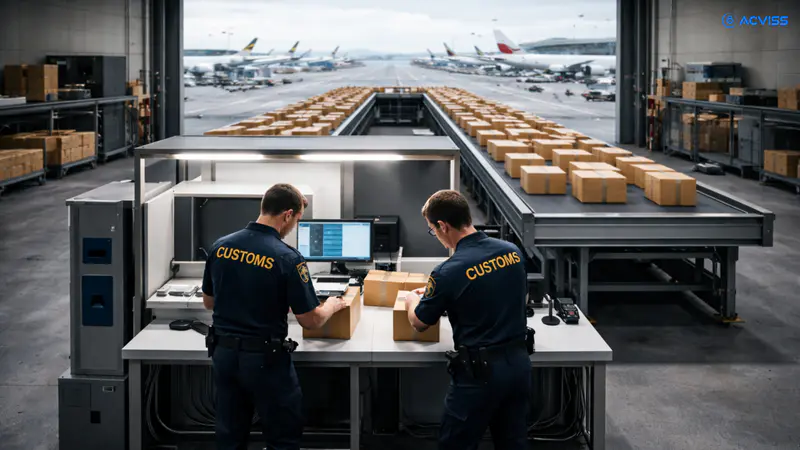
Brand protection teams today are more sophisticated than ever. Marketplace enforcement programmes are sharper, takedowns are faster, and digital monitoring systems powered by AI can detect infringing listings at scale. Yet, despite doing everything right online, counterfeit products continue to surface in physical markets, distribution networks, and even authorised retail channels.
The uncomfortable truth is this: the problem is no longer just digital. It is logistical.
Counterfeit goods are entering markets not through visible storefronts, but through millions of small, cross-border parcels that slip through customs systems never designed to handle this volume or complexity. For brand managers focused on counterfeit customs enforcement, this is the blind spot that continues to undermine even the most robust brand protection solutions.
The Structural Shift: How E-commerce Broke Customs Enforcement
The global supply chain has undergone a silent but profound transformation. Counterfeiting has moved away from container shipments and into decentralised, direct-to-consumer delivery models.
A decade ago, counterfeit goods typically travelled in bulk shipments. These were easier to identify, inspect, and seize. Today, they are fragmented into thousands of individual parcels, each containing one or two items, shipped directly to consumers through postal and courier networks.
Consider the scale:
The European Union processes over 12 million small parcels daily, totalling 4.6 billion annually
The United States handles 1.8 million shipments per day through customs
More than 70% of IP seizures are now linked to e-commerce shipments
This shift has made anti-counterfeiting customs enforcement structurally difficult. Customs authorities are no longer dealing with containers. They are dealing with an avalanche.
Each parcel is low value, low risk individually, but collectively represents a massive inflow of imported counterfeit goods.
The De Minimis Loophole: A System Designed to Be Exploited
At the heart of the issue lies a policy originally designed to facilitate trade: the de minimis threshold.
This threshold allows low-value shipments to enter a country with minimal customs scrutiny and without duties. While beneficial for trade efficiency, it has become one of the most exploited mechanisms in cross-border e-commerce counterfeiting.
How counterfeiters exploit it
Bulk shipments are broken into thousands of small parcels
Each parcel is declared below the de minimis value
Goods are shipped directly to consumers, bypassing traditional import controls
Inspection probability drops dramatically due to volume
In effect, counterfeiters have engineered their logistics around customs policies.
For example:
In the US, the de minimis threshold is $800
In the EU, it has historically been €150
Many developing markets, including India, have similar enforcement gaps in low-value imports
The result is predictable. Inspection systems designed for trade facilitation are now being used as entry points for counterfeit goods.
What Customs Enforcement Actually Looks Like
There is a widespread assumption that customs authorities systematically screen incoming goods. The reality is far more constrained.
The operational reality
Only a fraction of shipments are physically inspected
Risk-based profiling determines which parcels are flagged
Officers rely heavily on documentation, declarations, and limited scanning
Visual inspection remains a primary method despite declining effectiveness
Estimates suggest that less than 1% of total shipments are inspected globally.
Now consider the implications in an AI-driven counterfeiting environment:
Human detection accuracy for high-quality fakes has dropped to 24.5%
Counterfeit packaging can replicate microscopic design features
Documentation, including certificates and invoices, can be synthetically generated
In such a system, even when parcels are inspected, product authentication becomes unreliable without deeper verification tools.
The Brand’s Role in Customs Enforcement

Brands often assume customs enforcement is entirely a government responsibility. In practice, customs agencies depend heavily on brands for intelligence, training, and validation.
Key mechanisms available to brands
1. IP Recordal
Registering trademarks with customs authorities enables officers to flag suspicious shipments linked to known Trademark Protection violations.
2. Product Identification Guides
Brands provide detailed manuals to help officers distinguish genuine products from counterfeits. This includes packaging markers, serial formats, and known counterfeit patterns.
3. Training Programmes
Customs officers are trained to recognise specific product categories, particularly in high-risk sectors like pharma, electronics, and automotive parts.
4. Test Purchases
Brands conduct controlled purchases from cross-border sellers to trace supply routes and identify entry points.
These steps are necessary but insufficient. They are reactive, dependent on human interpretation, and difficult to scale across millions of shipments.
Why Traditional Product Authentication Fails at the Border
Counterfeiters have evolved faster than enforcement systems.
Basic QR codes can be cloned
Holograms can be replicated using AI-assisted design
Serial numbers can be generated with perfect logical consistency
This has eroded the effectiveness of traditional product verification methods at customs.
When an officer scans a QR code that leads to a convincing fake verification page, the inspection effectively ends there.
This is where non-cloneable authentication technologies begin to change the equation.
Digital Traceability as a Customs Tool

To address the scale problem, enforcement must shift from visual inspection to data-driven validation.
What digital traceability enables
Product traceability across the entire supply chain
Detection of unauthorised distribution or diversion
Integration with customs systems for rapid verification
A serialised product, when scanned, should not only confirm authenticity but also answer critical questions:
Was this unit manufactured by the brand?
Has it already been sold or scanned elsewhere?
Is it appearing in an unexpected geography?
This transforms product authentication from a static check into a dynamic intelligence system.
The role of non-cloneable systems
Solutions such as Acviss Certify introduce non-cloneable cryptographic codes that cannot be duplicated or reused.
For customs enforcement, this creates a decisive advantage:
A cloned code triggers an alert immediately
Each scan is logged, building a traceable history
Suspicious patterns can be flagged in real time
Unlike traditional labels, these systems support Brand Authentication and Product Verification at scale, even in high-volume environments.
The Indian Context: A Complex and Evolving Landscape

India presents a unique set of challenges in the enforcement of the importation of counterfeit goods.
Structural realities
High volume of small parcel imports driven by e-commerce platforms
Limited inspection infrastructure relative to shipment volumes
Heavy reliance on documentation rather than physical inspection
Growing use of international courier channels
Key enforcement gaps
Fragmented Data Systems
Customs, marketplaces, and brands operate on disconnected datasets, limiting coordinated action.Low Visibility in Last-Mile Delivery
Once parcels clear customs, tracking becomes significantly harder.Limited Use of Advanced Authentication Technologies
Adoption of track and trace and blockchain-based product traceability remains in early stages.Regulatory Lag
While global markets are tightening de minimis rules and platform liability, similar reforms in India are still evolving.
Despite these challenges, India is also an opportunity. With the right integration of IP Protection, digital systems, and anti-counterfeiting solutions, enforcement effectiveness can improve significantly.
What Brands Can Realistically Do
The scale of the problem may seem overwhelming, but there are practical steps brands can take to reduce exposure.
1. Prioritise High-Risk SKUs
Focus on products with high demand, high margins, and a history of counterfeiting. This is especially critical in pharma, electronics, and premium consumer goods.
2. Move Beyond Static Authentication
Adopt dynamic product authentication technologies that provide real-time validation and usage intelligence.
3. Implement End-to-End Traceability
Invest in supply chain management systems that enable track and trace from manufacturing to the end consumer.
4. Strengthen Customs Collaboration
Record trademarks across key import markets
Share intelligence regularly
Provide updated identification tools
5. Monitor Cross-Border Channels
Extend brand protection efforts beyond marketplaces to include logistics patterns, shipping routes, and fulfilment models.
6. Leverage Consumer Interaction
Enable customers to verify products easily. This improves customer satisfaction, strengthens customer engagement, and creates an additional detection layer.
The Bigger Picture: A System That Needs Rethinking
The current customs framework was not designed for the realities of modern e-commerce.
It assumes manageable shipment volumes
It relies on human inspection
It treats parcels as isolated units rather than part of a larger network
Counterfeiters, on the other hand, operate with:
Distributed logistics
Deep understanding of regulatory loopholes
This asymmetry is why counterfeit customs enforcement continues to fall short.
Closing the Gap Between Digital and Physical Enforcement
Brand protection cannot stop at takedowns and online monitoring. The physical entry point of counterfeit goods is now the most critical vulnerability.
The future of anti-counterfeiting customs lies in convergence:
Digital intelligence integrated with customs workflows
Product-level traceability replacing visual inspection
Non-cloneable authentication enabling real-time verification
Stronger collaboration between brands, regulators, and logistics providers
Without addressing the import channel, even the most advanced brand protection solutions will remain incomplete.
For brands that have already invested heavily in online enforcement, this is the next frontier.
Interested in learning how to extend your protection strategy to the import level? Get in touch with us to explore advanced solutions in product authentication, traceability, and customs-ready verification systems.