Seed is not merely an agricultural input. It is intellectual property in its most tangible form. It carries years of research, genetic stabilisation, field trials and regulatory approvals. For seed brands, every packet that leaves the warehouse is a compact expression of science, investment and reputation.
Yet once that packet enters the agro supply chain, control begins to thin. It moves from breeder to packer, from distributor to dealer, and finally into the hands of a farmer who relies on its performance for livelihood and yield. Along this journey lie risks of duplication, diversion, counterfeiting and mislabelling.
Seed traceability is no longer an optional layer of oversight. It is fast becoming a strategic necessity.
This article takes you through the full journey of breeder pack tracking and agro supply chain QR implementation. It also examines how modern track and trace technologies, supported by non-cloneable identity systems and blockchain-backed infrastructure such as Origin, are reshaping product traceability for seed brands.
Why Seed Traceability Is a Strategic Imperative
Agriculture is under pressure globally. Climate volatility, input cost fluctuations and tightening regulations are reshaping the sector. At the same time, counterfeit seeds remain a serious threat. In several developing markets, industry associations estimate that up to 15 per cent of seeds sold in certain crop categories may be substandard or fake.
Unlike other consumer goods, the impact of counterfeit seeds extends beyond financial loss. Poor germination rates, inconsistent crop performance and susceptibility to pests directly affect farmer income and food security.
For a seed brand, this translates into:
Reputational damage
Loss of farmer trust
Legal exposure relating to product safety
Erosion of IP and trademark value
Seed traceability strengthens product authentication and brand verification at every stage. It provides visibility into where the product is, who handled it and whether it remains genuine
Mapping the Seed Journey: Breeder to Farmer

Understanding seed traceability begins with understanding the chain itself. The journey is not linear but layered, involving multiple actors and processes.
1. Breeder Stage: The Origin of Intellectual Property
The breeder is the custodian of the genetic line. Whether hybrid maize, cotton or vegetable seeds, this stage represents years of research and IP protection.
Breeder packs are often small in volume but high in value. They are distributed to authorised multipliers or production units. At this stage, breeder pack tracking becomes critical. Each lot carries specific lineage data, trial performance history and regulatory documentation.
Without product traceability at this point, unauthorised multiplication can occur. A duplicated breeder line can quickly propagate into counterfeit commercial seeds.
Embedding non-cloneable identifiers at the breeder stage establishes a digital foundation. Each breeder pack can be assigned a unique identity that links to its genetic and production history.
2. Packer Stage: Scaling and Packaging
At the packer level, seeds are cleaned, graded, treated and packed into commercial SKUs. This is where scale begins. Thousands or millions of retail packs may originate from a limited set of breeder lines.
This stage presents several traceability challenges:
Mixing of lots
Mislabelled varieties
Packaging substitutions
Unauthorised overproduction
A robust track and trace system integrates breeder pack data with packaging operations. Secure agro supply chain QR codes can be generated per unit, tied back to the breeder source and batch.
Product verification at this stage ensures that each retail pack corresponds to an authenticated production batch. If a pack surfaces in the market without a matching backend record, it can be flagged immediately.
3. Distributor Stage: Regional Flow and Inventory Risk
Distributors operate across regions, often handling multiple brands and crop varieties. Inventory movement at this level is high volume and time-sensitive.
Diversion risk is significant here. Seed meant for one region may be diverted to another where pricing differs. In regulated markets, incorrect geographic distribution may violate compliance norms.
Through blockchain-supported infrastructure such as Origin, each transfer from packer to distributor can be logged immutably. This strengthens supply chain management and ensures that:
Shipment quantities match dispatch records
Regional allocations are respected
Parallel market leakages are detected
Such systems are particularly valuable when aligning with broader regulatory expectations, including sustainability reporting requirements under frameworks such as EUDR, where traceability of agricultural commodities is becoming central.
4. Dealer Stage: The Final Commercial Node
Dealers are the interface between the brand and the farmer. They manage inventory, promote products and often extend informal credit to customers.
At this stage, counterfeit infiltration risk peaks. Fake products may be introduced into the channel, sometimes visually similar to authentic packs. Holograms and printed labels are no longer sufficient deterrents.
An agro supply chain QR system enables real-time product authentication. Dealers can scan packs before sale to confirm authenticity. Repeated scans of the same code across different locations can trigger alerts.
For the brand, this is not only about anti-counterfeiting solutions but also about brand authentication in the field.
5. Farmer Stage: The Ultimate Test
The farmer is not concerned with supply chain intricacies. Their focus is on yield, germination rate and crop resilience.
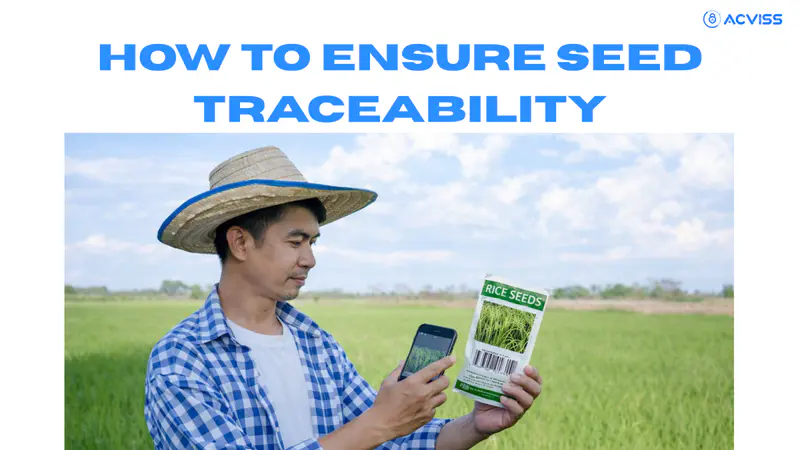
However, enabling farmers to perform product verification via a simple QR scan enhances customer engagement and customer satisfaction. When a farmer scans a pack and receives confirmation of authenticity, along with agronomic guidance and helpline access, trust deepens.
This final node completes the loop of product authentication.
A Generic Case Illustration: Where Traceability Changes the Outcome

Consider a mid-sized hybrid seed company operating across three states.
Scenario Without Traceability
Breeder packs are distributed with basic documentation.
Packaging units produce retail packs without unit-level serialisation.
Distributors receive bulk shipments without digital logging.
Dealers rely on visual inspection to distinguish genuine from fake.
Within a season, farmers in one region report poor germination. Investigation reveals counterfeit packs circulating with replicated packaging artwork. The brand faces claims, reputational harm and regulatory scrutiny.
Tracking the source becomes difficult because there is no digital product traceability from breeder to dealer.
Scenario With Seed Traceability
Each breeder pack carries a non-cloneable digital identity.
Retail packs are assigned unique QR-based codes linked to batch data.
All transfers are recorded through a blockchain-backed Origin infrastructure.
Dealers and farmers can perform product verification instantly.
When suspicious packs surface, repeated scan alerts flag anomalies. The brand identifies the distribution cluster where duplication occurred. Legal action is supported by concrete data logs, strengthening trademark protection and IP protection claims.
The difference is not cosmetic. It is structural.
Technology Foundations of Modern Seed Traceability
Non-Cloneable Identity Systems
Traditional QR codes can be copied if not secured properly. Non-cloneable technologies embed unpredictability and cryptographic safeguards into each code. Even if the visible print is replicated, backend validation detects duplication patterns.
This enhances product authentication and brand verification.
Blockchain-Backed Track and Trace Infrastructure
Solutions such as Origin by Acviss enable decentralised, immutable recording of each transaction in the seed lifecycle. This creates an auditable chain of custody from breeder to farmer.
For brands concerned about data integrity, regulatory audits and cross-border compliance, blockchain-backed systems provide added assurance.
Integration With Brand Protection Systems
Seed traceability should not operate in isolation. It complements broader brand protection solutions, including online monitoring for counterfeit listings, trademark enforcement and IP protection strategies.
In sectors like pharma, where serialisation and traceability are already advanced, similar principles are now being adopted in agriculture.
Beyond Compliance: Strategic Benefits for Seed Brands

Strengthened Brand Protection
Data-driven anti-counterfeiting solutions provide evidence for legal enforcement. Trademark and IP protection are reinforced by transaction logs and scan analytics.
Improved Supply Chain Management
Real-time visibility into stock movement reduces overproduction, diversion and stock ageing.
Enhanced Customer Engagement
Farmers scanning packs can receive:
Agronomic advice
Sowing calendar reminders
Feedback forms
Loyalty incentives
Customer engagement improves customer satisfaction and deepens brand loyalty.
Data-Driven Decision Making
Scan data reveals regional demand patterns, seasonality trends and potential distribution inefficiencies. This insight informs production planning and marketing strategy.
Addressing Common Concerns
Is Traceability Too Complex for Agro Channels?
Modern systems are designed to be intuitive. QR scanning via smartphones is now commonplace, even in rural markets. Training and onboarding remain important, but technological barriers are diminishing.
Does It Increase Packaging Cost?
While unit costs may rise marginally, the financial impact of counterfeit losses, brand erosion and legal disputes often far outweighs implementation expense.
Traceability should be viewed as infrastructure, not overhead.
The Road Ahead for Seed Brands
The agricultural sector is entering a decade defined by transparency. Sustainability, regulatory compliance and digital engagement are converging forces.
Seed brands that invest in seed traceability today position themselves for:
Greater resilience against counterfeit infiltration
Stronger farmer trust
Improved regulatory readiness
Better alignment with global trade standards
From breeder pack tracking to agro supply chain QR implementation, the journey is about more than monitoring products. It is about protecting intellectual property, safeguarding farmer livelihoods and reinforcing product safety across the chain.
The full journey from breeder to farmer must be visible, verifiable and secure.
Securing the Future of Your Seed Brand
Seed brands stand at a crossroads. They can continue relying on traditional controls and reactive investigations. Or they can embrace integrated track and trace technologies supported by non-cloneable identity systems and blockchain-backed infrastructure such as Origin.
Product traceability is not merely an operational upgrade. It is a strategic shield for brand protection, trademark protection and IP protection. It strengthens product authentication and brand authentication at every stage of the agro supply chain.
The brands that will lead in the coming years are those that treat traceability as a core pillar of their supply chain management strategy.
Interested to learn more? Get in touch with us to explore how advanced seed traceability and product verification solutions can secure your journey from breeder pack to farmer’s field.