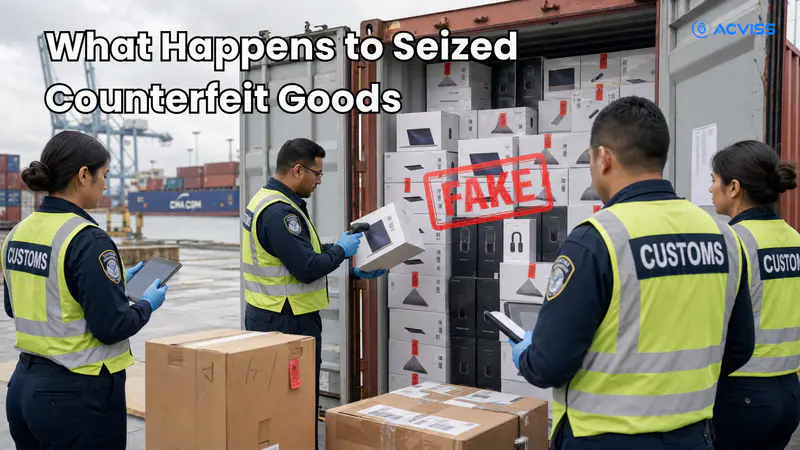
22 shipping containers packed with fake Gucci bags, Hermès scarves, Louis Vuitton wallets, and Burberry coats. All of it was intercepted by US Homeland Security after a six-year investigation spanning two continents. Reported as one of the largest counterfeit seizures in American history, the goods would have been worth over half a billion dollars if authentic.
The headline ran. Brands celebrated. Law enforcement took a bow.
The story doesn’t end here though. It does for the headline readers but if you are someone curious, you are probably wondering what happened to those confiscated items. And you are right to be curious, because this happens very often. No update on what happened to the goods. No confirmation of destruction. No intelligence on the supply chain that produced them.
This is more common than it should be. In FY2024, US Customs and Border Protection seized 32.3 million counterfeit items with an estimated authentic value of $5.4 billion, a 125% increase from the previous year. In the same year, EU authorities detained over 112 million counterfeit items worth an estimated €3.8 billion.
The numbers are staggering. But behind each seizure is a legal process that is slow, jurisdiction-dependent, expensive, and often deeply unsatisfying for the brands involved. Some goods get destroyed. Some get donated. Some get quietly sold. Some find their way back to market.
This blog walks through what actually happens after a counterfeit seizure, from the moment of detention to final disposal, and what brands can do to ensure the outcome serves their interests rather than just the system's.
The Moment of Seizure: And What Brands Think Happens Next
A seizure happens in one of two ways. The first is a customs intercept: goods flagged during inspection at a port, airport, or mail facility because they bear suspected counterfeit marks. The second is a market-level enforcement action, typically a raid on a warehouse, retail outlet, or distribution network, initiated by law enforcement working in tandem with a brand's protection team or following a formal complaint.
Both feel like wins. The goods are off the street. The counterfeiter has been disrupted. The brand's intellectual property is no longer circulating in the wrong hands.
The assumption that naturally follows is simple: the goods will be destroyed, and that will be the end of it.
The reality is that seized counterfeit goods do not automatically get destroyed. They enter a legal process that can stretch over many months, involve multiple government agencies, and require active participation from the brand to reach the right outcome. In some jurisdictions, the process can result in the goods being released back into circulation if the brand fails to act in time.
Most brands never find out what happened because they were never told there was something they needed to do.
A Long, Complicated Legal Process
Destruction is not the default outcome of a seizure. It is the outcome of a completed legal process, and that process has several stages, each with its own timeline and decision points.
Here is how the lifecycle typically unfolds:
Under US law, the entire process from seizure to destruction can take more than 120 days, and that is only if proceedings move without complication. In cases where the importer contests the seizure, the timeline extends significantly further. During this period, the goods sit in government-managed storage.
Once a seizure notice is issued, the importer has three choices: abandon the goods, file a Petition for Relief contesting the seizure, or make an Offer in Compromise.When petitions are denied and all appeal windows close, forfeiture is confirmed and only then can disposal proceed.
How the Process Looks Like in Different Countries (US, EU, India, and UK)
One of the most important and least discussed aspects of counterfeit seizure is that the process varies significantly depending on where the goods are intercepted. The legal framework, the brand's rights, who pays for destruction, and the risk of goods being released all differ by jurisdiction.
The India situation deserves particular attention. If the rights holder does not execute the requisite bond and join proceedings within the prescribed period, customs will release the suspended goods. For brands not actively monitoring and registered with Indian Customs, a seizure can result in their counterfeits being formally released. Legally.
There is also a blind spot specific to India: customs only has authority over imported goods and cannot seize goods being exported from the country. Fakes manufactured domestically for export require enforcement action before those goods reach the port, not at it.
For brands operating across multiple markets, this is not a theoretical risk. It is an active vulnerability in their enforcement strategy.
The Re-entry Problem: When Seized Fakes Come Back

Here is the scenario no one mentions in the post-seizure press release.
A counterfeiter ships a large consignment of fake goods. Customs intercepts it. The importer, facing legal costs and uncertain outcomes, abandons the goods rather than contest the seizure. The brand's legal team is not registered with customs in that jurisdiction, so no notification is sent. The brand never finds out the seizure happened.
The goods sit in storage. The legal process runs its course. The counterfeit goods are forfeited to the state. And then, depending on the jurisdiction and condition of the goods, the disposal decision may not be destroyed.
In the US, counterfeit goods can legally be sold once the counterfeit mark has been obliterated, provided the trademark holder's consent is obtained and at least 90 days have passed since forfeiture. In practice, debranded goods can re-enter retail channels, often through secondary markets where they become indistinguishable from genuine products with their labels removed.
The donation pathway carries its own risk. Even when the original intention behind donating confiscated goods to charities is entirely legitimate, this does not prevent fakes from finding their way back into the retail stream through resale, online listing, or further redistribution.
In markets with weaker enforcement infrastructure, the risk is more direct. Disposal into non-sanitary landfills can allow goods that were not fully destroyed to re-enter channels of commerce, especially in facilities that are heavily scavenged.
What Brands Are Legally Entitled to (And Rarely Claim)
Most brand teams treat a seizure as news to be celebrated and then forgotten. But it is actually an enforcement event that entitles them to specific data, physical evidence, and decision-making rights. Rights that are legally theirs, and that almost none ever claim.
In the United States, within 30 days of a seizure of counterfeit goods, CBP is required to provide the trademark owner with identifying information including the date, port, merchandise type, quantity, manufacturer, exporter, and importer. This data package identifies where the fakes came from, who moved them, and through which route.
Brands can also request a physical sample of the seized goods upon posting a bond. That sample is invaluable for forensic analysis, future authentication training for customs officers, and building the evidentiary record for civil litigation.
But none of this happens automatically. It requires the brand to be registered with customs authorities in the relevant jurisdiction before the seizure occurs.
What brands are entitled to and should claim:
Full seizure data: date, port, importer name, manufacturer, exporter, and quantity
A physical sample of the counterfeit goods, with bond posted
The right to join proceedings and influence the disposal outcome
A Certificate of Destruction confirming the goods were destroyed and not diverted
The right to provide customs officers with product authentication tools and identification guides, reducing misidentification risk at future intercepts
The brands that have built this infrastructure turn every seizure into an intelligence event. Those that have not are simply bystanders watching their brand's fakes disappear into a process they have no visibility into.
The Environmental Cost No One Talks About
Tens of millions of counterfeit products are incinerated or landfilled every year. The environmental cost of this is rarely factored into the brand protection conversation, but it should be.
Open-air incineration is among the most commonly used disposal methods globally, and also among the most damaging. Counterfeit goods are manufactured without regulatory oversight and frequently contain unknown combinations of plastics, synthetic dyes, heavy metals, and chemicals that, when incinerated, release toxic emissions. Seized goods are typically burned in bulk, releasing harmful emissions into the atmosphere, creating a paradox where protecting consumers comes at the cost of polluting the planet.
Landfill disposal is not a clean alternative. Disposal of counterfeit goods in non-sanitary landfills results in toxic leachates that can escape into waterways and groundwater. In heavily scavenged sites, goods not fully destroyed before disposal re-enter circulation.
The paradox is sharpest for brands that have invested in sustainable manufacturing. A brand that has spent years reducing chemical content in its products, switching to biodegradable packaging, or building an ethical supply chain sees that investment undermined twice over: once when the counterfeit enters the market as a cheaper, toxic imitation, and again when it is incinerated using methods the brand would never sanction for its own products.
The Emerging Alternative: Debranding, Donation, and Recycling

A small but growing number of brands and enforcement organisations are working to change what happens after seizure, moving away from incineration toward approaches that are both legally sound and environmentally responsible.
The debranding model removes all brand-identifying elements before goods are distributed. Tommy Hilfiger has worked with UK non-profit HIS Church for years to de-brand and rebrand counterfeit products found through its own enforcement efforts, so the goods can be distributed to those in need without diluting the brand's trademark rights. The NFL has donated debranded counterfeit clothing to humanitarian organisations outside the US, where trademark dilution risk is lower.
The recycling model is more technically ambitious and proving viable at scale. In the Netherlands, anti-counterfeiting organisation REACT recycles approximately 95% of all counterfeit goods seized. Goods are sorted, dismantled, and shredded, with materials such as polycarbonate granules from pirated DVDs repurposed into furniture, sports facility construction materials, and clothing.
REACT has since expanded this model to Spain, Bulgaria, Turkey, Belgium, and South Africa, with researchers from the University of Utrecht exploring how recycled counterfeit textiles can be used in soundproofing panels and automotive interior materials.
Adoption remains limited. An INTA survey found that more than 36% of brand respondents have not implemented any sustainable destruction method, and awareness of available initiatives remains low across the industry. Legal barriers compound the challenge: some jurisdictions mandate destruction within the territory of seizure even where the only available option is incineration, and cross-border movement for recycling is restricted in some EU member states despite being permitted under EU law.
The direction of travel is clear. The challenge is building the regulatory and logistical infrastructure to make responsible disposal the default rather than the exception.
The Brand Oversight Checklist: What to Demand After a Seizure
A seizure is not the end of the job. For brands that are prepared, it is the beginning of a process that generates intelligence, strengthens future enforcement, and ensures fakes are permanently removed from circulation.
Before a seizure happens:
Register key trademarks with customs authorities in every priority market: CBP e-Recordation in the US; Application for Action in the EU; IPR registration under the 2007 Rules in India; customs watch in the UK
Provide customs officers with detailed product identification guides and authentication markers; teach them what genuine looks like
Designate an internal or external legal contact to receive and act on seizure notifications immediately
When a seizure is reported:
Respond within the legal window: 5 days in India, 30 days in the US, variable in the EU
Request the full seizure data package from customs: date, port, importer name, manufacturer, exporter, quantity, and route
Request a physical sample of the counterfeit goods and post the required bond
Formally join proceedings; in India especially, failure to do so results in goods being released
During proceedings:
Provide expert authentication testimony or a technical report confirming the goods are counterfeit
Confirm the disposal outcome will be destruction, not auction or donation without debranding
If donation is proposed, insist on full debranding documentation and distribution controls to prevent re-entry into retail
After destruction:
Request a Certificate of Destruction: documented confirmation that the goods were destroyed, not diverted
Use the importer and manufacturer data to investigate the source and map the broader distribution network
Feed the intelligence into your brand monitoring system to identify related listings, sellers, or routes
Brief customs officers at relevant ports on the specifics of the seizure to strengthen future intercepts
Brands that build this process turn enforcement into a compounding advantage. Every seizure becomes a data point. Every data point tightens the intelligence picture. And the intelligence picture is what tells you where the next consignment is coming from, before it reaches the market.
What Smart Brands Do
The seizure process is the end of the supply chain for a fake product. The smarter intervention happens much earlier: building visibility across every step of your genuine product's journey so infiltration points are identified before a consignment of fakes ever reaches a customs officer.
Certify by Acviss
Non-cloneable QR codes on every unit give each product a verifiable digital identity
When a seizure occurs, customs officers and brand teams can authenticate goods instantly, speeding up the identification process and strengthening the forfeiture case
Reduces misidentification risk, particularly in markets where customs officers are unfamiliar with a brand's product range
Generates real-time scan data that flags unusual activity in the distribution network: geographic anomalies, scanning patterns that suggest diversion, and verification failures that indicate counterfeit infiltration
Origin by Acviss
Blockchain-backed supply chain traceability creates an immutable, auditable record of where every unit should be at every stage of the journey
When a seizure occurs, Origin data can identify exactly where in the supply chain the infiltration happened: which distributor, which route, which geography
Provides audit-ready documentation to support enforcement proceedings and civil litigation
Enables brands to demonstrate chain of custody to customs authorities, making it significantly harder for counterfeiters to argue that seized goods are genuine overstock or parallel imports
Value Outcomes
Faster seizure resolution and a stronger evidentiary position
Intelligence on infiltration points that can be acted on upstream
Real-time visibility into distribution anomalies before a fake reaches customs
A traceable product record that supports enforcement, compliance, and consumer trust simultaneously

Frequently Asked Questions
What happens to counterfeit products after they are caught?
After seizure, counterfeit goods enter a legal process involving detention, forfeiture proceedings, and a disposal decision. This can take several months. The most common outcome is destruction by incineration or shredding, but goods can also be donated after debranding, auctioned, or in some cases released if the brand owner fails to respond within the legal window.
Can seized counterfeit goods re-enter the market?
Yes, in some circumstances. In the US, goods can be resold after the counterfeit mark is removed, with trademark holder consent, 90 days after forfeiture. Donated goods can also find their way back to retail through resale. In poorly managed storage and disposal facilities, goods not fully destroyed before landfill disposal have re-entered circulation in documented cases.
What rights does a brand have after a counterfeit seizure?
Brands registered with customs authorities are legally entitled to receive seizure data including the importer, manufacturer, port, and quantity of goods seized. They can also request a physical sample, join proceedings to influence the disposal decision, and request a Certificate of Destruction confirming the goods were not diverted. These rights must be actively claimed; they are not automatically exercised.
How long does it take for seized counterfeit goods to be destroyed?
In the US, the process from seizure to destruction takes a minimum of 120 days under standard legal timelines. In contested cases, it takes considerably longer. EU and India timelines vary but typically follow a similar multi-stage process before final disposal can proceed.
What happens to seized counterfeit goods in India specifically?
In India, the rights holder must register their IP with customs and join proceedings within five days of notification. If they do not respond in time, customs is required to release the goods. If proceedings are completed and goods are confirmed as counterfeit, they are destroyed under the supervision of the rights holder. India's customs authority only has jurisdiction over imported goods, not those manufactured in India for export.
Are there environmentally responsible alternatives to incinerating counterfeit goods?
Yes. Debranding and donation, which involves removing all brand identifiers before distributing to charities, is one approach used by brands including Tommy Hilfiger. Recycling initiatives, most notably REACT in the Netherlands, recycle up to 95% of seized goods by shredding and repurposing materials. Adoption is still limited by legal constraints and low awareness of available programmes.