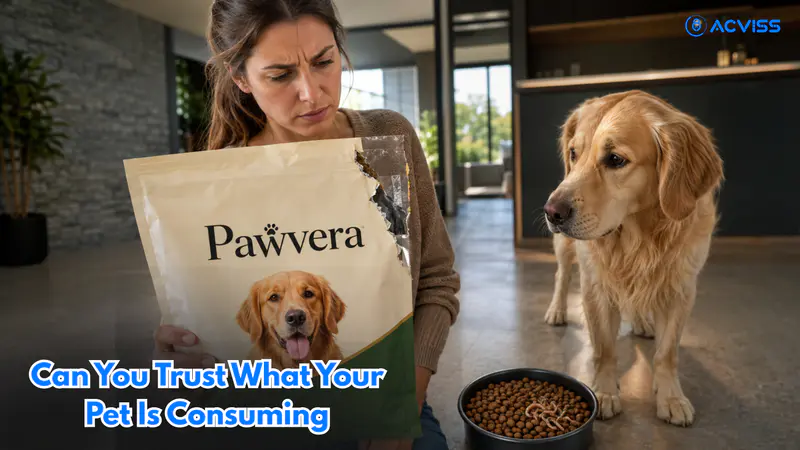
India's pet care market is growing rapidly, but the industry's biggest challenge may not be nutrition, innovation, or even competition. It may be trust. As pet owners spend more on premium food, specialised supplements, prescription medicines, therapeutic diets, and wellness products, the ability to verify what is actually being purchased has become increasingly difficult.
The issue extends far beyond counterfeit pet food. Today's risks include fake supplements, adulterated wellness products, unauthorised veterinary medicines, grey-market imports, and lookalike products sold through online marketplaces. In a category where consumers cannot independently verify ingredients, potency, or authenticity, product safety and product authenticity are becoming inseparable concerns.
India's Pet Care Market Is Becoming Increasingly Premium
The Indian pet care sector is undergoing a structural transformation. Industry projections estimate the market will grow from approximately $755 million in 2024 to nearly $1.28 billion by 2030, supported by rising pet ownership, urbanisation, increasing disposable incomes, and changing attitudes towards animal welfare.
Food continues to account for the largest share of spending, representing roughly 85% of the overall market. However, some of the fastest growth is occurring in adjacent categories. Joint health supplements, probiotics, breed-specific nutrition, prescription diets, skin and coat formulations, anxiety-management products, and wellness supplements are becoming increasingly common in household purchasing decisions.
This shift has important implications for manufacturers and regulators alike.
Historically, pet care spending focused on basic nutrition and routine veterinary care. Today's consumers are purchasing products that resemble human healthcare categories. A senior dog may consume a prescription diet, a mobility supplement, probiotics, pain medication, and a skin-health formulation simultaneously. Each product introduces its own supply chain, sourcing, compliance, and authenticity considerations.
The result is a market where trust is no longer confined to the brand. It must extend to every ingredient, every batch, every distribution channel, and every seller involved in delivering the product.
The Counterfeit Problem Extends Beyond Pet Food

Pet food receives most of the attention when discussions around authenticity arise. However, limiting the conversation to food overlooks a broader challenge emerging across the pet care ecosystem.
Counterfeit activity is increasingly affecting:
Dry and wet pet food
Therapeutic diets
Joint health supplements
Omega-3 products
Probiotic formulations
Calming supplements
Veterinary medications
Flea and tick treatments
CBD-based wellness products
Nutritional additives
Each category presents different risks.
A counterfeit bag of food may expose pets to inferior ingredients or contamination. A counterfeit supplement may contain lower concentrations of active ingredients than advertised. A counterfeit medication may fail to deliver treatment altogether or introduce harmful substances that create entirely new health risks.
The underlying problem remains consistent across all categories. Consumers are often purchasing products they cannot independently verify.
What Is Actually Inside Counterfeit Pet Food?
One of the most dangerous assumptions surrounding counterfeit pet food is that it merely contains lower-quality ingredients. The reality is often more complex.
Counterfeit operators frequently focus on reducing production costs while preserving the appearance of a legitimate product. Premium proteins may be substituted with lower-grade alternatives. Nutritional additives may be reduced or removed entirely. Ingredients sourced from verified suppliers may be replaced with materials of uncertain origin.
The 2007 global pet food contamination crisis remains one of the industry's most important lessons. Thousands of pet illnesses and deaths were linked to ingredients contaminated with melamine and cyanuric acid. Investigations later revealed that these substances had been introduced to artificially inflate apparent protein content during testing.
What made the incident particularly significant was not simply the contamination itself. It exposed how difficult it can be to detect problems once compromised ingredients enter complex supply chains.
The same lesson continues to apply today.
When ingredient verification fails at any stage of the supply chain, the consequences may not become visible until products reach consumers.
The Growing Risk Around Pet Supplements

The supplement category presents a different challenge.
Many supplements operate within a regulatory environment that differs substantially from prescription medicines. Product claims often focus on wellness outcomes rather than treatment outcomes, creating a grey area where quality assessment becomes more difficult for consumers.
Consider a mobility supplement marketed for ageing dogs.
The product may claim to contain glucosamine, chondroitin, omega fatty acids, or specialised botanical extracts. While the ingredients sound familiar, most consumers have no practical way to determine whether the product contains the advertised concentrations or whether those ingredients meet expected quality standards.
Counterfeit versions exploit precisely this uncertainty.
A bottle may look authentic. The label may appear legitimate. The packaging may include ingredient lists, dosage recommendations, and marketing claims that closely resemble the original product.
Yet the actual contents may differ significantly from what consumers believe they are purchasing.
This becomes especially problematic because supplements are often consumed over extended periods. If a product fails to deliver expected results, pet owners may attribute the issue to age, disease progression, or individual variation rather than authenticity concerns.
Veterinary Medicines Carry Much Higher Stakes
Food and supplements primarily affect nutrition and wellness. Veterinary medicines affect treatment outcomes. The distinction is important.
Animals suffering from arthritis, heart disease, kidney disorders, diabetes, epilepsy, or chronic infections often depend on carefully managed treatment plans. Counterfeit medications introduce uncertainty into those plans by creating a gap between what veterinarians prescribe and what pets ultimately receive.
International investigations have identified counterfeit veterinary products containing hazardous substances, including industrial fillers, toxic compounds, and unapproved ingredients. Even when counterfeit products are not overtly toxic, incorrect dosages or missing active ingredients can undermine treatment effectiveness.
One of the biggest challenges is that counterfeit medicines increasingly resemble genuine products.
Packaging technology has become more sophisticated. Labels are easier to replicate. Distribution channels have become more fragmented.
Visual inspection alone is no longer a reliable defence.
Why Senior Pets Are Particularly Vulnerable
Senior pets often represent the highest-value segment within the pet care market. They also represent one of the most vulnerable.
Older animals frequently consume multiple products simultaneously, including prescription medicines, mobility supplements, renal-support diets, digestive formulations, and pain-management products. The interaction between these products can make it difficult to identify the root cause of emerging health issues.
If a senior dog experiences declining mobility, reduced appetite, or abnormal bloodwork results, veterinarians may initially investigate disease progression rather than product authenticity.
Counterfeit exposure therefore becomes harder to detect.
In many cases, problems remain hidden because symptoms overlap with the natural ageing process.
This creates a situation where counterfeit products may circulate for extended periods before concerns are raised.
Why Most Counterfeit Incidents Go Unreported
One of the industry's least discussed realities is that many counterfeit incidents never become counterfeit investigations.
The typical sequence rarely begins with authentication concerns.
A pet develops symptoms. A veterinarian assesses the condition. The owner changes products. Treatment is adjusted. Life moves on.
At no point does anyone necessarily question whether the product itself was genuine.
This creates a major visibility challenge for brands.
The absence of complaints does not necessarily indicate the absence of counterfeit activity. It may simply indicate that counterfeit exposure was never identified as the underlying cause.
For manufacturers, this means traditional reporting mechanisms often provide an incomplete picture of marketplace risk.
How Fake Pet Products Enter the Market
Counterfeit pet products rarely move directly from a fraudulent manufacturer to a consumer. Most reach the market through a combination of fragmented distribution channels, unauthorised sellers, inventory diversion, and digital marketplaces that prioritise scale over verification.
Understanding how products enter circulation is essential because effective brand protection begins long before a consumer encounters a counterfeit item.
1. E-Commerce Has Expanded Both Access and Risk
The rapid growth of e-commerce has transformed the pet care industry. Consumers can now purchase food, supplements, medications, grooming products, and wellness items with a few taps on a mobile device.
While this convenience benefits legitimate brands and consumers, it also creates opportunities for bad actors.
A seller can establish an online storefront, list products under multiple accounts, source inventory from unauthorised channels, and reach customers across multiple cities without operating a physical retail network. Even when counterfeit listings are removed, new listings frequently emerge under different seller identities.
This creates a continuous enforcement challenge.
Many brands discover that counterfeit management is not a one-time exercise. It requires ongoing marketplace monitoring, seller identification, evidence collection, takedown processes, and escalation workflows.
2. Grey Market Imports Create Authenticity Challenges
Not every problematic product is necessarily counterfeit.
Grey market products often originate from genuine manufacturers but enter a market through unauthorised distribution channels. These products may bypass official importers, approved distributors, or regional sales networks.
The issue is not always the product itself. The issue is visibility.
Brands often lose insight into:
Storage conditions
Transportation environments
Expiry management
Product handling practices
Regional compliance requirements
For products such as supplements and medications, where environmental conditions can affect efficacy, the lack of visibility creates significant quality and safety concerns.
3. Inventory Diversion Is More Common Than Many Brands Realise
One operational reality that frequently surprises pet care brands is inventory diversion.
A product intended for one geography may appear in another. Distributor-exclusive inventory may surface on online marketplaces. Products allocated to specific channels may reappear through unauthorised sellers.
These incidents do not always involve counterfeit products, but they often create the same business consequences:
Pricing erosion
Channel conflict
Consumer confusion
Compliance challenges
Increased counterfeit exposure
Without product traceability, identifying the source of these leakages becomes extremely difficult.
The Regulatory Landscape Remains a Work in Progress

The pet care industry's growth has outpaced regulatory development in many markets, including India.
While frameworks exist for food safety, animal health, and pharmaceutical oversight, the broader pet care ecosystem often operates across multiple regulatory domains simultaneously.
1. Pet Food Standards Exist, but Adoption Varies
India's Bureau of Indian Standards introduced IS 11968:2019 to establish nutritional, safety, hygiene, and labelling specifications for pet food.
However, unlike certain mandatory regulatory frameworks, these standards remain largely voluntary.
This creates variability across the market.
Larger manufacturers often implement extensive quality assurance programmes, supplier audits, ingredient testing protocols, and traceability systems. Smaller operators may not maintain the same level of oversight.
The result is an uneven operating environment where product quality can vary significantly between manufacturers.
2. Veterinary Products Face Additional Regulatory Requirements
Products making therapeutic claims generally require additional scrutiny.
Veterinary medicines, flea and tick treatments, and certain health-related formulations may fall under regulatory oversight that differs substantially from conventional food products.
This complexity creates challenges for both regulators and consumers.
A product may appear similar on a shelf while being subject to entirely different compliance requirements behind the scenes.
For counterfeiters, such complexity creates opportunities to exploit consumer uncertainty.
Why Traditional Anti-Counterfeit Measures Are Struggling
For years, brands relied on visual security features to distinguish genuine products from counterfeit alternatives.
These measures included:
Holograms
Security labels
Printed serial numbers
Static QR codes
While still useful, these approaches are becoming less effective against modern counterfeit operations.
The reason is simple.
Counterfeiters have become better at copying packaging than consumers have become at detecting it.
A hologram that once provided reassurance can now be replicated with surprising accuracy. A QR code can be copied. A serial number can be duplicated. Even packaging materials themselves have become easier to imitate.
The challenge facing pet care brands is no longer preventing packaging duplication.
The challenge is preventing identity duplication.
Why Product Authentication Is Becoming Essential

Authentication changes the conversation from appearance to verification.
Rather than asking whether a product looks genuine, authentication systems allow consumers, distributors, and brands to verify whether a product actually is genuine.
This distinction becomes increasingly important in categories where product quality cannot be visually assessed.
A consumer cannot determine the authenticity of a probiotic formulation by looking at the bottle. A pet owner cannot verify the potency of a joint supplement through visual inspection. A veterinarian cannot immediately identify whether a medicine contains the correct active ingredients simply by examining the packaging.
Authentication provides a mechanism to bridge that trust gap.
1. Packaging-Level Authentication
At the packaging level, each product receives a unique identity.
Consumers can scan the product and verify its authenticity through a simple verification workflow. Unlike conventional static codes, modern systems increasingly rely on non-cloneable security technologies designed to resist duplication.
For brands, this creates an important advantage.
Verification is no longer limited to internal quality processes. Consumers themselves become part of the authentication ecosystem.
2. Batch-Level Product Verification
The next evolution involves connecting authentication with production intelligence.
A verified product can provide access to:
Manufacturing information
Batch details
Production timelines
Supply chain records
Distribution data
This transforms authentication from a simple anti-counterfeiting tool into a broader product verification capability.
Why Traceability Matters Beyond Counterfeit Detection
One misconception is that track and trace systems exist solely to identify fake products.
In practice, some of the greatest value comes from operational visibility.
When a supposedly Bengaluru-bound shipment begins generating consumer scans across multiple regions within days of distribution, brands gain early warning that inventory diversion may be occurring.
When unexpected verification patterns emerge, brands can investigate:
Distribution leakages
Grey market activity
Channel violations
Inventory irregularities
This visibility becomes increasingly valuable as supply chains grow more complex.
Product traceability also supports:
Recall management
Supplier accountability
Product safety investigations
Audit readiness
As global supply chains move towards greater transparency, traceability is becoming a strategic business capability rather than a compliance exercise.
Why Authentication Deployments Often Fail
Many brands assume that implementing authentication technology automatically solves counterfeit problems. Reality is rarely that straightforward.
Successful deployments depend as much on operational execution as they do on technology selection.
1. Treating Authentication as a Packaging Project
One common mistake is assigning ownership exclusively to packaging teams.
Authentication programmes affect multiple functions:
Manufacturing
IT systems
Distribution management
Customer engagement
Compliance
Brand protection
When deployment ownership remains too narrow, adoption challenges emerge quickly.
2. Poor Distributor Participation
Traceability systems depend on participation throughout the supply chain.
If distributors fail to follow scanning procedures, inventory recording protocols, or verification workflows, visibility gaps appear almost immediately.
Many authentication programmes struggle not because the technology fails, but because operational participation remains inconsistent.
3. Lack of Consumer Engagement
Even the most sophisticated authentication platform becomes ineffective if consumers never use it.
Brands often underestimate the importance of educating customers about verification workflows.
Verification adoption improves significantly when consumers receive a clear value proposition, whether through authenticity assurance, product information, customer engagement benefits, or loyalty incentives.
What Effective Pet Care Brand Protection Looks Like
Modern pet care brand protection requires a layered approach.
Solutions such as Acviss Certify allow manufacturers to establish unique, non-cloneable identities for products at the packaging level. Combined with broader brand protection capabilities, authentication workflows, marketplace monitoring, customer engagement programmes, and loyalty initiatives, these technologies create an ecosystem where trust becomes measurable rather than assumed.
Conclusion
As India's pet care industry continues its rapid growth, the conversation around product quality must evolve beyond nutrition labels and marketing claims. Whether the product is a premium pet food formulation, a mobility supplement, a wellness product, or a prescription medication, the fundamental question remains the same: can consumers trust what they are buying?
Counterfeit food, fake supplements, unauthorised medicines, and grey-market products all exploit the same weakness. Consumers cannot independently verify what sits inside the package.
For pet care brands, this is no longer just a trademark issue or a marketplace enforcement challenge. It is a product safety issue, a consumer trust issue, and increasingly a business resilience issue. Product authentication, brand verification, supply chain traceability, and proactive brand protection are becoming critical components of modern pet care operations.
The future of pet care trust will belong to brands that can do more than make claims. It will belong to brands that can prove them.
