Inventory strategy rarely makes headlines. Yet in manufacturing plants, distribution hubs and boardrooms, the method used to move stock can quietly determine whether a business preserves margin, complies with regulation, protects its Trademark, or faces product recalls.
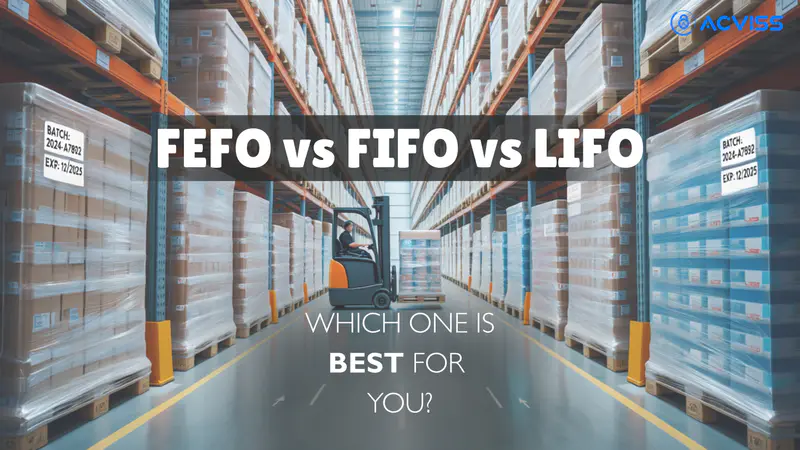
FIFO. LIFO. FEFO.
They appear to be accounting conventions. In reality, they are operational doctrines that shape Supply chain management, production line discipline, ERP configuration and ultimately Brand protection.
For sectors such as pharma, food, chemicals and high-value manufacturing, choosing the wrong inventory logic is not a minor inefficiency. It is a systemic risk.
This article examines the structural differences between FIFO, LIFO and FEFO, their impact on manufacturing and inventory management, and why advanced Track and trace technologies, Product traceability and non-cloneable identification systems are redefining how modern supply chains must operate.
Why Inventory Rotation Has Become a Strategic Issue
Global supply chains are longer and more complex than at any point in industrial history. A finished product may pass through:
Multiple raw material suppliers
Contract manufacturers
Regional warehouses
Third-party logistics partners
Cross-border regulatory environments
At each stage, inventory rotation decisions influence:
Product safety
Working capital efficiency
Waste levels
Compliance exposure
Customer satisfaction
Brand Authentication
Industry data suggests that poor inventory management contributes to 8 to 12 per cent revenue leakage in manufacturing sectors through write-offs, expiry losses and unplanned discounting. In pharma alone, product recalls cost firms millions per incident, excluding reputational damage.
Inventory logic is no longer a warehouse preference. It is a core business control.
FIFO: First In, First Out
Definition
FIFO, or First In, First Out, means that the inventory received earliest is dispatched or consumed first. The assumption is chronological ageing. Older stock moves out before newer stock.
Where FIFO Is Applied
FIFO is common in:
Food manufacturing
Retail distribution
Electronics assembly
Packaging industries
Most ERP systems default to FIFO because it is straightforward to configure and aligns with basic stock ageing principles.
Operational Impact on Manufacturing
On a production line, FIFO ensures that raw materials are consumed in the order they were received. This reduces the likelihood of obsolete inventory building up unnoticed.
For example:
Raw material batch A arrives in January
Raw material batch B arrives in February
January stock is consumed first
In stable supply chains with consistent shelf life across batches, FIFO works efficiently.
Limitations of FIFO
FIFO assumes that the arrival date equals priority. This is not always true.
Consider pharma or chemical manufacturing. Two batches may arrive on different dates but have different expiry timelines due to storage conditions or production variability.
FIFO does not account for:
Expiry date variations
Storage sensitivity
Regulatory compliance deadlines
Product traceability mandates
In regulated environments, relying purely on FIFO can compromise Product safety and Product Verification integrity.
LIFO: Last In, First Out
Definition
LIFO, or Last In, First Out, means the most recently received inventory is used or dispatched first.
This method is often adopted for financial or tax reporting reasons rather than physical inventory optimisation.
Where LIFO Is Used
LIFO is generally applied in:
Commodity trading
Non-perishable goods industries
Certain financial reporting contexts
In physical warehouse operations, LIFO is less practical for perishables.
Risks in Manufacturing and Supply Chains
For businesses dealing with products that degrade, expire or face regulatory oversight, LIFO presents significant risks.
Older inventory may remain buried in storage, leading to:
Expiry losses
Compliance breaches
Recall exposure
Reduced customer satisfaction
In sectors like pharma, where Product Authentication and Product Verification are mandatory under serialisation frameworks, LIFO can conflict with regulatory expectations.
LIFO does not support Product traceability in a risk-aware manner. It is often incompatible with strict Track and trace environments.
FEFO: First Expired, First Out

Definition
FEFO, or First Expired, First Out, prioritises inventory based on expiry date rather than arrival date. The batch with the nearest expiry moves first, regardless of when it entered the warehouse.
Why FEFO Matters
FEFO is critical in:
Pharma manufacturing
Food and beverage production
Nutraceuticals
Cosmetics
Agrochemicals
Chemicals
In these industries, expiry determines product safety, regulatory compliance and Brand Verification credibility.
Industry reports estimate that up to 15 per cent of perishable inventory waste is caused by inadequate expiry management. FEFO directly addresses this issue.
Operational Implications
FEFO requires:
Accurate batch-level expiry data
ERP systems configured to prioritise expiry
Real-time visibility across warehouses
Integrated Track and trace capabilities
Unlike FIFO, FEFO cannot operate effectively without a precise data infrastructure.
If ERP data is inaccurate or delayed, FEFO fails.
Comparing FIFO, LIFO and FEFO in Practice
For highly regulated industries, FEFO offers superior alignment with Product safety, Brand Authentication and compliance obligations such as EUDR.
The ERP Dimension: Where Theory Meets Execution
Inventory logic is only as strong as the ERP systems supporting it.
Modern ERP platforms manage:
Batch numbers
Serialisation
Expiry dates
Manufacturing records
Distribution data
Recall workflows
Implementing FEFO requires ERP configuration that dynamically selects inventory based on expiry metadata, not just receipt timestamp.
Without digital accuracy, manual overrides creep in. This creates blind spots in Product traceability and weakens IP Protection frameworks.
Inventory Rotation and Brand Protection
Inventory strategy intersects directly with Brand protection.
Expired or counterfeit products in the market can:
Damage Brand Authentication credibility
Undermine Trademark Protection
Trigger regulatory penalties
Erode customer engagement
Reduce customer satisfaction
Counterfeit infiltration further complicates inventory logic. Fake products introduced into distribution channels distort ERP data and corrupt FEFO prioritisation.
This is where Anti-counterfeiting solutions and non-cloneable technologies become critical.
The Role of Track and Trace in Modern Inventory Systems

Traditional inventory systems relied on barcodes. Barcodes can be duplicated. In high-risk sectors, this creates vulnerability.
Advanced Track and trace technologies now support:
Unit-level serialisation
Real-time duplication detection
Digital Product Authentication
When combined with FEFO, these systems ensure that expiry-based prioritisation is applied only to legitimate inventory.
Without Product Authentication controls, FEFO can inadvertently circulate counterfeit goods that mimic valid batches.
Integrating Non-Cloneable Identity into FEFO Workflows
In sophisticated supply chains, inventory logic must integrate with Brand Authentication frameworks.
Non-cloneable identity systems ensure that each product unit carries a secure, unique digital identity. When connected to a track and trace platform such as Origin, this enables:
Immutable Product traceability across the supply chain
Real-time verification of product legitimacy
Secure integration with ERP systems
Automated FEFO sequencing based on verified data
This strengthens:
Product Verification
Brand Verification
IP Protection
Trademark Protection
Origin acts as a track and trace plugin that integrates with existing ERP infrastructure. It ensures that FEFO is not merely a warehouse rule but a digitally secured operational strategy.
In sectors such as pharma, where serialisation and Product Authentication are mandatory, this integration is particularly significant.
Production Line Implications
Inventory rotation affects more than warehouses. It influences production line stability.
Incorrect batch sequencing can result in:
Quality deviations
Compliance breaches
Production downtime
Costly rework
By integrating FEFO logic with verified, non-cloneable identities:
Raw materials nearing expiry are prioritised
Automated alerts prevent misuse
Quality documentation aligns with real-time data
Audit trails become tamper-resistant
This improves operational discipline and reduces recall risk.
Financial and Strategic Consequences
Inventory mismanagement impacts:
Cash flow
Insurance costs
Write-offs
Distributor trust
Market access
In global supply chains facing EUDR and similar traceability mandates, compliance is directly tied to digital Product traceability capabilities.
Brands that treat FEFO as a strategic capability rather than a warehouse technique are better positioned to:
Reduce waste
Strengthen Brand protection
Improve customer satisfaction
Enhance customer engagement through transparent Product Verification
Choosing the Right Approach
The appropriate method depends on:
Product perishability
Regulatory intensity
Supply chain complexity
Counterfeit exposure
ERP maturity
For durable goods with minimal degradation risk, FIFO may suffice.
For financial reporting contexts, LIFO may remain relevant.
For regulated, expiry-sensitive industries facing counterfeit risk, FEFO integrated with advanced Track and trace technologies and non-cloneable Product Authentication systems offers the most resilient framework.
Inventory Strategy Is Now a Brand Strategy
FIFO, LIFO and FEFO represent different philosophies of inventory management. One is chronological. One is financial. One is risk-driven.
In modern manufacturing, especially in pharma and regulated sectors, inventory logic must align with Product safety, Product Authentication, and robust Brand protection strategies.
FEFO, supported by ERP integration, Track and trace infrastructure, and secure, non-cloneable identity technologies such as Origin, creates a disciplined, transparent, and tamper-resistant supply chain.
Interested to learn more about how advanced Product traceability and Brand Authentication solutions can strengthen your operations? Get in touch with us.