How Free Trade Zones Became Counterfeit Highways: The Global Trade Legal Loophole
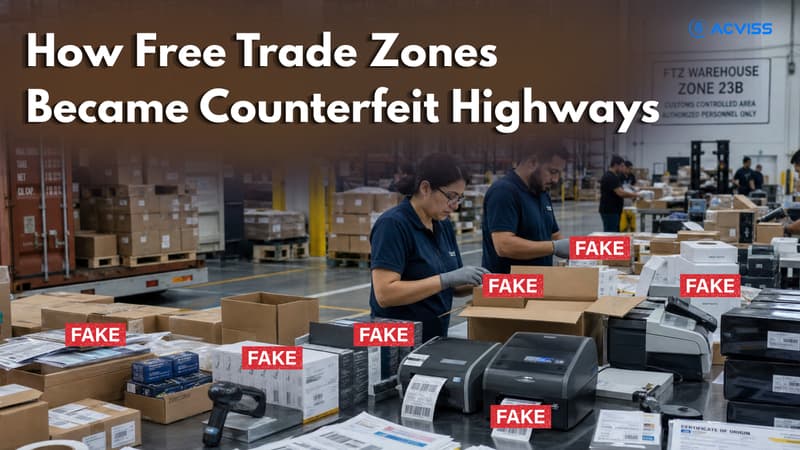
Global commerce depends on speed. Modern supply chains move millions of containers across borders every day, carrying everything from pharmaceuticals and automotive parts to electronics, luxury goods, chemicals, and food products. To keep trade flowing efficiently, governments created free trade zones, commonly known as FTZs, where goods can be imported, stored, assembled, repackaged, and re-exported with reduced customs procedures and tax advantages.
These zones were designed to accelerate economic growth. Instead, many have quietly evolved into some of the most exploited weak points in global trade.
Today, several of the world’s most significant counterfeit transit operations rely heavily on free trade zones. Counterfeit pharmaceuticals are relabelled inside bonded warehouses. Fake electronics are layered among authentic inventory. Illicit automotive components are repackaged with forged certificates of origin. Luxury goods receive new labels and documentation before entering legitimate distribution channels.
For brand owners, the danger is no longer limited to counterfeit production alone. The larger threat lies in how counterfeit goods move invisibly through legitimate supply chain infrastructure.
This is where modern FTZ brand protection becomes critical.
What Is a Free Trade Zone and Why Does It Exist?
A free trade zone is a designated economic area where goods can be imported, handled, manufactured, and re-exported under simplified customs and regulatory procedures. Governments establish FTZs to encourage foreign investment, attract logistics businesses, increase exports, and position their countries as regional trade hubs.
Some of the world’s largest and most influential FTZs include:
Jebel Ali Free Zone
Colón Free Trade Zone
Shenzhen Special Economic Zone
King Abdullah Economic City
These zones are not inherently illegal or problematic. In fact, they are essential components of global trade infrastructure. They help reduce bureaucracy, improve shipping efficiency, lower operating costs, and support industrial growth.
A shipment entering an FTZ may avoid immediate customs duties because the goods are technically considered outside the national customs territory until they formally enter the domestic market. This flexibility benefits manufacturers, exporters, and logistics operators.
However, the same reduced oversight that improves efficiency also creates a structural opportunity for organised counterfeit networks.
The Structural Weakness Inside FTZs
Counterfeiters thrive where visibility declines.
Inside many FTZs, customs inspections are less intensive, documentation requirements are simplified, and cargo movement is designed for speed rather than scrutiny. Large volumes of goods move through warehouses, transhipment hubs, and container yards with minimal physical inspection.
This creates an environment where counterfeit operations can blend into legitimate commerce.
According to the TT Club and BSI Connect SCREEN report on cargo crime in Gulf countries, 76% of cargo theft incidents across the Gulf region occur at warehouses or facilities rather than during transit. In the UAE, that figure rises to 87%. These statistics reveal an important truth: the biggest vulnerabilities are no longer only on roads or ports. They exist inside logistics ecosystems themselves.
Free trade zones amplify this risk because they provide:
1. Reduced Customs Intervention
FTZs are specifically designed to minimise administrative delays. Containers often move with limited inspection frequency, especially when they are intended for re-export.
2. Repackaging Opportunities
Counterfeit goods can be unpacked, relabelled, repacked, and redistributed without attracting the same level of regulatory scrutiny found in conventional customs environments.
3. Documentation Manipulation
Certificates of origin, invoices, shipping manifests, and product declarations can be altered or forged to disguise the true nature or origin of goods.
4. Layering Tactics
Criminal groups frequently place counterfeit goods alongside genuine products within the same shipment or warehouse. This technique makes detection significantly harder during random inspections.
5. Jurisdictional Complexity
Many FTZs involve overlapping legal frameworks, private operators, international logistics providers, and multiple customs authorities. Enforcement responsibility often becomes fragmented.
For counterfeit operators, these are not accidental weaknesses. They are operational advantages.
How Counterfeit Goods Are Repackaged Inside FTZs
One of the least understood aspects of free trade zone counterfeiting is the transit and repackaging model.
Contrary to popular belief, counterfeit products are not always manufactured and shipped directly to the end market in their final form. Increasingly, they move through multiple countries and logistics points before reaching consumers.
A typical counterfeit transit operation may look like this:
Stage 1: Manufacturing
Counterfeit products are manufactured in one country, often designed to imitate high-demand branded goods such as:
Pharmaceuticals
Consumer electronics
Luxury accessories
Cosmetics
Food products
Chemicals
Stage 2: Shipment to an FTZ
The products are shipped to a free trade zone under vague or misleading cargo descriptions.
For example:
“Electronic accessories”
“Packaging materials”
“Industrial components”
Stage 3: Relabelling and Repackaging
Inside FTZ warehouses:
Fake labels are applied
Packaging is upgraded
Product verification stickers are added
Barcodes are altered
Country-of-origin information is changed
Trademark markings are attached
This process is often referred to as “round-tripping”.
Counterfeiters may also mix fake goods with authentic inventory to reduce suspicion.
Stage 4: Re-export Into Legitimate Markets
Once repackaged, the goods are re-exported into:
Retail supply chains
E-commerce fulfilment networks
Wholesale distribution channels
Third-party marketplace sellers
At this stage, the counterfeit product may appear operationally legitimate.
The packaging looks authentic.
The shipping documents appear compliant.
The logistics trail seems clean.
But the product itself remains fraudulent.
This is why modern product authentication and product verification technologies are increasingly necessary across global supply chains.
The Most Documented FTZ Counterfeit Hubs Globally

Not all free trade zones are associated with illicit trade. However, several hubs have repeatedly appeared in enforcement reports, customs investigations, and international anti-counterfeiting studies.
Dubai and Jebel Ali
Dubai and Jebel Ali Free Zone remain among the world’s most important re-export hubs.
The OECD counterfeit goods in FTZ report identifies the region as a significant transit point for counterfeit goods, including:
Electronics
Pharmaceuticals
Apparel
Illicit tobacco products
The scale of operations in these logistics zones creates enormous complexity for enforcement agencies. Millions of containers pass through annually, making comprehensive inspection impossible.
The report also highlighted that electronics accounted for 43% of targeted cargo thefts in the UAE.
Saudi Arabian Economic Zones
King Abdullah Economic City and logistics zones near Jeddah Islamic Port have faced increasing scrutiny over counterfeit transit risks.
Counterfeit pharmaceuticals originating from India, China, and the UAE have reportedly moved through these routes toward African markets.
Automotive parts represented 20% of targeted theft categories in Saudi Arabia, while pharmaceuticals accounted for 8%.
Colón Free Trade Zone
Colón Free Trade Zone is one of the largest free trade zones in the Americas and has frequently appeared in investigations involving counterfeit apparel, electronics, and luxury goods moving across Latin America.
Asian FTZ Networks
Several Asian trade and manufacturing hubs remain vulnerable to counterfeit repackaging due to high trade volumes and fragmented supplier ecosystems.
This is particularly concerning for industries such as:
Pharma
Semiconductors
Automotive
Chemicals
Consumer electronics
The complexity of regional manufacturing networks makes product traceability increasingly difficult without digital verification systems.
How Counterfeit Goods Re-enter Legitimate Supply Chains
One of the biggest misconceptions about counterfeiting is that fake goods are sold only through obvious black markets.
Modern counterfeit operations are far more sophisticated.
Many counterfeit goods enter entirely legitimate supply chains after leaving FTZs.
This happens through several mechanisms.
1. Third-Party Distribution Networks
Distributors purchasing excess inventory or discounted stock may unknowingly source counterfeit products from intermediaries connected to FTZ operations.
2. E-commerce Fulfilment
Online marketplaces often rely on decentralised seller ecosystems. Counterfeit products can enter fulfilment centres with little physical verification.
3. Grey Market Diversion
Products intended for one market are redirected into another market with altered packaging or documentation.
4. Spare Parts Ecosystems
Automotive and industrial supply chains are particularly vulnerable because buyers prioritise immediate availability and price competitiveness.
5. Emergency Procurement
During crises, shortages often reduce verification standards. This was especially visible during the pandemic-era surge in counterfeit pharma and medical products.
The re-entry mechanism matters because it transforms counterfeit goods from a customs issue into a broader supply chain management and customer safety problem.
A counterfeit brake component, vaccine, industrial chemical, or electrical device is no longer merely an IP violation. It becomes a direct operational and public safety risk.
Why Traditional Enforcement Alone Is No Longer Enough
For years, many brands approached counterfeiting reactively:
File a complaint
Conduct a seizure
Remove online listings
Pursue legal action
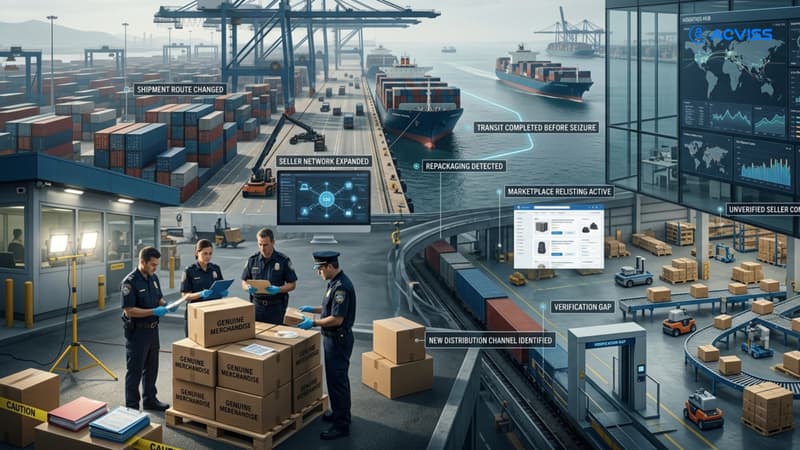
But FTZ-based counterfeiting networks move faster than traditional enforcement structures.
By the time a shipment is intercepted, the counterfeit operation may already have shifted routes, entities, or documentation trails.
This is why intelligence-led brand protection is becoming essential.
What Brand Owners Can Do Now
While governments debate regulatory reform, brands cannot afford to wait.
Modern anti-counterfeiting solutions require a combination of physical security, digital verification, supply chain intelligence, and online monitoring.
1. Customs Recordal Across Key Markets
Brands should register trademarks and IP assets with customs authorities in high-risk jurisdictions.
Trademark Protection and IP Protection programmes help customs officers identify suspicious shipments more effectively.
2. Deploy Product Authentication Technologies
Secure product authentication systems using Acviss's non-cloneable identifiers, encrypted QR structures, or dynamic digital verification can help distinguish genuine products from counterfeit replicas.
This is especially critical in:
Pharma
Automotive
Consumer electronics
Chemicals
Premium food products
3. Strengthen Track and Trace Infrastructure
Track and trace systems improve supply chain traceability across manufacturing, warehousing, distribution, and retail environments.
A stronger chain of custody reduces opportunities for counterfeit insertion.
Modern track and trace capabilities also support:
Product verification
Brand verification
Brand authentication
Recall management
Product safety compliance
Supply chain management visibility
4. Monitor High-Risk Transit Corridors
Brands increasingly need shipment intelligence capabilities that identify:
Unusual routing patterns
High-risk FTZ movement
Suspicious repackaging activity
Grey market diversion
5. Integrate Online and Offline Brand Protection
Counterfeit operations no longer separate physical and digital commerce.
A product repackaged inside an FTZ may ultimately be sold through:
Online marketplaces
Social commerce
B2B wholesale platforms
Independent distributors
Effective Brand protection, therefore, requires crossover visibility between physical logistics and digital commerce ecosystems.
Why FTZ Reform Remains Slow
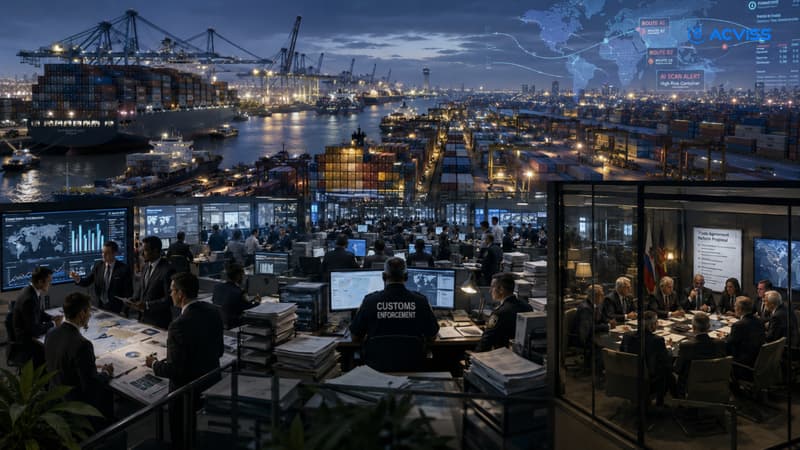
Despite growing evidence, meaningful FTZ reform has progressed slowly worldwide.
There are several reasons.
1. Economic Dependence
Many countries rely heavily on FTZs for employment, exports, and foreign investment.
2. Competitive Pressure
Governments fear stricter enforcement may push logistics operators toward competing trade hubs.
3. Enforcement Complexity
Global supply chains involve multiple jurisdictions, private operators, and varying customs standards.
4. Political Sensitivity
Large-scale inspections can disrupt trade flows and create diplomatic tensions.
As a result, many governments attempt incremental improvements rather than systemic reform.
For brands, this means the burden of defence increasingly shifts onto private sector risk management.
The Future of FTZ Brand Protection
Counterfeit networks are evolving into sophisticated logistics enterprises. They understand global shipping systems, exploit legal grey areas, manipulate documentation, and use trade infrastructure with remarkable efficiency.
Free trade zones were built to accelerate commerce.
Counterfeiters learned how to accelerate deception within them.
For brand owners, the implications are profound.
Counterfeiting is no longer only about fake products appearing on shelves. It is about invisible supply chain entry points, compromised logistics infrastructure, fraudulent repackaging operations, and weakened product traceability.
The brands that adapt fastest will be those that treat counterfeiting as a supply chain intelligence problem rather than merely a legal issue.
This requires:
Stronger product authentication
Integrated track and trace systems
Shipment intelligence
Online and offline Brand protection integration
Faster product verification workflows
Data-led enforcement strategies
The challenge is no longer simply identifying counterfeit products.
It is identifying where authenticity disappears inside the supply chain itself.
Interested in learning more?
Counterfeit risks inside global trade networks are becoming increasingly sophisticated, especially across free trade zones and high-volume transhipment hubs. Strengthening product authentication, track and trace visibility, and supply chain traceability is now essential for protecting customer trust, product safety, and brand reputation.
If you are looking to strengthen your Brand protection strategy with intelligent product verification, supply chain visibility, and anti-counterfeiting solutions, get in touch with us to explore how Acviss can help secure your products across physical and digital supply chains.