Agriculture sits at the foundation of food security, economic stability, and rural livelihoods. Yet beneath this essential industry lies a persistent and increasingly complex challenge: counterfeit and illegal agrochemical products. Across several developing markets, particularly in Asia and Africa, farmers frequently encounter pesticides, fertilisers, and crop protection products that appear legitimate but fail to perform as expected. In many cases, the issue is not agronomic conditions or application errors but the authenticity of the product itself.
For agrochemical manufacturers, the stakes extend far beyond lost revenue. Counterfeit inputs erode brand credibility, undermine regulatory compliance, disrupt supply chain management, and ultimately threaten the safety of crops, soil, and human health. At the heart of addressing this crisis lies a concept that is gaining increasing importance across industries: the creation of a digital trust layer that ensures product authentication and product verification from factory to farm.
Building such a trust layer requires a shift from traditional packaging security toward advanced product authentication technologies that empower every stakeholder in the ecosystem, especially the farmer who stands at the final point of purchase.
The Growing Crisis of Counterfeit Agrochemicals
The illegal trade of pesticides and crop protection chemicals has become one of the most pressing challenges facing global agriculture. According to multiple regulatory studies, counterfeit or unregistered pesticides account for approximately 25–30 per cent of the crop protection market in countries such as India, with the segment expanding at an estimated 20 per cent annually.
This situation creates several cascading risks across the agricultural value chain.
Economic Losses for Farmers and Brands
Farmers who unknowingly purchase counterfeit pesticides often experience poor crop protection performance, resulting in yield loss, pest resurgence, or crop damage. For smallholder farmers operating on thin margins, such losses can be devastating.
At the same time, legitimate manufacturers face significant financial damage through brand dilution, trademark misuse, and IP violations. Counterfeiters frequently replicate packaging designs, logos, and trademarks, making it difficult for retailers and farmers to distinguish authentic products from fraudulent ones.
The consequences go far beyond financial impact. Weak product verification systems can undermine years of research investment and damage the brand trust that companies have built over decades.
When Product Safety and Environmental Protection Are Compromised
Counterfeit agrochemicals do not merely fail to deliver performance. They often contain unregulated or incorrect formulations, posing serious risks to farmers, consumers, and ecosystems.
Many fake pesticides contain:
Incorrect concentrations of active ingredients
Toxic contaminants not approved by regulators
Completely different chemical compositions
Such inconsistencies threaten product safety, soil health, biodiversity, and water systems. In certain cases, they may also lead to long-term pesticide resistance among pests, worsening agricultural challenges.
The implications stretch beyond agriculture into public health and environmental sustainability.
Regulatory Pressure Is Increasing Worldwide
Recognising the scale of the problem, regulators and international organisations have begun introducing new frameworks designed to strengthen product traceability and combat illegal trade.
The OECD’s Global Response
The Organisation for Economic Co-operation and Development (OECD) has introduced coordinated strategies to tackle the illegal pesticide trade through the OECD Network on Illegal Trade of Pesticides (ONIP).
Key initiatives include:
Rapid Alert Systems for identifying suspicious shipments
Best Practice Guidance for monitoring the pesticide lifecycle
International collaboration between customs authorities and regulators
These measures aim to improve cross-border supply chain monitoring and strengthen enforcement.
The Rise of Digital Product Passports
Within the European Union, the Digital Product Passport (DPP) is emerging as a major regulatory milestone under the Ecodesign for Sustainable Products Regulation.
This framework requires products to carry a digital identity containing:
Product ID and batch numbers
Manufacturing and sourcing details
Environmental footprint data
Lifecycle and recycling information
Although initially targeting sectors such as electronics and chemicals, the concept is expected to influence agrochemical traceability systems globally. The DPP effectively creates a digital identity for every product, reinforcing product traceability and compliance.
Why Agrochemicals Need a Trust Layer
Traditional anti-counterfeiting strategies in agrochemicals have relied on overt packaging features such as holograms, security inks, and tamper-evident seals. While useful, these measures are increasingly vulnerable to sophisticated counterfeit networks.
Modern counterfeiting operations can replicate packaging details with alarming precision. What was once a reliable indicator of authenticity can now be duplicated at scale.
A trust layer goes beyond packaging security. It integrates digital product authentication, supply chain traceability, and real-time verification tools that connect manufacturers, distributors, retailers, and farmers through a shared system of transparency.
Such a framework ensures that authenticity can be verified at any stage of the product lifecycle.
Building Product Authentication Into the Agrochemical Supply Chain

To effectively combat counterfeiting, agrochemical companies must embed product authentication technologies directly into their manufacturing and distribution processes.
This involves creating a unique digital identity for every product unit or batch, enabling traceability across the entire supply chain.
A robust authentication infrastructure typically supports:
Product authentication at the manufacturing stage
Product verification by distributors and retailers
Brand authentication by farmers at the point of purchase
Real-time monitoring of suspicious supply chain activity
These capabilities transform authentication from a passive security feature into an active brand protection system.
Empowering Farmers Through Direct Product Verification
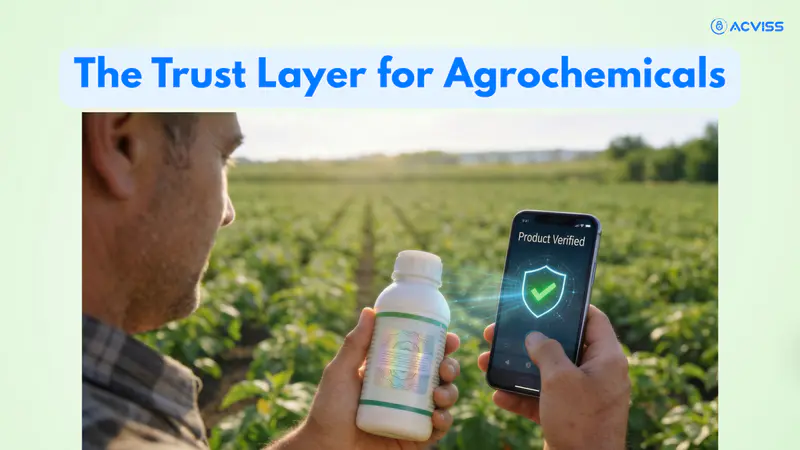
One of the most powerful aspects of modern authentication technology is the ability to place verification tools directly into the hands of farmers.
A farmer purchasing a pesticide should not have to rely solely on visual inspection or trust in a retailer. With digital verification systems, farmers can independently confirm whether a product is genuine.
This capability creates several benefits.
First, it improves customer satisfaction by providing confidence that the product will perform as intended.
Second, it strengthens customer engagement, encouraging farmers to interact directly with brands rather than relying solely on intermediaries.
Third, it creates valuable market intelligence for manufacturers, helping them identify suspicious distribution patterns and counterfeit hotspots.
Non-Cloneable Technology and the Future of Product Authentication

One of the most promising innovations in brand protection is the use of non-cloneable technology, which prevents counterfeiters from replicating authentication codes.
Unlike conventional QR codes that can be copied, non-cloneable identifiers generate unique, tamper-proof security codes that cannot be duplicated or reused.
This technology ensures that each product carries a digital certificate of authenticity.
When scanned, the code confirms:
Product origin and manufacturer
Batch details and manufacturing date
Distribution pathway
Verification status
If a code is duplicated or scanned from multiple locations simultaneously, the system immediately flags the activity as suspicious.
Such capabilities significantly strengthen anti-counterfeiting solutions and enhance trademark protection across supply chains.
The Role of Certify in Strengthening Brand Authentication
For agrochemical manufacturers seeking to implement a trust layer, solutions such as Certify provide a powerful foundation for product authentication and brand protection.
Certify by Acviss uses non-cloneable digital security codes embedded directly into product packaging. Each code acts as a unique identifier that can be verified instantly by farmers, distributors, and regulators.
The system enables several critical capabilities.
Authenticity Verification
Farmers can scan the security code to perform immediate product verification. The system confirms whether the product is genuine and provides key information about the manufacturer and product details.
Supply Chain Visibility
Every scan generates traceability data that helps companies track distribution flows and detect suspicious market activity.
IP and Trademark Protection
By linking each product unit to a secure digital identity, Certify helps manufacturers protect their intellectual property, trademarks, and brand reputation.
Market Intelligence
The verification data generated through farmer interactions provides insights into geographic demand patterns, helping brands improve supply chain management and distribution planning.
Through these capabilities, authentication systems become more than security tools. They become strategic assets that strengthen brand trust and customer engagement.
Digital Traceability and the Future of Agrochemical Compliance
As global regulatory expectations evolve, digital traceability is becoming essential for market access and compliance.
New frameworks such as the EU’s sustainability regulations and EUDR initiatives increasingly require companies to demonstrate transparent supply chain documentation.
Technologies that support track and trace, product traceability, and digital verification will therefore play a central role in regulatory readiness.
For agrochemical companies, investing in authentication infrastructure today not only protects brands from counterfeit threats but also prepares them for future compliance requirements.
The Strategic Value of Brand Protection in Agriculture

Brand protection in agrochemicals is often viewed primarily as a legal or security concern. In reality, it plays a far broader role in building long-term market trust.
When farmers repeatedly experience ineffective products due to counterfeiting, they lose confidence not only in individual brands but also in the broader agricultural input ecosystem.
By implementing robust product authentication and verification systems, agrochemical companies can restore that trust.
The benefits include:
Stronger brand authentication and customer loyalty
Improved product safety and environmental compliance
Greater transparency across supply chains
Enhanced protection for trademarks and intellectual property
Ultimately, brand protection becomes an essential pillar of sustainable agriculture.
Guaranteeing Authenticity Down to the Farm
Agriculture depends on trust. Farmers trust that the products they purchase will protect their crops, improve yields, and safeguard their livelihoods.
When counterfeit agrochemicals infiltrate the market, that trust is broken.
Building a digital trust layer that enables reliable product authentication, supply chain transparency, and farmer-level verification is no longer optional. It is becoming a fundamental requirement for responsible agrochemical manufacturing.
Through the integration of non-cloneable authentication technologies and advanced traceability systems such as Certify, agrochemical companies can ensure that authenticity travels with every product from factory to farm.
This approach does more than protect revenue. It protects farmers, ecosystems, and the integrity of global agriculture.
Conclusion
The fight against counterfeit agrochemicals requires a combination of regulatory action, technological innovation, and industry collaboration. As counterfeit networks grow more sophisticated, agrochemical manufacturers must adopt equally advanced anti-counterfeiting solutions.
Product authentication technologies that enable secure product verification, supply chain traceability, and farmer-level brand verification are emerging as the most effective tools in this effort.
By establishing a strong trust layer through solutions like Certify and non-cloneable authentication technologies, brands can ensure product safety, strengthen trademark protection, and rebuild farmer confidence in agricultural inputs.
A future where every farmer can instantly verify the authenticity of the products they use is not only achievable but increasingly necessary.
Interested to learn more about how product authentication and brand protection solutions can safeguard your agrochemical products? Get in touch with us to explore how we can help.