Most brands know their end consumer well. They have personas, journey maps, and consumer loyalty apps with thousands of downloads. What they often miss is that in a surprisingly large number of industries, the end consumer does not actually choose the product. Someone else does. And that person usually has no loyalty program waiting for them.
According to Gallup research, 71% of B2B customers are not emotionally attached to the companies they do business with and are willing to switch suppliers with very little friction. Despite this, the loyalty budgets in most product companies still flow almost entirely toward the end consumer, the person furthest from the actual purchase decision.
This blog makes the case for building your loyalty program around the trade channel instead. The electrician. The mechanic. The agronomist. The plumber. This blog will show you exactly how a trade channel loyalty program not only drives repeat sales when done right. It becomes one of the most powerful anti-counterfeiting tools a brand can have.
The Influence Gap: Who Actually Drives the Purchase Decision
There is a gap in most B2B-heavy industries between the person who pays for a product and the person who chooses it. In technical categories, that gap is enormous.
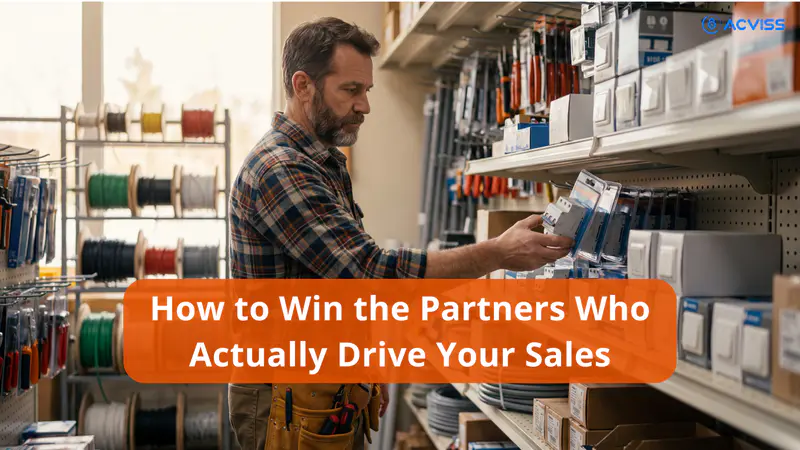
The homeowner calling in an electrician is not specifying the brand of switchgear. The farmer picking up a bag of fertiliser at the local agri-input shop is usually buying what the dealer or agronomist recommended. The car owner dropping the vehicle for a service is not telling the mechanic which brake pads to fit. These decisions are made upstream, by professionals who interact with the product every day.
This is what the influence gap looks like in practice. The end consumer refers to the professional, and the professional's default preference becomes your brand's market share.
When you win the installer's loyalty, you do not win a single transaction. You win every job they take on for the next year. And when you lose them to a competitor, you lose all of that pipeline too, without a single consumer ever knowing it happened.
Why Most Loyalty Programs Are Built for the Wrong Person

Most brands design loyalty programs like the B2C brands do because that is what everyone talks about and that is what they know. Discount codes, Consumer cashback apps, reward points redeemable for gift vouchers. These mechanics work well when the person earning the reward is the same person making the purchase decision.
In trade channels, they fall flat.
A contractor placing orders worth lakhs every month is not motivated by a 10% coupon on their next purchase. An agronomist who recommends products to fifty farmers a season does not need a branded coffee mug. When you paste B2C loyalty mechanics onto a B2B channel, you create a program that looks good on paper and does very little in the field.
The bigger problem is the vacuum it creates. If your competitor launches an installer loyalty scheme that pays instant digital cashback to the mechanic every time they fit one of your competitor's parts, that mechanic will start recommending the competing brand, not because it is better, but because it is the one that pays them back. Brand preference in trade channels is often built on exactly this kind of small, consistent financial recognition.
Brands that have understood this have built programs that actually move the needle.
Here are the examples:
Club Clipsal, run by Schneider Electric, is one of Australia's largest loyalty programs for electricians.
ADEY ProClub lets heating and plumbing installers scan product barcodes on-site to register warranties and earn points, redeemable against tools, vouchers, and branded merchandise.
Both programs treat the trade professional as the primary customer, not an afterthought.
What Trade Channel Loyalty Actually Looks Like on the Ground
A well-designed trade partner loyalty B2B program removes friction and creates a direct, consistent financial connection between the installer's action and their reward.
Here is what that looks like across three layers of the channel.
Let’s break this down in detail.
Detailed Breakdown
B2B Scan-and-Earn for Installers
The mechanic opens the box. They scan the inner QR code. A reward hits their digital wallet within seconds. No app download required, no claim form, no waiting period. The immediacy of the reward at the exact moment of installation is what drives the behaviour. It is simple, it is direct, and it builds a habit faster than any other loyalty mechanic.
Verified Purchase Rewards for Contractors
For contractors buying in volume, the program becomes tiered. Scanning batch codes across a quarter moves them from Silver to Gold to Platinum. Platinum might unlock extended credit terms, priority support, or high-value professional tools such as branded drill kits or diagnostic scanners. At this volume, status recognition matters as much as the cash reward itself.
Tier-Based Distributor Incentives
The distributor layer can be woven in through downstream scan tracking. When an installer in a distributor's territory scans a product, the distributor receives a micro-reward as well. This creates a push-pull dynamic: the distributor is incentivised to push the product, the installer is incentivised to pull demand through, and both get rewarded when it happens. Inventory clears faster, and sell-through becomes measurable in real time.
The Anti-Counterfeiting Benefit Nobody Talks About

Here is the part most brands miss entirely, and it is arguably the most valuable outcome of a well-designed installer loyalty program.
In many industries, counterfeit products enter the supply chain at precisely the point where installers are working. The end consumer cannot tell a genuine auto part from a fake one. They cannot spot an undersized electrical conductor inside a wall or identify industrial waste repackaged as branded fertiliser. But the mechanic, the electrician, and the agronomist can.
The scale of the problem is significant.
According to ACMA, fake auto parts account for 30 to 40% of the total spares market in India, amounting to nearly INR 2,500 crore in losses every year. The same ACMA data attributes around 20% of road accidents in India to the use of counterfeit automotive components.
In agriculture, raids in Rajasthan alone uncovered over 30 factories producing fake fertilisers made from industrial waste, including marble slurry and stone dust, repackaged under well-known brand names. Fake fertilisers lower crop yields by up to 20% and push farmers deeper into debt.
In electricals, counterfeit wires and cables are a significant contributor to fire hazards. Substandard products fail to meet basic safety standards, and around 42% of fires in India are caused by defective electrical systems, with inferior wiring a primary driver.
The insight here is simple but powerful. A loyalty program that requires an installer to scan a product to claim their reward creates an authentication touchpoint at the moment of installation, not just at the point of sale. That is exactly where counterfeits cause the most damage, and it is exactly where you want your verification layer to sit.
Here is how it works when Acviss Certify and Acviss Bonus operate together:
A non-cloneable authentication label is applied to the product at the factory
A financial reward is attached to that specific, unique label
The installer scans to claim their reward at the point of installation
The system authenticates in real time: a genuine product means the reward is released; a counterfeit triggers a flag, and the reward is denied
The installer does not need to be briefed on brand protection. They scan because the money is there. In doing so, they verify the product is genuine. If a rogue distributor has slipped fake brake pads or counterfeit switchgear into the supply chain, the installer finds out at the scan, not after a complaint or a recall.
Because Certify labels are non-cloneable, counterfeiters also cannot copy the QR code and drain your loyalty budget. The authentication and the reward are inseparable.
What you get, without asking for it, is a motivated, field-level anti-counterfeit force, your own installers, policing your supply chain every single day.
How to Run a Program That Works for Both Ends of the Channel

Rewarding the trade channel does not mean abandoning the end consumer. The best programs serve both simultaneously from a single product, using a dual-scan approach.
The Inner QR Code for the Installer
This code sits inside the packaging, only accessible once the box is opened. The installer scans it at the point of installation and receives their direct cashback or points reward immediately. This is the trade incentive.
The Outer QR Code for the Consumer
This code sits on the outside of the pack. After installation, the consumer scans it to register the product, activate their digital warranty, and confirm they have received a genuine item. This is the consumer assurance.
One product. One label system. Two distinct scans. Two sets of first-party data. The brand gets full visibility from factory dispatch through to the point of installation, and both parties get real value from a single interaction.
Metrics That Tell You If It's Actually Working
Once the program is live, throw away vanity metrics. App downloads and social engagement numbers will not tell you if your channel loyalty program is actually driving brand preference or protecting your supply chain.
These three operational metrics will.
Repeat Specification Rate is your truest measure of loyalty. An installer who scans your products every week for three months has made a brand decision. Authenticated Installs tells you what proportion of your shipped units are actually verified in the field, and flags where counterfeits might be entering the channel. Distributor Sell-Through tells you whether your product is genuinely moving or just shifting between storage locations.
How Acviss Helps
Acviss Certify
Non-cloneable QR labels for on-pack product authentication
Instant mobile verification in the field at the point of installation
Real-time counterfeit flagging when a fake product is scanned
Acviss Bonus
Scan-and-earn loyalty engine built specifically for trade channels
Direct cashback, points, and tier rewards, fully configurable across installer, contractor, and distributor layers
First-party data captured from every single installer scan
Value Outcomes
Fewer counterfeit products are reaching the installation point
Higher installer loyalty and consistent repeat brand specification
Full supply chain visibility from manufacture through to installation
Conclusion
The brands that dominate their categories over the next five years will not be the ones with the most polished consumer app. They will be the ones the electrician reaches for by habit, the mechanic trusts by default, and the agronomist recommends without being asked.
Your loyalty budget is a strategic asset. Right now, for most brands, it is being spent on the person who makes one purchase decision every few years. The person who makes fifty such decisions every month is getting nothing.
Start there. Reward the people who actually build your market share. Your end consumer will follow.
Frequently Asked Questions
What is a channel loyalty program?
A channel loyalty program rewards intermediaries in the supply chain, such as distributors, contractors, mechanics, and installers, rather than the end consumer. It incentivises these professionals to consistently recommend and purchase a specific brand, driving repeat specification and long-term revenue for the manufacturer.
How does B2B scan-and-earn work for installers?
Installers scan a unique, secure QR code placed inside product packaging at the point of installation. The scan instantly verifies the product and triggers a reward, such as direct cashback or loyalty points, to the installer's digital wallet. No paperwork, no delays.
Can a loyalty program help prevent counterfeiting?
Yes, when paired with non-cloneable authentication technology. Requiring an installer to scan a secure label to earn their reward means they automatically verify the product at the moment of installation. If a counterfeit is scanned, the reward is denied, and the fake is flagged, turning trade professionals into a self-motivated anti-counterfeit field force.
How is a trade loyalty program different from a consumer loyalty program?
Consumer loyalty programs reward end buyers with discounts and points. Trade loyalty programs reward the professionals who specify and install products, such as electricians, mechanics, and agronomists. The mechanics differ too: trade programs focus on instant financial triggers, tier-based status, and business tools rather than consumer-facing perks.