Enterprise Resource Planning systems were once seen as the ultimate source of truth. If the ERP said there were 12,450 units in stock, finance trusted it. If production output was recorded as 8,000 finished goods, management accepted it. If dispatch data showed a shipment left the warehouse, the transaction was considered complete.
That era of passive trust is ending.
Across manufacturing, pharma, FMCG and high-value consumer goods, companies are discovering a difficult reality. ERP systems record transactions. They do not verify reality. They assume the physical world aligns with the digital record. When it does not, the consequences range from stock mismatches and revenue leakage to compliance breaches and reputational damage.
This is where the combination of Digital Twin ERP architecture and a structured verification layer introduces a new integrity model. It shifts ERP systems from static record-keeping platforms to real-time verification ecosystems.
What Is a Digital Twin in an ERP Context?
A digital twin in industrial engineering traditionally refers to a virtual replica of a physical asset or process. In the ERP context, the concept evolves.
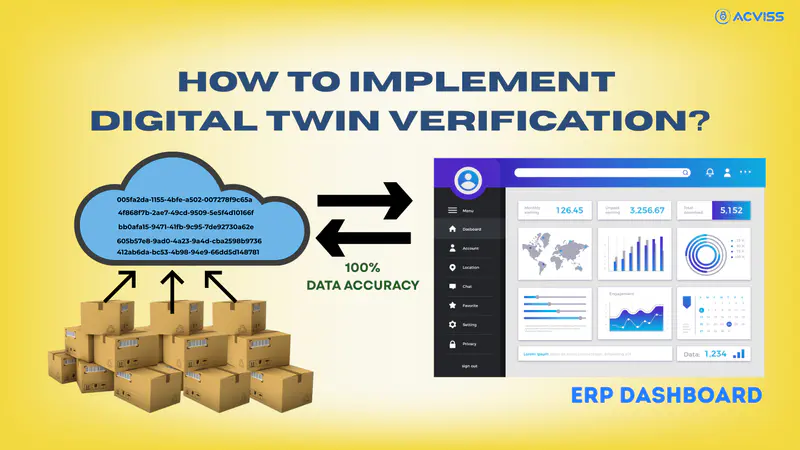
An ERP digital twin is a dynamic digital replica of operational reality. It mirrors inventory, production lines, assets, transactions and supply chain flows in near real time. But unlike traditional dashboards, it does not simply display data. It continuously reconciles physical operations with digital records.
Think of it as a second, independent intelligence layer sitting parallel to your ERP. This layer enables real-time verification, twin-based validation and continuous integrity checking across every transaction.
According to Gartner, by 2027, more than 50 per cent of large enterprises will use digital twin technologies in at least one core business process. The shift is being driven not only by efficiency goals but by the urgent need for data integrity and compliance assurance.
Why Traditional ERP Integrity Is No Longer Enough
ERP systems are powerful. They integrate procurement, inventory, finance, production and distribution. Yet they rely heavily on human inputs and batch updates.
Common integrity gaps include:
Inventory recorded but physically missing
Production quantities overstated or understated
Assets misallocated across cost centres
Dispatch entries created without an actual shipment
Unauthorised manual overrides
In sectors such as pharma, where product safety and regulatory reporting are tightly monitored, discrepancies between physical goods and ERP records can trigger audits and penalties. In global trade environments shaped by regulations such as EUDR, traceability gaps carry financial and reputational risks.
An ERP digital twin introduces physical-digital sync. It creates a verification layer that questions every transaction rather than assuming correctness.
The Verification Layer: Creating a Parallel Control System

The defining feature of this new integrity model is the verification layer.
This layer operates independently of the ERP’s transactional engine. It continuously validates:
Whether physical inventory matches system stock
Whether production output aligns with raw material consumption
Whether dispatched goods correspond to actual scans at the warehouse gate
Whether financial postings reflect verified operational events
In effect, it establishes twin-based validation.
Where the ERP records an event, the digital twin confirms it.
Where the ERP assumes a process is completed, the twin checks physical confirmation.
This reduces blind trust and replaces it with structured data validation ERP mechanisms.
Real-Time Sync Between Physical Operations and Digital Replica

At the heart of Digital twin ERP architecture is ERP synchronisation.
Real-time feeds from:
IoT sensors
Barcode or QR scans
Production line counters
Warehouse scanning devices
flow into the digital replica.
The system then performs real-time verification:
Is the stock physically present where the ERP says it is?
Does each asset carry a validated identity?
Are process timestamps logical and sequential?
This physical-digital sync is particularly powerful when combined with product authentication technologies. For example, when finished goods are tagged with non-cloneable digital identities through solutions such as Certify by Acviss, each unit becomes uniquely verifiable. The digital twin can cross-check whether every serialised product recorded in the ERP has a corresponding validated identity in circulation.
This strengthens product authentication, product verification and brand verification within operational systems.
Discrepancy Detection Mechanisms
A mature ERP digital twin does more than reconcile numbers. It identifies patterns.
Transaction-Level Integrity Checking
Each ERP entry is evaluated against:
Physical scan evidence
Historical process norms
Time-stamped production records
Location validation
If 10,000 units are recorded as produced but only 9,400 validated identities exist, discrepancy detection triggers alerts.
If inventory verification reveals multiple scans of the same unit in different locations, the system flags potential duplication or fraud.
Production Verification
Production verification mechanisms compare:
Input material consumption
Machine output logs
Finished goods serialisation
If output exceeds theoretical yield ratios, predictive verification highlights anomalies before they escalate into audit issues.
Inventory Verification
Inventory verification through twin-based validation ensures that:
Stock counts match verified scans
Expiry dates align with system records
Damaged goods are correctly segregated
In industries like pharma, where track and trace and product traceability are legally mandated, such verification supports compliance and product safety.
Use Cases Across Core Business Functions
1. Inventory Management

Inventory mismatches remain one of the most common ERP pain points. Studies suggest that inventory inaccuracy can reach 8 to 12 per cent in many warehouses.
A supply chain digital twin enables:
Real-time inventory verification
Asset verification through unique identifiers
Immediate flagging of phantom stock
The result is improved data accuracy, ERP metrics and reduced write-offs.
2. Production Operations

In manufacturing environments, production verification ensures that recorded output corresponds to validated units.
When each finished unit carries a non-cloneable identity, the ERP digital twin can perform process integrity checks at the batch and unit level. This protects against internal pilferage and unauthorised overproduction.
For brands focused on anti-counterfeiting solutions, this internal integrity is as critical as external brand protection.
3. Supply Chain Management

A supply chain digital twin provides visibility from dispatch to delivery.
ERP synchronisation ensures that:
Goods dispatched are actually scanned at the gate-out
Goods received by distributors correspond to shipped identities
No duplicate or unverified units enter the channel
This supports brand authentication and trademark protection by preventing grey market infiltration.
4. Finance and Compliance

Financial integrity depends on operational truth.
If inventory is overstated, financial statements misrepresent asset value. If production costs are inaccurately logged, margins distort.
A verification layer strengthens compliance reporting, particularly in regulated sectors such as pharma, where product traceability and audit trails are essential.
Integrity Checking at the Transaction Level
Traditional ERP audits occur periodically. Digital twin systems enable continuous auditing.
Every transaction undergoes integrity checking:
Does this stock transfer correspond to validated identities?
Does this production batch align with machine logs?
Is this asset movement authorised and physically confirmed?
This real-time verification reduces dependency on manual reconciliation.
It also strengthens IP protection. When each product unit is authenticated and logged through non-cloneable technologies, unauthorised duplication becomes easier to detect internally and externally.
Verification Scenarios in Practice
Stock vs System
A warehouse records 50,000 units in stock. The digital twin reconciles serialised scans and detects only 48,750 validated identities present.
The discrepancy detection engine flags a 1,250-unit gap before the year-end audit. Investigation reveals shrinkage in a specific zone.
Production vs Records
A production line reports 20,000 units completed. The digital replica counts 19,300 validated serials generated via Certify integration.
The twin-based validation highlights variance. The issue is addressed before dispatch, preventing channel inconsistencies.
Asset Verification
High-value machinery or moulds carry digital identities. If relocated without authorised ERP entry, the digital twin detects a mismatch between physical movement and system record.
Process integrity improves, reducing operational risk.
Predictive Integrity: Catching Issues Before They Occur
Perhaps the most transformative aspect of this integrity model is predictive verification.
By analysing historical discrepancy patterns, the system can:
Identify high-risk time windows
Flag abnormal production spikes
Predict potential inventory imbalances
Detect behavioural anomalies in transaction entries
Instead of reacting to errors, companies anticipate them.
Predictive integrity improves customer satisfaction by reducing order delays, preventing compliance violations and strengthening brand protection.
Beyond Operations: Strategic Implications

Digital twin ERP architecture is not merely about accuracy. It is about confidence.
It enables:
Reliable data for strategic decisions
Stronger compliance with global trade regulations
Enhanced product authentication and brand authentication
Robust anti-counterfeiting technologies integrated with internal systems
For companies managing global trademarks and intellectual property portfolios, integrity in internal systems reinforces external trademark protection and IP protection efforts.
When ERP systems and verification layers operate in synchronised harmony, organisations gain a defensible position against fraud, counterfeiting and operational inefficiency.
The New Integrity Model
Digital transformation once focused on automation. The next wave focuses on verification.
A true integrity model combines:
ERP digital twin architecture
Real-time verification
Non-cloneable product identities
Continuous discrepancy detection
Predictive analytics
This model transforms ERP from a passive recorder of transactions into an active guardian of operational truth.
As supply chains grow more complex and compliance expectations intensify, companies cannot rely solely on transactional accuracy. They must ensure data accuracy ERP-wide, backed by structured twin-based validation.
Digital twins plus verification do not replace ERP systems. They elevate them.
Ready to Reinforce Your ERP Integrity?
The future of enterprise systems lies in continuous verification, physical-digital sync and predictive integrity. Organisations that embrace Digital twin ERP architecture will gain stronger compliance, better operational control and greater confidence in every transaction.
If you are interested to learn more about integrating non-cloneable product identities and verification layers into your ERP ecosystem, get in touch with us. Let us explore how a next-generation integrity model can strengthen your operations, protect your assets and future-proof your enterprise systems.