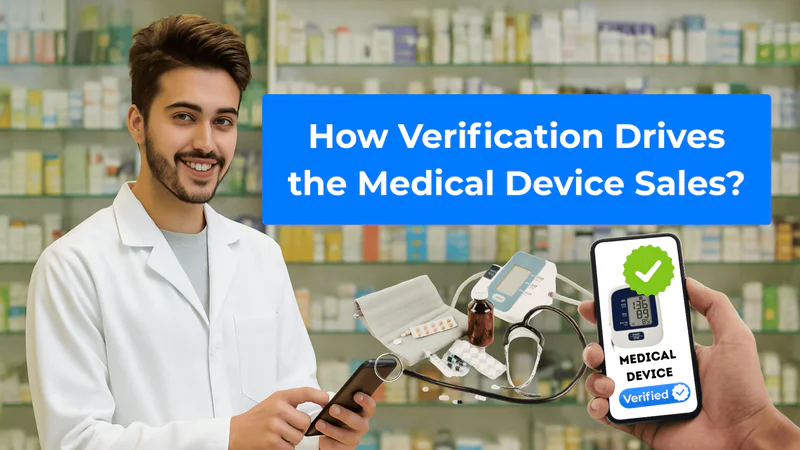
Procurement teams in hospitals rarely speak about fear. They speak about budgets, vendor performance, delivery timelines and regulatory compliance. Yet behind closed-door committee meetings, another question quietly shapes purchasing decisions.
Can we trust this device?
Medical devices now sit at the intersection of patient safety, regulatory pressure and financial scrutiny. A faulty infusion pump, a substandard implant or an unverified diagnostic kit does not simply result in returns. It exposes hospitals to litigation, reputational harm and operational disruption.
What is emerging across global healthcare systems is a subtle but powerful shift in buyer behaviour. Authenticated medical devices move through approval processes faster. Verified suppliers gain preference in tenders. Devices supported by clear product authentication frameworks experience less friction in adoption.
Hospitals may not publicly state that verification influences purchasing velocity. Their actions, however, tell a different story.
The Silent Evolution in Hospital Purchasing Behaviour
Healthcare procurement has transformed dramatically over the last decade.
Several forces are driving this change:
Rising incidents of counterfeit and substandard medical products
Stricter regulatory oversight in pharma and medical devices
Increased traceability mandates across supply chain management
Heightened public scrutiny around product safety
According to the World Health Organisation, up to 10 per cent of medical products in low and middle-income countries are substandard or falsified. In high-income markets, regulatory recalls and quality alerts are increasing year on year.
For procurement committees, this translates into a simple risk equation. Devices that demonstrate strong product verification protocols reduce institutional exposure.
Hospitals increasingly look beyond price. They evaluate traceability, product authentication technologies and supplier transparency. While this may not appear in formal tender language, it heavily influences shortlisting and final selection.
Why Verified Devices Move Faster Through Committees

Hospital procurement is rarely an individual decision. It involves biomedical engineers, compliance officers, finance managers and clinical leadership.
Every stakeholder asks different questions:
Is this device compliant with regulatory standards?
Can we trace its origin and batch history?
Does the manufacturer have anti-counterfeiting solutions in place?
Is there verifiable proof of authenticity at the unit level?
When suppliers provide authenticated medical devices supported by robust product traceability and track and trace systems, objections reduce. Approval cycles shorten.
In contrast, devices lacking transparent verification often trigger additional documentation requests, audits or delayed pilot approvals.
Time, in healthcare procurement, is often as valuable as cost.
The Trust Premium in Healthcare Procurement
Trust is difficult to quantify but easy to observe in purchasing outcomes.
A procurement head in a tertiary care hospital may not explicitly state that brand authentication influences decisions. Yet vendors with strong brand protection frameworks frequently secure repeat orders.
Why?
Because trust reduces cognitive load.
When a device carries non-cloneable identification and secure product verification capability, procurement teams feel reassured that:
Supply chain tampering risks are mitigated
Device authenticity can be validated at receipt
Compliance documentation aligns with traceability systems
This assurance translates into faster internal alignment.
Verified medical devices effectively carry a trust premium.
The Role of Product Authentication in Medical Devices
Medical devices differ from general consumer goods in one fundamental way. Failure carries clinical consequences.
Product authentication in this sector must operate at the unit level, not merely at the packaging level. Serialisation, digital identity assignment and non-cloneable technologies create a secure verification layer.
When devices are integrated with solutions such as Certify, each unit receives a unique digital identity that can be verified against a secure backend. This enables:
Detection of duplicated serials
Traceability across distribution nodes
Validation during installation or servicing
For hospitals, this means that authenticity can be confirmed at the point of receipt or deployment. For manufacturers, it strengthens IP protection and trademark protection against grey market infiltration.
Counterfeit Risks Hospitals Rarely Discuss Publicly

Counterfeit medical devices are not always crude imitations. In some markets, high-quality replicas of surgical instruments, diagnostic cartridges and electronic modules circulate through parallel channels.
Hospitals avoid public discussion of such incidents due to reputational sensitivity. Yet internal audits often reveal vulnerabilities in supply chain management.
Consider common scenarios:
Spare parts sourced from unauthorised intermediaries
Diagnostic consumables are supplied at suspiciously low prices
Devices sold through unofficial distributors
Without structured product traceability and track and trace mechanisms, detection becomes reactive rather than proactive.
Authenticated medical devices reduce this ambiguity. They allow hospitals to perform brand verification instantly, strengthening product safety assurance.
Demand Generation: Why Verification Drives Sales Momentum
From a manufacturer’s perspective, verification is often viewed as a defensive measure. In reality, it is also a demand-generation strategy.
Hospitals increasingly favour vendors who:
Demonstrate transparent supply chain digitalisation
Provide unit-level product authentication
Support compliance documentation with digital validation
This preference accelerates vendor onboarding.
In competitive tenders, verification capability can become an informal differentiator. When technical specifications are comparable, perceived integrity tips the balance.
A device backed by non-cloneable authentication signals seriousness about brand protection and product safety. It reassures procurement committees that the supplier understands institutional risk.
That reassurance translates into faster movement from evaluation to purchase order.
Regulatory and Compliance Pressures Amplifying the Trend
Healthcare systems worldwide are tightening compliance requirements.
From EU MDR frameworks to increasing scrutiny under sustainability-linked trade regulations such as EUDR, traceability expectations are expanding.
Medical device manufacturers must now demonstrate:
Product traceability from production to the end user
Transparent supply chain documentation
Protection against unauthorised duplication
Hospitals, aware of these pressures, seek suppliers aligned with modern compliance practices.
Devices embedded with digital product verification capabilities simplify audit processes. Documentation becomes easier to retrieve. Serial histories are instantly accessible.
For procurement officers managing regulatory audits, this reduces operational stress.
The Financial Dimension: Risk Mitigation as Value Creation
Hospital purchasing decisions are financial decisions at their core.
The cost of a device recall, legal claim or compliance penalty far exceeds marginal price differences between vendors.
Verified medical devices reduce exposure to:
Counterfeit infiltration
Warranty disputes
Insurance complications
Regulatory penalties
From a financial risk management perspective, investing in authenticated devices is prudent governance.
Manufacturers that communicate this clearly during demand generation efforts often shift the discussion from price to risk-adjusted value.
Integrating Non-Cloneable Verification Into Medical Devices

The next evolution in product authentication lies in non-cloneable digital identity systems.
When devices are integrated with technologies like Certify, each unit carries a secure, unique code resistant to replication. Hospitals can verify authenticity using standard digital interfaces without complex hardware.
This approach strengthens:
Brand authentication
Trademark protection
Product safety assurance
It also enables post-purchase engagement. Hospitals can access maintenance records, installation guides or compliance certificates through authenticated portals.
This subtle integration transforms verification from a compliance checkbox into a value-added feature.
Changing Buyer Psychology in Healthcare
Hospital procurement professionals operate under increasing scrutiny. Media coverage of device failures or counterfeit incidents amplifies reputational risk.
As a result, purchasing psychology has shifted from reactive compliance to proactive assurance.
Procurement teams now prefer suppliers who:
Anticipate risk
Offer transparent verification mechanisms
Align with digital transformation goals
Demonstrate structured supply chain management
Verified medical devices signal maturity. They reflect a manufacturer’s investment in long-term integrity rather than short-term sales.
Over time, this influences vendor perception.
Beyond Authentication: Building Institutional Confidence

Product authentication is not only about detecting counterfeits. It is about reinforcing institutional confidence.
When a hospital installs a verified diagnostic system, biomedical teams gain clarity. When surgical tools carry validated digital identities, inventory verification improves. When consumables can be authenticated instantly, stock discrepancies are reduced.
This operational confidence improves customer satisfaction internally and enhances the hospital’s reputation externally.
Manufacturers who recognise this broader impact position themselves as strategic partners rather than commodity suppliers.
The New Competitive Reality
Healthcare procurement may never publicly declare that verified devices sell faster. Tender documents may continue to focus on technical compliance and pricing structures.
Yet the behavioural evidence is visible.
Authenticated medical devices:
Face fewer objections
Move faster through approval cycles
Experience lower post-purchase friction
Secure stronger repeat orders
In competitive markets, these incremental advantages compound.
Verification is no longer a defensive add-on. It is a competitive accelerator.
The Strategic Imperative for Medical Device Brands
Medical device brands must recognise that hospital purchasing behaviour has evolved.
Product authentication, track and trace systems and non-cloneable identity technologies are shaping buying decisions quietly but decisively.
Manufacturers that invest in robust brand protection solutions and transparent supply chain frameworks position themselves favourably in this new landscape.
Verified devices do not merely reduce risk. They generate demand by aligning with institutional priorities around safety, compliance and accountability.
Strengthen Your Market Position With Verified Integrity
The healthcare market rewards trust, transparency and technological foresight. Verified medical devices are moving faster because they reduce uncertainty in an environment where uncertainty is costly.
If you are interested to learn more about integrating non-cloneable product authentication and verification technologies into your medical device portfolio, get in touch with us. Let us explore how stronger verification can accelerate approvals, enhance brand protection and strengthen your competitive position in healthcare markets.