Introduction: Why Packaging Hierarchy Matters More Than Ever
Most manufacturers track inventory at the carton or pallet level.
That worked when supply chains were simple and distribution layers were limited.
Today, FMCG and manufacturing supply chains are complex, fragmented, and fast-moving.
Products change hands multiple times, move across regions, and pass through distributors, sub-distributors, and retailers before reaching consumers.
Without a clear packaging hierarchy, visibility breaks.
This is where parent-child traceability, also known as hierarchical serialisation, becomes critical.
What Is Parent Child Traceability
Parent-child traceability is a method of linking packaging levels into a structured hierarchy.
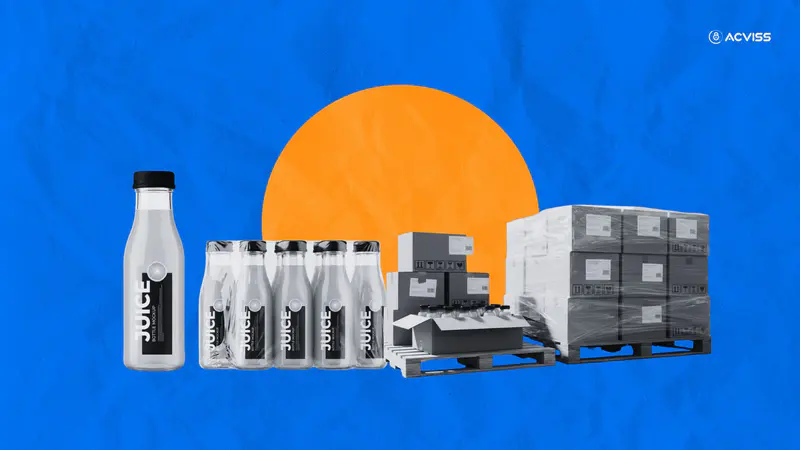
Each individual unit is connected to a larger container, which is then connected to a shipper and finally to a pallet.
A simple hierarchy looks like this:
Unit pack
Inner carton
Shipper carton
Pallet
Each level is digitally linked.
Scanning a higher level automatically reveals information about everything inside it.
This structure allows manufacturers to track movement, ownership, and status without scanning every single unit at every checkpoint.
Why Unit Level Tracking Alone Is Not Enough
Some brands focus only on unit-level QR or serial codes.
While unit tracking is important, it creates operational friction when volumes scale.
Problems that appear include:
Excessive scanning time at warehouses
Incomplete scan compliance at the distributor level
Data gaps when cartons or pallets move without unit scans
High operational cost for full unit-level scanning
Parent-child serialisation solves this by allowing aggregation and disaggregation without losing visibility.
How Parent Child Serialisation Works Step by Step
Step 1: Unit Serialisation
Each individual pack receives a unique serial or QR identity during production or packaging.
Step 2: Aggregation Into Parent
Multiple units are packed into a carton.
The carton receives its own code, which becomes the parent.
All unit codes are digitally linked to this parent.
Step 3: Higher Level Aggregation
Cartons are grouped into shippers or pallets.
Each higher level receives a new parent code.
Step 4: Movement Tracking
When a shipper or pallet is scanned, the system automatically knows which units are inside and updates their status.
This preserves visibility while reducing scanning effort.
Why FMCG Traceability Depends on Hierarchy Packaging

In FMCG environments, speed matters. Warehouses handle thousands of SKUs daily. Distributors focus on dispatch efficiency, not scanning discipline.
Hierarchy packaging enables:
Faster inward and outward movements
Fewer scan points with better data quality
Clear ownership and custody tracking
Reduced human error
Without parent-child traceability, FMCG brands struggle with blind spots between warehouse dispatch and retail receipt.
Operational Problems Parent Child Traceability Solves
Inventory Mismatch
ERP systems often show stock that has already moved.
Hierarchy scans update all child units instantly, reducing phantom inventory.
Distributor Substitution
If a distributor breaks a carton and replaces units, disaggregation events can be tracked and flagged.
Faster Recalls
Instead of recalling all pallets, brands can identify exact cartons or units linked to a defective batch.
Parallel Trade Detection
Unexpected scans outside intended regions reveal diversion early.
Industry Use Cases Where It Becomes Essential
FMCG and Food
High-volume, low-margin products require speed and accuracy.
Hierarchy packaging keeps traceability lightweight and scalable.
Pharmaceuticals
Regulatory requirements demand aggregation from unit to pallet for compliance and audits.
Agro Inputs
Seasonal spikes require fast dispatch with minimal scanning overhead.
Consumer Electronics
High-value products need precise tracking without slowing logistics.
Common Mistakes Brands Make With Serialisation

Many brands implement serialisation but skip hierarchy.
Typical mistakes include:
Treating aggregation as optional
Breaking parent-child links during repacking
Not tracking disaggregation events
Using static code at higher levels
Without enforcing hierarchy rules, traceability collapses under scale.
What to Look for in a Parent-Child Traceability System
When evaluating a solution, ensure it supports:
Flexible aggregation and disaggregation
Real-time hierarchy updates
Scan at any level with backward visibility
Integration with ERP and WMS
Location and time-stamped events
Exception alerts for broken hierarchy
A traceability system is only as strong as its weakest link.
Why Parent Child Traceability Is Evergreen
Packaging hierarchies are not tied to regulations, seasons, or trends.
They are a structural requirement of modern supply chains.
As volumes grow and channels multiply, brands that invest in hierarchy packaging gain:
Long-term operational efficiency
Cleaner data
Faster response to disruptions
Stronger distributor accountability
This makes parent-child serialisation one of the most durable investments in supply chain technology.
Stop Tracking Boxes, Start Tracking Relationships

Most brands track boxes.
High-performing brands track relationships between units, cartons, and pallets.
If your traceability system cannot tell you what is inside a shipper with one scan, visibility is already broken.
Acviss Origin helps manufacturers implement parent-child traceability that scales across FMCG, agro, pharma, and consumer goods supply chains without slowing operations.
Explore how Acviss Origin can connect every unit pack to its pallet and beyond, with built-in full-hierarchy visibility.