A Field Guide to Regional E-Commerce Brand Protection
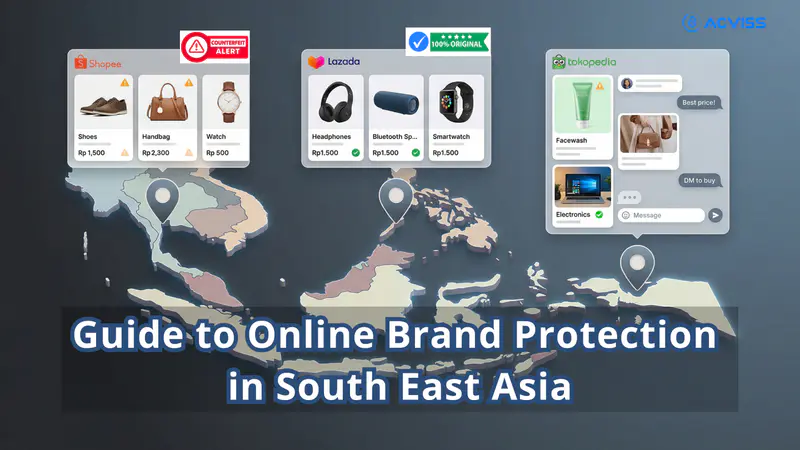
Southeast Asia has become one of the most attractive growth frontiers for global and emerging brands. A young population, rising disposable incomes, and mobile-first commerce have turned platforms such as Shopee, Lazada, and Tokopedia into high-velocity sales engines. Add to that the explosive rise of TikTok Shop, and the region begins to look less like an opportunity and more like an inevitability.
Yet, beneath that growth lies a far more complex reality. Brand protection in Southeast Asia is not simply an extension of what works on Amazon or Flipkart. It is a fundamentally different operating environment where counterfeit products, grey market distribution, and fragmented enforcement mechanisms can erode brand value at speed.
This guide aims to provide a grounded, field-tested perspective on how to approach e-commerce brand protection in ASEAN markets without losing control of your trademark, IP, and customer trust.
Why Southeast Asia Has Become a Counterfeit Hotspot
The global trade in counterfeit goods is estimated to be between $467 billion and $600 billion, with exponential growth over the past two decades. Southeast Asia sits at the centre of this expansion, not by coincidence but by structural design.
1. Fragmented Regulatory Enforcement
Unlike the European Union or the United States, ASEAN operates as a collection of distinct regulatory regimes. Trademark protection and IP protection laws vary significantly between Indonesia, Vietnam, Thailand, and the Philippines. Enforcement is often inconsistent, under-resourced, and reactive rather than preventive.
2. Marketplace-Led Commerce Dominance
In Southeast Asia, marketplaces dominate consumer buying behaviour far more than brand-owned websites. This creates a dependency where:
Sellers can quickly create and abandon storefronts
Listings can be duplicated at scale
Product verification is rarely enforced at onboarding
This structure enables counterfeiters to operate with agility.
3. The Grey Market Problem
Grey market activity is particularly pronounced in ASEAN. Genuine goods are diverted, resold, or repackaged without traceability. While not always illegal, this undermines:
Product traceability
Warranty systems
Customer satisfaction
Supply chain management integrity
4. Price Sensitivity and Demand Elasticity
Counterfeiters exploit price-sensitive consumers by offering products 20–40% cheaper than genuine goods. As seen in industrial supply chains, what appears cheaper often results in a significantly higher total cost of ownership due to product failure, safety risks, and reputational damage.
Platform-by-Platform: How Enforcement Really Works

Understanding how each marketplace handles counterfeit reporting is critical to building an effective anti-counterfeiting strategy.
Shopee
Shopee operates on a high-volume, low-friction seller model.
Strength: Fast takedown response for clear trademark violations
Limitation: Sellers can relist within hours using slight variations
Reality: Enforcement is reactive and requires continuous monitoring
Brands must rely on persistent reporting rather than one-time enforcement.
Lazada
Backed by Alibaba, Lazada offers a more structured IP protection system.
Strength: Formal IP reporting portals and brand registry features
Limitation: Slower response cycles compared to Shopee
Reality: Works better for established brands with registered trademarks
Trademark protection becomes essential here to unlock enforcement tools.
Tokopedia
Indonesia’s Tokopedia presents a unique challenge.
Strength: Localised ecosystem with strong domestic reach
Limitation: Enforcement processes are less standardised
Reality: Requires local expertise and language adaptation
Without in-country support, enforcement can stall.
Why Social Commerce Is a Harder Problem
If marketplaces are complex, social commerce is chaotic.
Platforms such as TikTok Shop, Instagram, and Facebook Marketplace operate on discovery-driven buying behaviour rather than search-driven intent. Sellers:
Use short-lived accounts
Operate through live streams
Avoid persistent listings
This makes traditional product verification and takedown approaches less effective.
The challenge is not just identifying counterfeit products, but tracking how they spread across:
Influencer networks
Closed groups
Messaging platforms
Online brand protection in this environment requires continuous digital monitoring rather than periodic enforcement.
This is where solutions like Truviss become relevant, enabling brands to scan digital ecosystems, detect counterfeit listings, and act across platforms in near real time.
Consumer Verification Behaviour in ASEAN

A critical mistake brands make is assuming that consumers behave similarly across markets.
They do not.
What Consumers Actually Do
QR codes are widely recognised, but not always trusted
SMS-based verification still works in low-data environments
App downloads are resisted unless there is clear value
What Consumers Do Not Do
They rarely read long authentication instructions
They avoid multi-step verification flows
They do not prioritise product authentication unless the risk is obvious
Implication for Brand Authentication
Your product authentication strategy must be:
Immediate
Language-localised
Low friction
A complex product verification journey will simply be ignored.
Designing Authentication for Low-Connectivity Markets
In many ASEAN regions, network reliability remains inconsistent. This directly affects how track-and-trace and product authentication systems should be designed.
Practical Design Principles
Offline fallback mechanisms, such as SMS verification
Lightweight QR experiences that load quickly on low bandwidth
Minimal text reliance, favouring icons and visual cues
Language Localisation
A significant portion of consumers do not engage with English-first interfaces. Authentication flows must support:
Bahasa Indonesia
Thai
Vietnamese
Tagalog
Without localisation, even the best anti-counterfeiting solutions fail at the last mile.
Working with In-Country Enforcement Partners
Entering Southeast Asia without local enforcement support is a strategic risk.
Where to Start
Identify legal partners with experience in IP protection and trademark enforcement
Work with marketplace liaison agencies familiar with platform-specific processes
Build relationships with local authorities where possible
Why It Matters
Counterfeiters often operate within legal grey zones. Local expertise is essential to:
Navigate jurisdictional nuances
Escalate enforcement actions
Conduct offline investigations when necessary
Building a Regional Brand Protection Programme

For a mid-sized brand, resources are limited. The goal is not perfection, but prioritisation.
Step 1: Establish Visibility
You cannot protect what you cannot see.
Monitor marketplaces continuously
Track social commerce channels
Identify repeat offenders
Step 2: Strengthen Product Authentication
Deploy product authentication technologies that enable:
Consumer-level product verification
Backend product traceability
Integration with supply chain management systems
Step 3: Implement Track and Trace
Track and trace systems provide:
End-to-end visibility across distribution channels
Detection of grey market diversion
Faster response during recalls or compliance audits
Step 4: Focus on High-Risk SKUs
Counterfeiters target:
High-demand products
High-margin categories
Frequently replaced items
Prioritise protection efforts accordingly.
Step 5: Integrate Online Brand Protection
Digital monitoring tools such as Truviss by Acviss enable:
Detection of counterfeit listings across platforms
Automated takedown workflows
Insights into counterfeit networks
This shifts brand protection from reactive to proactive.
Lessons from Industrial Supply Chains
Counterfeiting is not unique to consumer goods. Industrial sectors have faced similar challenges for decades.
Key insights include:
Counterfeit components often reduce lifecycle performance by over 90%
The total cost of ownership can be up to 21 times higher than genuine products
Failures in critical sectors such as pharma can lead to life-threatening consequences
These lessons reinforce the importance of:
Product safety
Product traceability
Verified sourcing
The same principles apply to e-commerce brand protection in ASEAN markets.
The Role of Technology in Modern Brand Protection
Modern anti-counterfeiting solutions are no longer optional.
They combine:
AI-driven monitoring
Blockchain-enabled track and trace
Secure product authentication systems
Together, these technologies enable:
Brand verification at scale
Real-time detection of counterfeit activity
Improved customer engagement and customer satisfaction
The objective is not just enforcement, but trust.
Control Is Not Automatic, It Is Engineered
Selling into Southeast Asia offers scale, speed, and access to millions of consumers. It also exposes brands to one of the most dynamic counterfeit ecosystems in the world.
Brand protection in Southeast Asia requires a shift in mindset:
From reactive enforcement to proactive monitoring
From global strategies to localised execution
From isolated tools to integrated solutions
Control does not come from presence alone. It comes from visibility, verification, and vigilance.
For brands willing to invest in the right systems, the region offers not just growth, but sustainable growth.
Interested in strengthening your brand protection strategy in Southeast Asia?
Get in touch with us to explore how advanced product authentication, track and trace, and online brand protection solutions can help you scale with confidence.