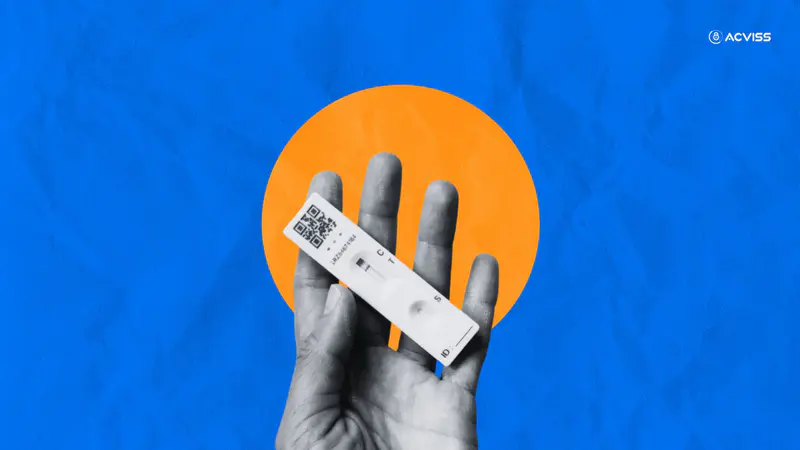
High-margin medical devices sit at a difficult intersection of trust, regulation, and risk. They are life-critical, tightly regulated, globally distributed, and increasingly targeted by organised counterfeit networks. Yet, despite the sophistication of the products themselves, many manufacturers still rely on protection mechanisms designed for a very different era.
Serial numbers and barcodes remain the default tools for product identification, authentication, and traceability across much of the medical device industry. They are familiar, widely accepted, and deeply embedded in enterprise systems. But familiarity does not equal security.
As counterfeiters grow more technologically adept, the cracks in serialisation-based protection are no longer theoretical. They are operational, commercial, and reputational. Serial numbers get cloned. Barcodes get copied. And once that happens, the illusion of control collapses.
This article examines why serial numbers and barcodes fail to protect high-margin medical devices, the real-world risks of barcode cloning and serial number fraud, and why non-cloneable authentication is becoming the logical upgrade for brands serious about product safety, brand protection, and long-term trust.
The Rising Stakes in Medical Device Counterfeiting
Counterfeit medical devices are no longer limited to crude imitations sold through obscure channels. Today’s fakes include orthopaedic implants, diagnostic kits, surgical instruments, and electronic monitoring devices, many of which enter legitimate-looking supply chains.
According to estimates from the World Health Organisation, up to 10 per cent of medical products in low- and middle-income countries are substandard or falsified. In high-margin categories, the incentive is even stronger. A single counterfeit implant can generate thousands of dollars in illicit profit, with minimal risk of immediate detection.
For manufacturers, the consequences extend far beyond revenue leakage. Product safety incidents trigger regulatory scrutiny, recalls, legal liability, and long-term damage to brand authentication and trademark protection efforts. Once a clinician's trust is lost, it is exceptionally difficult to rebuild.
In this environment, product authentication and product verification are no longer operational add-ons. They are strategic necessities.
Why Serial Numbers Became the Industry Standard
Serial numbers were never designed as anti-counterfeiting technologies. They emerged as inventory control tools, enabling manufacturers to identify production batches, manage recalls, and support basic track and trace requirements.
Barcodes and later QR codes simply made serial numbers machine-readable. They improved efficiency in supply chain management and logistics, but they did not fundamentally change the security model.
The assumption underlying serialisation is straightforward. If each product has a unique identifier, then that identifier can be checked against a database to confirm authenticity.
This assumption holds only if two conditions are met. The identifier must be unique, and it must be impossible to duplicate. In practice, serial numbers satisfy only the first condition.
The Core Vulnerability: Serial Numbers Can Be Copied

A serial number is information. And information, once exposed, can be copied perfectly.
Barcode cloning is not a sophisticated attack. A counterfeit operator needs only one genuine product to replicate its serial number across hundreds or thousands of fake units. High-resolution printing, commodity packaging equipment, and basic software tools make replication trivial.
Once cloned, the serial number behaves exactly as the original in downstream systems. Enterprise resource planning systems, track and trace platforms, and even regulatory reporting tools cannot distinguish between the genuine and the fake.
This is not a loophole. It is a structural weakness.
How Serial Number Fraud Plays Out in the Real World
Serial number fraud rarely announces itself clearly. Instead, it manifests as operational anomalies that are easy to dismiss until damage is already done.
Manufacturers may see the same serial number authenticated multiple times in different geographies. Warranty claims appear for products never sold in that region. Service centres receive devices with valid-looking identifiers that do not align with distribution records.
In some cases, counterfeit products pass through the entire supply chain undetected until a patient safety incident occurs. At that point, the question is no longer about product traceability. It is about accountability.
Serial numbers do not fail loudly. They fail quietly, at scale.
The Illusion of Verification
Many brands assume that adding consumer or clinician-facing verification completes the security loop. Scan a code. Check a database. Confirm authenticity.
But verification based on cloneable identifiers only confirms that a number exists, not that the physical product presenting it is genuine.
If a counterfeit product carries a copied serial number that has not yet been flagged, the system will return a positive result. In that moment, the verification process actively reinforces trust in a fake product.
This is a dangerous inversion. The very mechanism designed to protect brand authentication becomes a tool that counterfeiters exploit.
Why Track and Trace Alone Is Not Enough

Track and trace systems play a vital role in regulatory compliance and operational visibility. They support recalls, enable product traceability, and improve supply chain management.
However, track and trace rely on the integrity of the underlying identifier. If that identifier is cloneable, the system tracks movement, not authenticity.
In other words, track and trace tells you where an identity has been, not whether that identity belongs to a genuine product.
For high-margin medical devices, this distinction matters. A cloned serial number can move through authorised distributors, warehouses, and even hospitals without triggering alarms.
The Regulatory Blind Spot
Regulatory frameworks around product identification often focus on uniqueness rather than non-cloneability. As long as a serial number is unique at the point of generation, compliance boxes are ticked.
But uniqueness at creation does not guarantee uniqueness in the field.
This creates a blind spot where brands believe they are compliant and protected, while counterfeiters operate comfortably within the system’s assumptions.
As regulatory expectations evolve, there is growing emphasis on product safety, end-to-end traceability, and proactive IP protection. Brands that rely solely on serialisation may find themselves technically compliant but practically exposed.
What Non-Cloneable Authentication Changes
Non-cloneable authentication introduces a fundamentally different security model. Instead of relying on information that can be copied, it ties product identity to characteristics that cannot be replicated.
A non-cloneable ID is not just a number. It is a physical or cryptographic signature that is inherently unique and practically impossible to duplicate, even by the original manufacturer.
When scanned or verified, the system does not simply check whether an identifier exists. It checks whether the identifier matches the original, unrepeatable signature created at the point of manufacture.
This distinction transforms product verification from a database lookup into a genuine authenticity check.
Why Non-Cloneable IDs Are the Logical Upgrade
As counterfeit operations adopt industrial-scale processes, defensive strategies must evolve accordingly. Adding more layers of serialisation does not address the root problem.
Non-cloneable authentication directly targets the economics of counterfeiting. If an identifier cannot be copied, mass replication becomes unviable. The cost of producing convincing fakes increases dramatically, while the probability of detection rises.
For medical device brands, this shift delivers several advantages.
First, product authentication becomes reliable. Each verification event confirms both identity and originality.
Second, brand protection strategies move from reactive to preventive. Counterfeits are blocked at the point of verification, not discovered after harm occurs.
Third, product traceability gains integrity. Movement data is tied to genuine units, improving the quality of supply chain insights.
The Role of Authentication in Brand and IP Protection

Medical device brands invest heavily in trademarks, patents, and IP protection. Yet physical product security often lags behind legal safeguards.
Trademark protection loses practical value if counterfeit products circulate freely under the brand name. IP protection is undermined when cloned products generate revenue without accountability.
Non-cloneable product authentication strengthens these protections by making infringement detectable and enforceable in real-world conditions.
It also supports brand verification efforts across markets where enforcement infrastructure may be inconsistent. A reliable authentication layer becomes a universal control mechanism.
Where Solutions Begin to Matter
At this point, many organisations ask a pragmatic question. How does this translate into implementation without disrupting existing operations?
This is where solutions built specifically for non-cloneable authentication come into play.
For example, Certify by Acvissintegrates non-cloneable identifiers into product labelling, enabling secure product verification without changing core manufacturing workflows. The emphasis is not on replacing serialisation overnight, but on augmenting it with a layer that serial numbers cannot provide.
Used selectively, such technologies enhance product safety, support anti-counterfeiting solutions, and reinforce brand authentication without overwhelming operational teams.
Beyond Security: Customer Engagement and Trust
Authentication is not only about risk mitigation. When implemented thoughtfully, it also supports customer engagement and customer satisfaction.
Clinicians, hospitals, and distributors gain confidence when product verification is simple, reliable, and transparent. Patients benefit indirectly through improved product safety and reduced exposure to substandard devices.
Over time, consistent authentication experiences strengthen brand trust. In regulated industries, trust is a competitive advantage that compounds.
The Strategic Question Brands Must Answer
The question facing medical device manufacturers is no longer whether serial numbers and barcodes are useful. They remain essential components of compliance and logistics.
The real question is whether they are sufficient.
In a landscape defined by organised counterfeiting, digital replication, and global supply chains, cloneable identifiers represent a known and exploited weakness.
Non-cloneable IDs do not replace serial numbers. They complete them.
Moving from Assumption to Assurance
High-margin medical devices demand a higher standard of protection. Serial numbers and barcodes, by design, cannot meet that standard on their own.
As serial number fraud and barcode cloning continue to rise, brands must move beyond assumptions of security towards mechanisms that provide real assurance.
Non-cloneable authentication represents that shift. It aligns product verification with physical reality, strengthens brand protection, and restores confidence across the supply chain.
For organisations serious about product authentication, product verification, IP protection, and long-term brand integrity, this is not an upgrade driven by technology trends. It is a response to how counterfeiting actually works.
If you are interested in learning more about how non-cloneable authentication can strengthen your product safety strategy and protect high-value medical devices, get in touch with us to explore what a future-ready brand protection approach looks like.
