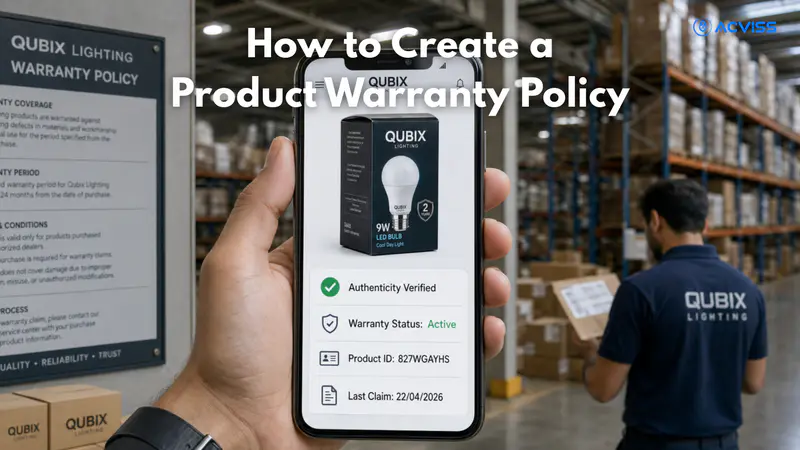
A warranty is often treated as a postscript to a sale. In reality, it is one of the most powerful instruments a brand has to build trust, protect revenue, and reinforce long-term customer relationships. When designed well, a warranty programme becomes a strategic extension of brand protection, product authentication, and customer service. When designed poorly, it becomes an open door to warranty fraud, counterfeit exploitation, and customer dissatisfaction.
Across industries such as pharma, electronics, automotive, and premium FMCG, the stakes are rising. Counterfeit goods are projected to account for over USD 1.8 trillion globally by 2030, and a significant portion of warranty claims are now linked to either fake products or manipulated proof of purchase. This makes warranty fraud prevention not just a legal concern, but a core pillar of modern anti-counterfeiting solutions.
This guide explores how to design a robust, future-ready warranty policy that aligns with product traceability, supply chain management, and customer engagement strategies.
Understanding the Role of a Warranty in Modern Commerce
At its core, a warranty is a promise. It assures the customer that a product will perform as expected and that the brand stands behind its quality. However, in today’s complex supply chains, this promise must extend beyond repair or replacement.
A modern warranty programme serves four interconnected purposes:
Product authentication and verification
Brand protection and IP protection
Data-driven post-sales programme optimisation
In sectors like pharma and temperature-sensitive goods, warranty policies also intersect with product safety and regulatory compliance. A compromised product is not just a financial risk but a public health concern.
Types of Warranties: Building the Foundation

Before structuring a warranty policy, it is essential to understand the different types of warranties that exist within legal and commercial frameworks.
Express Warranties
These are explicit promises made by the brand. They may include:
Written warranty certificates
Product descriptions such as “water-resistant up to 50 metres”
Demonstrations or samples
Any measurable claim can become legally binding. This is where product verification systems play a critical role in ensuring claims are consistently upheld.
Implied Warranties
These are automatic protections that apply regardless of written documentation:
Merchantability: The product must function as expected
Fitness for purpose: The product must meet a specific use communicated by the buyer
For brands, this means that even without a formal warranty programme, obligations still exist. A structured policy simply makes these obligations transparent and manageable.
Why Traditional Warranty Models Are Failing
Historically, warranties relied on invoices, paper cards, or basic serial numbers. These systems are now increasingly ineffective due to three major shifts:
1. Rise of Counterfeiting
Fake products often mimic serial numbers or reuse genuine ones. Without non-cloneable product authentication, brands cannot distinguish genuine claims from fraudulent ones.
2. Digital Commerce Complexity
With omnichannel retail, verifying the origin of a product has become difficult. Grey market goods often enter legitimate warranty systems.
3. Consumer Expectations
Modern consumers expect instant product verification, seamless service, and digital-first experiences. Delays or friction in warranty claims directly impact customer satisfaction.
The Core Elements of a Strong Warranty Policy

A well-designed warranty policy must go beyond legal compliance and address operational realities.
1. Clear Coverage Definition
Specify what is covered and what is not. This includes:
Manufacturing defects
Functional failures
Exclusions such as misuse or environmental damage
Clarity reduces disputes and improves customer service efficiency.
2. Defined Warranty Period
The duration must align with product lifecycle expectations. For example:
Electronics: 12–24 months
Automotive components: 3–5 years
Pharma or consumables: limited or conditional warranties
3. Simple Claim Process
The process should be:
Digitally accessible
Easy to understand
Supported by real-time product verification
Complex processes often lead to customer frustration and drop-offs.
4. Transparent Remedies
Clearly state what the customer will receive:
Repair
Replacement
Refund
Transparency builds trust and reduces legal ambiguity.
Integrating Anti-Counterfeiting into Warranty Design
A warranty policy without anti-counterfeiting measures is inherently vulnerable. This is where modern technologies redefine the landscape.
The Role of Non-Cloneable Labels
Traditional barcodes and QR codes can be copied. Non-cloneable label technologies introduce unique, secure identifiers that cannot be replicated.
These labels enable:
Product authentication at the unit level
Real-time product traceability across the supply chain
Accurate warranty validation
When a customer scans a product, the system verifies whether the code has been previously used, duplicated, or tampered with. This directly supports warranty fraud prevention.
Warranty Fraud Prevention: A Business Imperative
Warranty fraud is estimated to cost businesses 3–5% of annual revenue in sectors like electronics and appliances. The sources of fraud include:
Counterfeit product claims
Duplicate warranty registrations
Manipulated invoices
Grey market imports
How to Prevent Warranty Fraud
A robust warranty programme should include:
1. Unique Product Identity
Every unit must have a distinct identity linked to product traceability systems.
2. Real-Time Verification
Instant validation at the time of claim submission ensures authenticity.
3. Track and Trace Integration
Tracking products from manufacturing to end-user helps identify leakage points in the supply chain.
4. Behavioural Analytics
Advanced systems can detect unusual claim patterns, such as repeated claims from the same user or region.
The Role of Supply Chain Management in Warranty Effectiveness

Warranty systems are only as strong as the supply chain behind them. Without visibility, even the best policies fail.
Key Supply Chain Considerations
Track and trace systems to monitor product movement
Product traceability to identify origin and distribution path
Integration with distributors and retailers
For example, if a product meant for one region appears in another, the system can flag it as a potential grey market entry. This prevents unauthorised warranty claims.
Digital Warranty Systems and the Shift to Post Sales Programmes
The warranty is no longer a static document. It is part of a broader post-sales programme that drives customer engagement and loyalty.
Benefits of Digital Warranty Platforms
Instant registration via mobile devices
Seamless product verification
Direct communication channels with customers
Data collection for customer behaviour analysis
This transition enables brands to move from reactive service models to proactive customer engagement strategies.
Customer Engagement and Satisfaction Through Warranty
A well-designed warranty programme can significantly improve customer satisfaction.
Key Engagement Opportunities
Personalised notifications and service reminders
Loyalty rewards linked to warranty registration
Educational content on product usage and safety
In industries like pharma, where product safety is critical, these touchpoints can also reinforce trust and compliance.
Legal and Compliance Considerations
While this guide focuses on strategic design, compliance remains essential.
Key Principles to Follow
Use clear, plain language
Ensure pre-sale availability of warranty terms
Avoid misleading claims
Define limitations transparently
Global regulations are increasingly emphasising digital accessibility. Policies must be mobile-friendly and easily retrievable.
The Strategic Role of IP and Trademark Protection
Warranty systems are closely tied to IP protection and trademark protection. Counterfeit products not only bypass revenue channels but also damage brand reputation.
By integrating brand authentication technologies into warranty programmes, companies can:
Protect trademarks from misuse
Strengthen brand verification mechanisms
Enhance consumer trust
Industry-Specific Considerations
Pharma
Requires strict product verification and traceability
Direct impact on patient safety
Regulatory alignment with global standards
Electronics
High risk of warranty fraud
Complex service networks
Need for rapid verification systems
FMCG and Premium Goods
Focus on brand authentication and customer engagement
Increasing counterfeit penetration in low-cost segments
Building a Future-Ready Warranty Programme
To remain effective, warranty policies must evolve alongside technology and market risks.
Key Recommendations
Adopt non-cloneable product authentication technologies
Integrate warranty systems with supply chain management platforms
Leverage data analytics for fraud detection and customer insights
Design digital-first, user-friendly experiences
Align warranty policies with broader brand protection strategies
A Necessity
A warranty is no longer a back-office function. It is a frontline defence against counterfeiting, a driver of customer satisfaction, and a cornerstone of brand protection.
Brands that continue to rely on outdated systems risk not only financial losses but also erosion of trust. On the other hand, those that invest in advanced product authentication, track and trace capabilities, and intelligent warranty fraud prevention mechanisms position themselves for long-term resilience.
The shift is clear. Warranty programmes must evolve from static promises into dynamic, technology-driven ecosystems that connect products, customers, and supply chains.
Interested in learning more about building a secure, intelligent warranty programme? Get in touch with us.