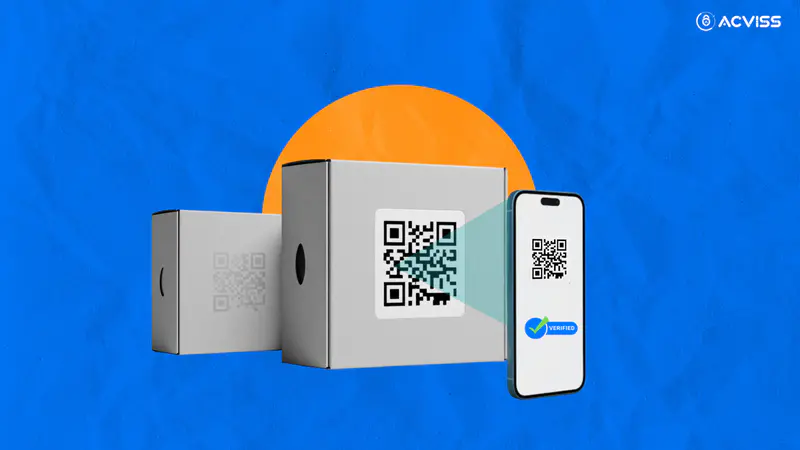
Low scan volume is rarely a technology problem. More often, it is a communication problem hiding in plain sight on your packaging. Brands invest in product authentication, QR codes, and brand protection solutions, only to discover that consumers are simply not scanning. That gap between capability and behaviour is where A/B testing your label becomes one of the most powerful tools available to brand owners.
This article breaks down how to approach packaging A/B tests with clarity and discipline. We will focus on QR code A/B testing, scan performance optimisation, and simple, repeatable experiments that improve product verification, customer engagement, and customer satisfaction without disrupting existing operations. Along the way, we will also touch on where brand protection and anti-counterfeiting solutions naturally fit into this process, particularly when scale and trust start to matter.
Why Low Scan Volume Is a Business Signal, Not a Failure
When scan rates are low, many teams jump to the conclusion that customers do not care about verification. Evidence suggests otherwise. According to a GS1 global study, over 70 percent of consumers are more likely to trust products that provide transparent, scannable information on origin and authenticity.
The issue is not intent. It is friction, visibility, and relevance.
From a brand protection perspective, low scan volume also weakens your anti-counterfeiting strategy. If genuine buyers are not scanning, counterfeit detection signals across your supply chain traceability systems remain thin. That reduces the effectiveness of trademark protection, IP protection, and downstream analytics tied to product safety.
A/B testing helps convert a static label into a learning system.
Start With a Clear A/B Testing Framework
Every effective A/B test follows the same logic:
Hypothesis: What you believe is limiting scans
Change: One controlled modification to test that belief
Metric: A single, measurable outcome such as scan rate, repeat scans, or dwell time
Avoid testing multiple variables at once. Labels are small. Confusion grows quickly.
What to Change First When Scan Volume Is Low

1. Call to Action A/B Testing
The call to action, or CTA, is the single most underestimated element in product authentication labels.
Common problem
Many labels say “Scan QR code” or “Scan for details”. These instructions are functional but emotionally empty.
Hypothesis
If the CTA communicates a direct benefit, more consumers will scan.
Change
Version A: “Scan QR code”
Version B: “Scan to verify authenticity”
Metric
Primary scan rate per 1,000 units sold
Research from Google’s UX studies shows that benefit-led CTAs can increase interaction rates by up to 45 per cent compared to neutral instructions. From a brand authentication standpoint, benefit-driven CTAs also reinforce trust signals and product safety messaging without adding visual clutter.
2. QR Code Placement A/B Testing
Placement determines whether a QR code is noticed before a purchasing decision is finalised.
Common problem
QR codes are often pushed to the back panel, bottom edge, or seam area to preserve front-of-pack aesthetics.
Hypothesis
If the QR code is visible at eye level during shelf interaction, scan volume will increase.
Change
Version A: QR code on back panel near ingredients
Version B: QR code on side or front-adjacent panel near brand logo
Metric
Unique scans per retail location
A Nielsen retail behaviour study found that shoppers spend an average of 13 seconds visually scanning packaging before deciding. If the QR code is not visible during that window, it effectively does not exist. This is especially relevant for brand verification and product authentication workflows where early engagement improves traceability signals across the supply chain.
3. Size A/B Testing: Visibility Versus Intrusion
Size is often constrained by design guidelines, but small increases can have disproportionate impact.
Common problem
QR codes are printed at the minimum scannable size, especially in crowded packaging layouts.
Hypothesis
A modest increase in QR code size will reduce scan friction and increase successful scans.
Change
Version A: QR code at minimum size
Version B: QR code increased by 20 to 30 percent
Metric
Successful scan completion rate
According to ISO/IEC 18004 standards, while QR codes can technically scan at small sizes, real-world lighting and camera quality significantly affect outcomes. Larger codes reduce failed attempts and abandonment.
From an anti-counterfeiting solutions perspective, higher scan completion rates also improve anomaly detection, especially when identifying suspicious batch-level activity.
4. Contrast and Quiet Zone A/B Testing
Contrast is not about colour theory. It is about camera recognition.
Common problem
Design-led QR codes placed on textured or low-contrast backgrounds.
Hypothesis
Improving contrast and quiet zone clarity will increase first-attempt scan success.
Change
Version A: QR code on patterned or coloured background
Version B: QR code on solid, high-contrast background with clear quiet zone
Metric
First-attempt scan success rate
A study on mobile barcode usability found that contrast issues were responsible for over 30 percent of failed consumer scans.
This improvement directly supports product verification systems and reduces consumer frustration, improving customer satisfaction.
Turning Packaging Experiments Into Brand Protection Intelligence

Once scan volume improves, brands often ask the next question. What do we do with this data?
This is where brand protection solutions move from defensive tools to strategic assets.
From Scans to Signals
Each verified scan generates a data point. Over time, patterns emerge across:
Geography
Time of scan
Repeat scan behaviour
Batch-level anomalies
At scale, this supports supply chain traceability, counterfeit detection, and IP protection strategies. It also feeds into LIMS and quality systems when integrated correctly.
This is where non-cloneable technology becomes relevant. Static QR codes alone cannot prevent duplication. When combined with non-cloneable identifiers and secure verification layers, scan data becomes significantly more reliable.
In this context, Certify by Acviss acts as a plugin rather than a replacement. It builds on improved scan behaviour by adding cryptographically secure, non-cloneable product authentication without altering the consumer experience.
The key point is timing. Optimise engagement first. Then strengthen protection.
Why Simple A/B Tests Outperform Big Redesigns
Brands often delay action, waiting for full packaging redesign cycles. This is costly and slow.
Simple A/B tests can be executed through:
Limited batch variations
Regional pilots
Sticker overlays for short-term testing
According to Harvard Business Review, organisations that run small, continuous experiments outperform peers by learning faster and reducing decision risk.
This applies directly to product authentication and brand protection initiatives where adoption depends on real-world behaviour, not boardroom assumptions.
Aligning Marketing, Operations, and IP Teams
Low scan volume often sits at the intersection of departments.
Marketing controls packaging design
Operations manages printing and logistics
Legal and IP teams focus on trademark protection and enforcement
A/B testing creates a shared language. Hypothesis, change, metric. No opinions. Just evidence.
When scan performance improves, IP protection teams gain stronger data to support enforcement. Marketing gains customer engagement insights. Operations gain clarity on what works before scaling.
Measuring Success Beyond Scan Counts
While scan volume is the entry metric, mature brands track additional indicators:
Repeat scans per unit
Time spent on verification page
Post-verification actions such as registration or feedback
Correlation between verification and customer satisfaction scores
These metrics link product verification to real business outcomes such as loyalty, safety perception, and trust.
Optimise Before You Escalate
Low scan volume is not a verdict. It is feedback.
Before adding more technology, more layers, or more cost, brands should first ask whether the label is doing its job. A/B testing your label brings clarity to that question. It replaces assumptions with evidence and transforms packaging into a performance asset.
Once engagement improves, brand protection solutions, anti-counterfeiting technologies, and non-cloneable authentication systems can deliver their full value. Without scans, even the strongest IP protection remains invisible.
If you are interested in learning more about improving product verification, strengthening brand authentication, and building scalable brand protection strategies, get in touch with us. We would be glad to help you turn every scan into a signal that matters.