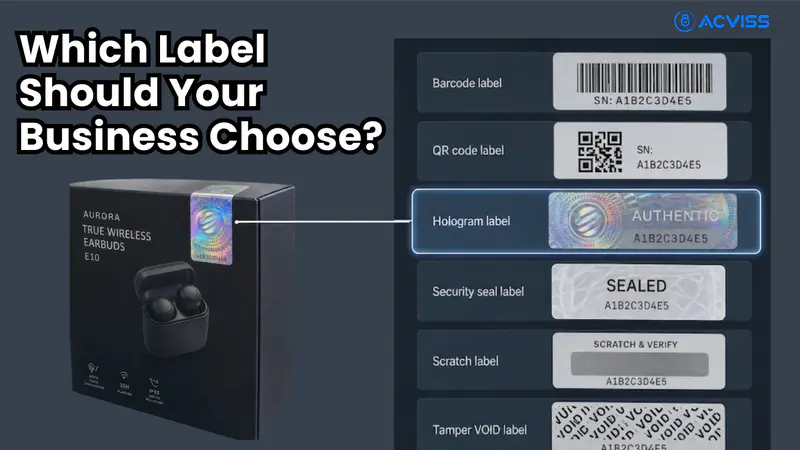
A surprising number of traceability failures begin with something organisations often treat as a low-priority procurement decision: the label itself. Not the ERP system. Not the warehouse software. Not the serialisation platform. The label.
Across pharma, automotive, industrial manufacturing, electronics, luxury goods, food logistics, and medical devices, businesses continue investing heavily in product traceability and authentication systems while underestimating the operational importance of the physical UID layer attached to the product. A barcode may scan perfectly during implementation testing and still fail six months later because the deployment assumptions did not reflect operational reality.
That operational reality is far harsher than most pilot environments suggest. Products move through humid warehouses, freezer storage, export packaging lines, transport vibration, regional distributors, online marketplaces, reverse logistics systems, and warranty claim networks. Labels encounter condensation, abrasion, UV exposure, inconsistent scanner quality, packaging redesigns, and sometimes deliberate relabelling attempts within grey-market channels.
Once traceability systems scale, UID infrastructure stops behaving like a packaging accessory and starts behaving like trust infrastructure.
Why UID Labels Are No Longer Just Inventory Tools
For years, UID labels were associated primarily with warehouse operations. Their purpose was relatively straightforward:
Inventory visibility
Pallet tracking
Asset management
SKU reconciliation
Warehouse automation
Most systems were designed around internal operational efficiency rather than external verification or long-term product identity management.
That environment has changed significantly.
Today, the same UID layer may be expected to support:
Product verification
Track and trace systems
Warranty validation
Anti-counterfeiting solutions
Digital product passports
Customer engagement
Online brand protection
Supply chain visibility
Compliance reporting
This shift matters because the operational expectations surrounding UID systems have expanded faster than many implementation strategies have evolved.
A barcode attached to a pharmaceutical carton now carries very different responsibilities compared to a warehouse inventory sticker from a decade ago. In many industries, the UID layer has become the entry point into a much broader ecosystem involving serialisation, authentication workflows, supply chain analytics, and verification intelligence.
The operational burden on these systems increases further once products move through fragmented global supply chains involving:
Contract manufacturers
Third-party logistics providers
Regional distributors
Online marketplaces
Reverse logistics networks
Service centres
Independent resellers
At that stage, maintaining trust in product identity becomes substantially more difficult than simply generating unique serial numbers.
Most Businesses Still Buy UID Labels Using Outdated Assumptions

One of the most common implementation mistakes is evaluating UID labels primarily through procurement criteria, such as:
cost per unit
print quality
supplier lead time
scanner compatibility
material pricing
Those factors still matter, but they rarely determine whether the system remains reliable after scale.
The larger operational questions are usually more important:
Can the label survive environmental exposure over the intended lifecycle?
Will the adhesive remain stable under freezer cycling or humidity?
Can the verification process detect cloned identifiers?
How will packaging redesigns affect scanner performance?
What happens when distributors stop scanning consistently?
How will serialisation governance be maintained across suppliers?
Can the authentication workflow detect suspicious behavioural patterns?
Many organisations do not ask these questions early enough.
As a result, the weaknesses only become visible later during:
product recalls
warranty disputes
audit reviews
counterfeit investigations
distributor conflicts
serialisation reconciliation exercises
By then, operational correction becomes significantly more expensive.
UID Labels vs Product Authentication: Why the Difference Matters
One of the more persistent misconceptions in the market is the assumption that serialisation automatically creates authentication.
It does not.
Serialisation creates uniqueness. Authentication determines whether that uniqueness can still be trusted after products move through real-world distribution environments.
This distinction becomes particularly important in sectors with high counterfeit exposure, such as:
pharmaceuticals
automotive spare parts
premium electronics
agrochemicals
luxury goods
cosmetics
A visible QR code may support product verification workflows, but if the surrounding authentication architecture is weak, counterfeiters can often duplicate the identifier without compromising the system technically.
That operational reality is becoming increasingly important because counterfeit operations have evolved significantly over the past decade. Many now replicate:
barcode structures
packaging formats
warranty cards
authentication pages
distributor labelling conventions
serialization patterns
According to the OECD report on counterfeit trade, counterfeit and pirated products account for a substantial share of global trade activity, increasingly infiltrating legitimate commercial supply chains.
This is why authentication systems increasingly depend on more than visible identifiers alone.
Modern verification ecosystems often incorporate:
Duplicate scan detection
Geolocation analysis
Behavioural anomaly monitoring
Suspicious reseller tracking
AI-driven marketplace monitoring
Verification governance controls
Solutions such as Certify by Acviss are becoming increasingly relevant because businesses now require authentication mechanisms capable of supporting non-cloneable verification and stronger product integrity workflows rather than relying solely on visible serialised labels.
QR Codes vs Data Matrix Codes: The Operational Trade-Offs
Comparisons between QR codes and Data Matrix codes are often oversimplified online. In operational environments, the choice depends less on abstract technical capability and more on how the product behaves throughout its lifecycle.
Where Data Matrix Codes Perform Better
Data Matrix ECC 200 codes remain widely used across:
aerospace
defence
medical devices
electronics manufacturing
industrial equipment
Their advantages become particularly useful where space is constrained or environmental exposure is severe.
Compared to QR codes, Data Matrix formats typically perform better in:
compact component marking
direct part marking applications
partially damaged scan conditions
industrial environments involving abrasion or chemicals
The GS1 traceability standards framework continues to support interoperable serialisation standards for product traceability systems across industries.
However, field performance rarely depends on barcode format alone.
Many real-world failures emerge because of operational factors such as:
Reflective overlaminates affecting smartphone cameras
Warehouse lighting inconsistency
Thermal print degradation over time
Scanner calibration drift
Curved packaging surfaces are distorting quiet zones
Freezer condensation is affecting readability
These problems are difficult to simulate accurately during controlled pilot testing.
Why QR Codes Continue Expanding
QR codes continue growing because they bridge operational traceability with customer interaction more effectively than most industrial barcode formats.
They support workflows such as:
customer verification
warranty registration
loyalty programmes
digital manuals
post-sale engagement
That flexibility makes them commercially valuable.
The problem is not the QR code itself. The problem is the assumption that visible QR codes automatically provide meaningful counterfeit protection.
A static QR code connected to a static webpage offers very limited resilience against organised duplication. More mature authentication ecosystems increasingly rely on verification intelligence behind the visible identifier rather than the identifier alone.
Why UID Programmes Often Fail After Scale
One of the least discussed realities in enterprise traceability is how differently systems behave after rollout expands across multiple operational environments.
Pilot programmes typically operate under unusually favourable conditions:
Suppliers are closely monitored
Scan discipline is higher
Packaging remains stable
Serialisation ranges are tightly controlled
Operational oversight is direct
Large-scale deployments are considerably messier.
Once products move across regional suppliers, warehouses, distributors, service networks, and packaging operations, UID governance becomes harder to maintain consistently.
Common Operational Failure Areas
Many of these failures accumulate gradually rather than appearing as obvious system breakdowns.
A distributor stops scanning consistently because the workflow slows throughput. A packaging redesign introduces reflective material, affecting smartphone readability. Warehouse teams bypass manual verification during peak operational periods. Over time, traceability integrity weakens without triggering immediate alarms.
This is one reason mature authentication systems increasingly focus on governance and behavioural monitoring rather than only barcode generation.
Adhesives and Environmental Exposure: The Problem Most Teams Underestimate

Much of the industry discussion around UID systems focuses on barcode formats, serialisation logic, or authentication software while giving comparatively little attention to adhesive behaviour.
Operationally, adhesive degradation remains one of the most common causes of traceability failure.
The problem is that these failures rarely happen immediately. Labels may initially appear stable, but begin deteriorating gradually after repeated exposure to:
humidity
freezer cycling
transport vibration
UV radiation
shrink-wrap tension
rough warehouse handling
chemicals
dust infiltration
Cold-chain environments are particularly difficult because products repeatedly transition between frozen storage and ambient transport conditions. Condensation weakens adhesion progressively, especially on curved packaging surfaces or shrink-wrapped secondary cartons.
Once label edges begin lifting, abrasion and moisture infiltration accelerate print deterioration and scan inconsistency.
These issues become especially serious in:
Pharma
Biologics
Food logistics
Medical distribution
Industrial chemicals
The WHO guidance on pharmaceutical traceability systems highlights the importance of maintaining reliable serialisation integrity throughout pharmaceutical supply chains as regulators continue increasing focus on product verification and chain-of-custody visibility.
Choosing the Right UID Material
There is no universally correct UID substrate because operational conditions vary considerably between industries and product categories.
Polyester Labels
Polyester remains one of the most widely used materials because it balances:
print quality
solvent resistance
cost efficiency
thermal transfer compatibility
It performs reliably in controlled industrial environments such as:
electronics manufacturing
industrial asset tracking
Its limitations become more visible under prolonged UV exposure, aggressive chemicals, or severe thermal cycling.
Polyimide Labels
Polyimide labels are commonly used in:
PCB manufacturing
aerospace electronics
semiconductor production
automotive electronics
Their thermal stability and chemical resistance make them suitable for demanding manufacturing environments. However, businesses sometimes over-engineer deployments unnecessarily by selecting premium materials for environments where lower-cost alternatives would perform adequately.
The opposite problem is equally common. Procurement teams often prioritise short-term savings while underestimating long-term replacement costs and operational disruption caused by label failure.
Metal and Anodised Aluminium UID Plates
Long-life industrial assets often require more permanent identification systems capable of surviving:
abrasion
vibration
chemical exposure
outdoor weathering
temperature extremes
These systems are common across:
defence
rail infrastructure
aerospace
oil and gas
heavy industrial manufacturing
The U.S. Department of Defence continues to require durable UID marking standards through MIL-STD-130 frameworks for mission-critical assets.
Although metal UID systems involve a higher upfront investment, the long-term operational costs of replacement, asset re-identification, and traceability disruption often exceed the initial premium significantly.
Product Authentication Is Becoming a Supply Chain Intelligence Function

Many businesses still approach product authentication primarily as a packaging or customer verification problem.
Operationally, some of the most important verification events occur much earlier in the supply chain:
distributor receiving
reseller onboarding
warranty registration
reverse logistics processing
service-part replacement
returns verification
A considerable number of counterfeit investigations begin not with customer complaints, but with operational anomalies such as:
suspicious reseller activity
abnormal geographic scan patterns
inconsistent serialisation behaviour
This is one reason authentication systems are increasingly integrated:
supply chain analytics
AI-driven monitoring
marketplace enforcement
behavioural anomaly detection
verification governance workflows
Authentication is evolving into a broader supply chain intelligence discipline rather than remaining confined to packaging security alone.
Regulatory Pressure Is Reshaping UID Infrastructure
Regulatory expectations surrounding product traceability continue expanding through frameworks such as:
FDA DSCSA
EUDR
medical device traceability regulations
EU Digital Product Passport initiatives
As a result, UID infrastructure increasingly functions as compliance infrastructure.
This distinction matters because compliance failures carry different business consequences than ordinary warehouse inefficiencies. During recalls, audits, or regulatory investigations, fragmented traceability records and weak serialisation governance become highly visible very quickly.
Many organisations technically maintain serialisation programmes while still struggling operationally with:
Disconnected supplier data
Fragmented ERP integration
Inconsistent verification compliance
Incomplete chain-of-custody visibility
These weaknesses rarely appear during early deployment stages. They become visible later under operational pressure when businesses attempt to validate product movement, investigate counterfeit infiltration, or execute large-scale recalls.
Key Questions Businesses Should Ask Before Choosing a UID System
Before selecting a UID strategy, organisations should evaluate several operational realities that are often ignored during procurement discussions.
1. Environmental Exposure
Will the product face:
freezer cycling
UV exposure
chemicals
vibration
moisture
abrasion
2. Product Lifecycle
Does the UID need to remain readable for:
months
years
or decades
3. Authentication Requirements
Is the objective:
Warehouse identification
Customer verification
Counterfeit prevention
All of the above
4. Supply Chain Complexity
How many third parties will interact with the product identity during its lifecycle?
5. Verification Governance
Can the organisation realistically maintain scan compliance and serialisation integrity across distributors and regional operations?
These questions often determine deployment success more than barcode format alone.
Final Thoughts
Choosing the right UID label is no longer a narrow packaging decision centred only on barcode readability or material cost. Effective UID infrastructure depends on how reliably the entire verification ecosystem performs under operational stress over time.
Environmental durability, authentication resilience, serialisation governance, scan consistency, packaging compatibility, distributor behaviour, and supply chain visibility all influence whether a UID system remains trustworthy after scale.
Businesses that approach UID infrastructure strategically tend to build stronger foundations for:
product authentication
warranty governance
regulatory readiness
anti-counterfeiting protection
and long-term brand trust
Organisations that continue treating UID labels primarily as low-cost operational consumables often discover their limitations only after operational complexity exposes weaknesses in traceability, integrity and verification governance.
As supply chains become increasingly digitised and regulators place greater emphasis on product traceability, UID systems will continue evolving into foundational components of enterprise product trust architecture rather than remaining simple identification tools.
Interested in learning more? Get in touch with us.